The business and technology of space.
Space Mart Editorial Team
Editorial Team

Space Mart Editorial Team

Editorial Team

The Space Mart Editorial Team produces Space Mart's coverage of the space economy. We report on satellites and constellations, the launch market, space telecom, industry deals, and the technology and ground systems behind the business of space. Articles reflect our team's collective editorial process, source verification, drafting, technical review, and editing, rather than a single writer's work. Space Mart takes editorial responsibility for content under this byline. For more on how we work, see our editorial policy.

Tech Space

In 1869, a Swiss physician named Friedrich Miescher isolated a strange phosphorus-rich substance from the pus-soaked bandages of wounded soldiers at a Tübingen clinic, called it ‘nuclein’, and unknowingly became the first person to hold purified DNA in his hands, 84 years before Watson and Crick built their model

In 1868, a young Swiss physician named Friedrich Miescher scraped pus from surgical bandages inside a converted castle kitchen in Tübingen and isolated a strange phosphorus-rich substance he called 'nuclein' — the first purified DNA, 84 years before Watson and Crick.

Tech Space

Astronauts returning from six-month ISS missions come home measurably taller, gaining up to 5 centimetres as spinal discs decompress in microgravity, and the extra height disappears within days once gravity crushes the vertebrae back into place

Astronauts returning from six-month ISS missions can be up to 5 centimetres taller than when they launched, the result of spinal discs swelling in microgravity. The bonus height disappears within days of splashdown, often accompanied by back pain and a sharply raised risk of herniated discs.

Tech Space

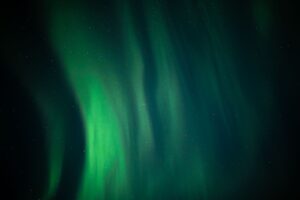
In 1859, a solar storm now called the Carrington Event induced currents so strong in North American telegraph lines that operators disconnected their batteries and kept sending messages on the geomagnetic current alone, while auroras were reported as far south as Cuba

In September 1859, the largest geomagnetic storm on record induced currents so strong in North American telegraph lines that operators pulled their batteries and kept transmitting on solar-driven current alone, while red auroras were reported as far south as Havana.

Tech Space

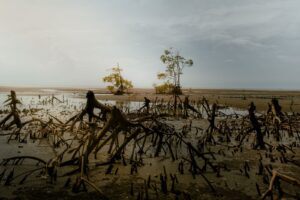
Why did a Bay of Bengal delta nation, after a 1991 cyclone killed some 138,000 people, plant hundreds of kilometres of salt-tolerant coastal forest instead of building higher sea walls?

After the 1991 Bay of Bengal cyclone killed roughly 138,000 people in a single night, Bangladesh chose to plant hundreds of kilometres of salt-tolerant mangrove forest along its delta coast. The reasoning was physical, ecological and economic — and satellite imagery now shows the result.

Tech Space

The Parker Solar Probe now passes within 6.1 million kilometres of the Sun’s surface at 692,000 kilometres per hour, fast enough to cross the continental United States in about 20 seconds, shielded by a carbon-composite heat shield only 11.4 centimetres thick

NASA's Parker Solar Probe now skims to within 6.1 million kilometres of the Sun at 692,000 km/h — fast enough to cross the United States in 20 seconds — protected by a carbon-composite heat shield just 11.4 centimetres thick.

Tech Space

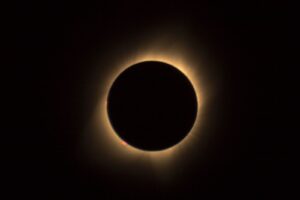
In 1868, astronomers watching a solar eclipse from India detected a bright yellow spectral line in the Sun’s atmosphere that matched no known element on Earth, and helium became the only element in the periodic table discovered on another world before it was found on this one

On 18 August 1868, French astronomer Pierre Janssen watched a solar eclipse from Guntur, India and caught a yellow spectral line that belonged to no known element. Helium existed only in the Sun for 27 years before William Ramsay finally found it in a Norwegian uranium mineral in 1895 — making it the only element in the periodic table discovered off-world first.

Tech Space

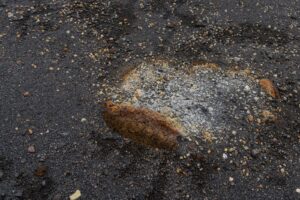
The Murchison meteorite that fell on a Victorian farming town in 1969 contains silicon carbide stardust that formed in the outflows of dying stars up to 7 billion years ago, making it older than the Sun itself by roughly 2.5 billion years

On 28 September 1969, a fireball dropped fragments of a black, carbon-rich meteorite over Murchison, Victoria. Inside were silicon carbide grains that formed inside dying stars about 7 billion years ago — roughly 2.5 billion years before the Sun existed. They are the oldest solid materials ever held in a human hand.