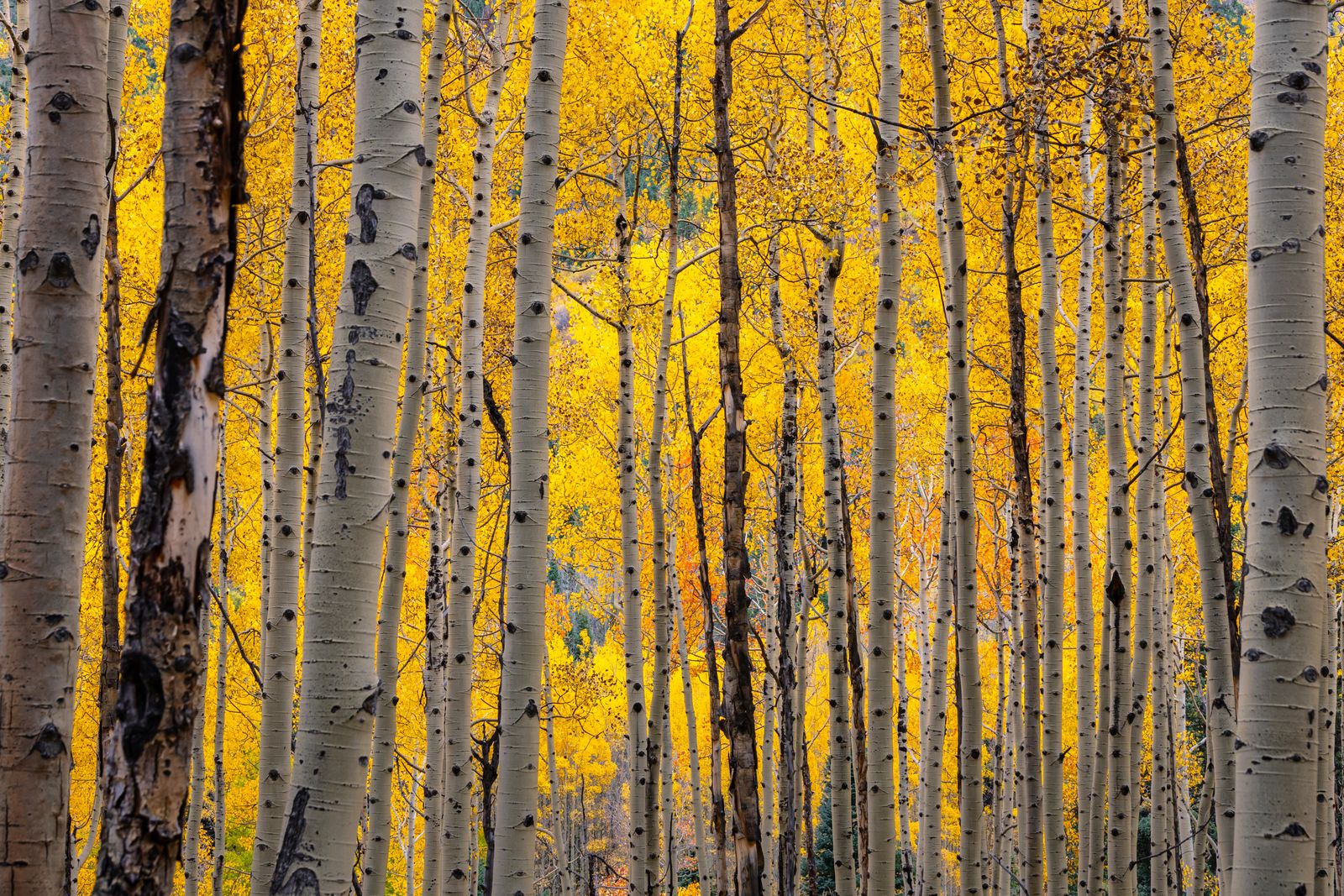
In the Fishlake National Forest of south-central Utah, a single quaking aspen has quietly been rewriting the definition of an individual life. It looks like a forest, roughly 47,000 pale trunks spread across about 106 acres, but every stem is genetically identical, connected underground by one enormous root system. Its name is Pando, Latin for “I spread,” and NASA’s Earth Observatory puts its combined weight at around 6,000 tonnes, or 13 million pounds, making it a leading contender for the heaviest known living organism on Earth by mass.
The mechanism is clonal reproduction. Instead of scattering seeds and letting new trees establish themselves independently, Pando sends up shoots, called ramets, directly from a shared root network. Each visible tree is closer to a branch than to a separate plant. Cut one down, and the roots below simply push up another. That is how a single genetic individual came to cover an area larger than 80 American football fields on the western edge of the Fishlake basin.
One tree, 47,000 trunks
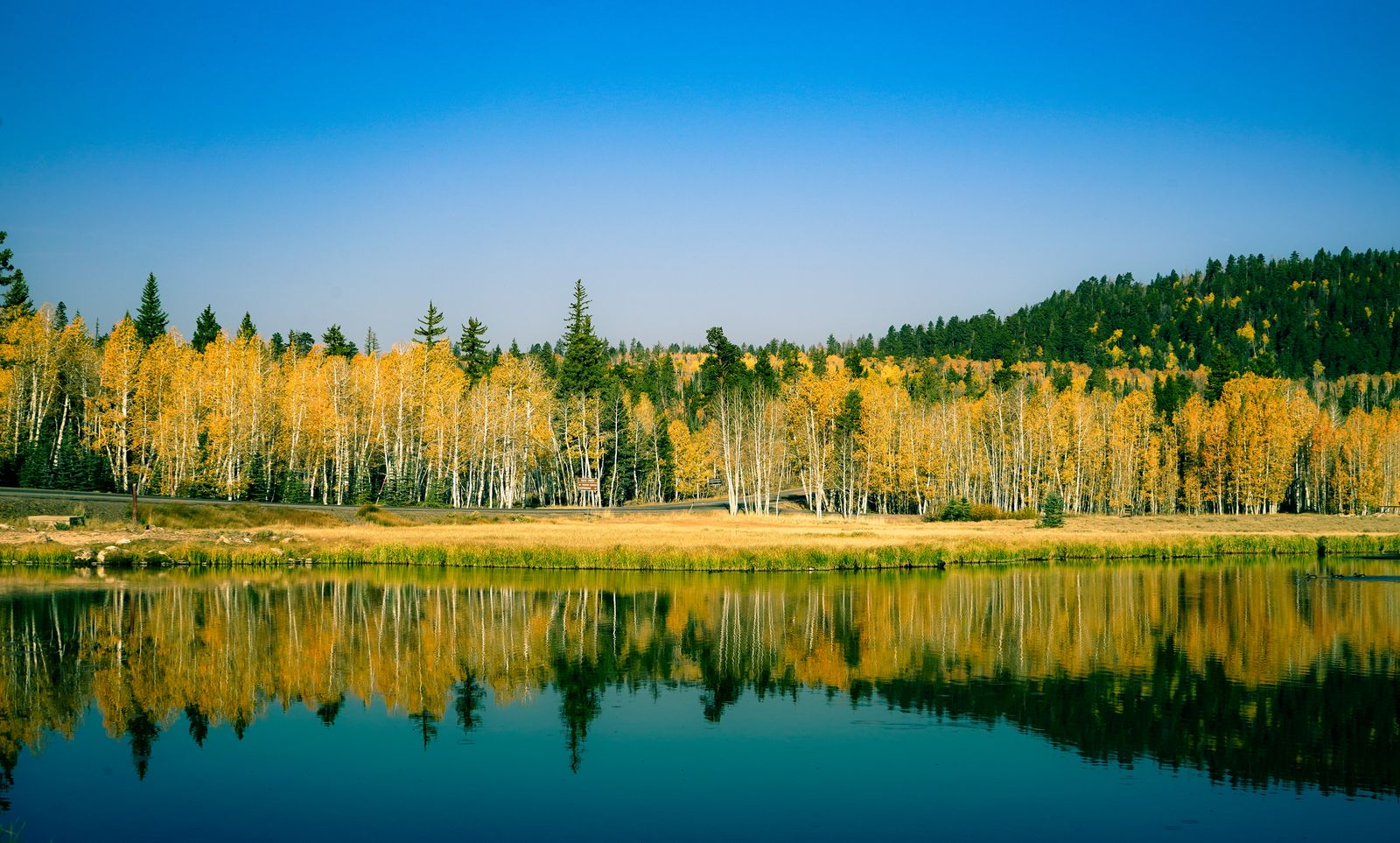
Pando sits at an elevation of about 2,700 metres, on the southwestern side of Fish Lake. From the road it looks like an ordinary aspen stand. The illusion breaks in autumn, when neighbouring aspen groves turn gold on their own schedule and Pando’s crowns shift colour in near-unison. That synchrony is the giveaway. Every stem is running the same genetic program.
Aspens (Populus tremuloides) are famous for cloning across the American West, but Pando is the extreme case. In the first complete assessment of the grove, published in the journal PLOS ONE in 2018, Utah State University ecologists Paul Rogers and Darren McAvoy described Pando as a single genet of about 43 hectares containing an estimated 47,000 genetically identical ramets. NASA, imaging the grove from Landsat 9, calls it simply a “forest of one.”
The mass is hard to hold in the mind. At roughly 6,000 tonnes, Pando weighs on the order of 40 times as much as a blue whale, and most of that bulk is not the trunks you can see. It is the root system underneath, the living architecture that keeps replacing the grove above it.
How the root system works
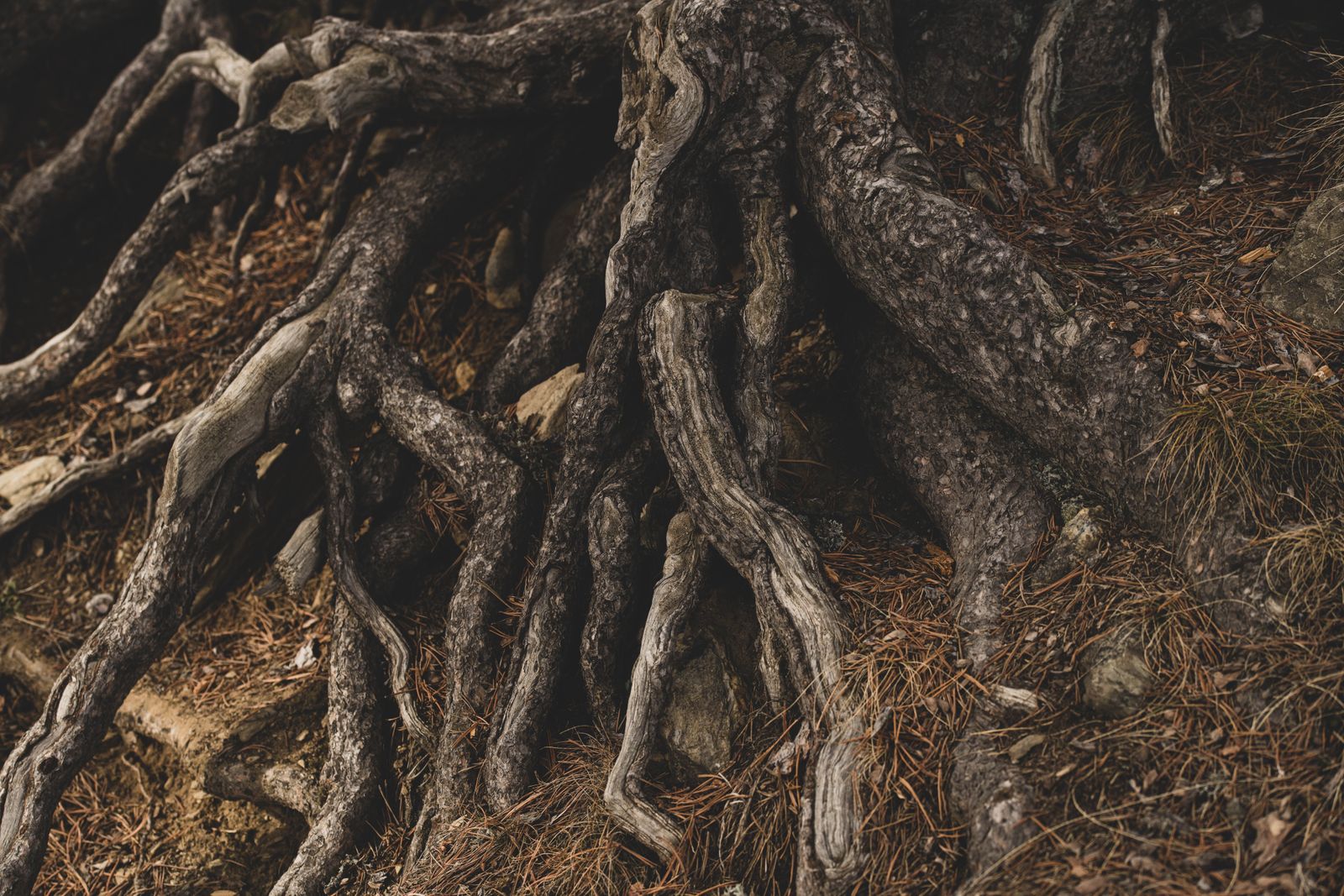
Underground, Pando is a lattice. The parent root threads through the soil at shallow depth, and where conditions allow (enough light reaching the ground, enough moisture, no browsing pressure) it sends a bud upward. That bud becomes a sucker, then a sapling, then a mature trunk perhaps 20 metres tall. Individual stems live only about 100 to 130 years. The roots keep going.
This is why Pando counts as one organism rather than a forest of siblings. Genetic sampling has confirmed that the stems share a single DNA fingerprint, and water, sugars and hormonal signals move through the connective tissue. When a stem is lost to fire or logging, the root system can push up replacements, sometimes within one growing season. The 2018 PLOS ONE work treats the whole 106-acre footprint as a single physiological unit responding as one.
Old, but how old?
Estimates of Pando’s age vary wildly, and the honest answer is that no one knows. Older figures repeated in popular science writing put it at 80,000 years or more. The first genetic attempt to pin it down, a 2024 study led by Rozenn Pineau and covered by Live Science, estimated that the clone had been growing continuously for somewhere between 16,000 and 80,000 years.
The Pineau team sequenced more than 500 samples from across Pando and from neighbouring aspens, then modelled how somatic mutations had spread through the clone to arrive at that range, a method laid out in their preprint on bioRxiv. Aspen pollen recovered from sediment cores near Fish Lake, present continuously for tens of thousands of years, offered independent support for great antiquity.
Even the researchers are cautious about the upper end. Rogers has suggested the real figure may sit closer to 16,000 years, noting that glaciers advanced to within about a mile of the site roughly 20,000 years ago, which would have made survival difficult. Either way, the age is measured in the tens of thousands of years, and the mechanism is simple: as long as the root system stays alive and keeps producing new shoots, the organism persists while individual trunks turn over on a century-long cycle.
The sound of a single organism
In 2023, sound artist Jeff Rice lowered hydrophones and contact microphones into hollows at the base of Pando’s trunks and threaded them down toward the roots, recording what he and the nonprofit Friends of Pando called an acoustic portrait of the clone. He presented the results at the 184th Meeting of the Acoustical Society of America. Vibrations from wind moving through tens of thousands of crowns travelled down into the shared root network as a low, continuous rumble.
The point of the exercise was not novelty. In one test, Rice and his collaborators tapped a branch about 90 feet away, and the hydrophone registered the thump even though it was inaudible through the air, hinting that the sound had travelled through the connected root mass. The team framed the recordings as a possible non-destructive way to probe Pando’s hidden hydraulic system, though they were careful to say a controlled experiment would be needed to rule out sound moving through soil.
Is Pando really the heaviest organism alive?
The title depends on how you measure. By area, a honey fungus (Armillaria ostoyae) in Oregon’s Malheur National Forest wins easily, sprawling across roughly 2,385 acres, about 22 times Pando’s footprint. But most of that organism is thin mycelial thread woven through soil and dead wood, invisible at the surface.
By mass the comparison is closer, and messier. The Oregon fungus has been estimated at anywhere from 7,500 to 35,000 tonnes, and the high end would beat Pando outright, but those figures carry far larger error bars than the aspen measurements. Pando’s advantage is confidence: you can count the trunks and weigh a representative sample. So the ranking splits. The fungus leads on area and possibly on mass; Pando leads on visible, above-ground biomass and on the certainty of the number. Both are contenders, and which one holds the crown depends on the definition.
The fungus is also a reminder that forests, at the genetic and physiological level, are rarely the collection of independent trees they appear to be from the trail. Below the soil, aspens, pines and most temperate species are wired into fungal networks, and in clonal species like Pando, into shared vascular tissue as well.
The scale of that hidden connectivity is staggering. A global mapping effort published in 2026 by the Society for the Protection of Underground Networks estimated that the mycelial threads binding the planet’s topsoils, if laid end to end, would stretch far enough to cross about 10 percent of the Milky Way. Pando is the visible exception, the rare case where the underground and the above-ground are demonstrably the same organism.
The clone is in trouble
Pando is not thriving. The 2018 PLOS ONE assessment documented a demographic collapse: across much of the grove there are almost no young or middle-aged stems, only aging trunks with little rising to replace them. Rogers has compared it to a village full of elderly residents and very few children.
The cause is browsing. Mule deer and cattle, no longer held in check by the predators that once roamed the Fishlake plateau, crop the young suckers down to stubs before they can reach the canopy. The study found that self-replacement began falling away 30 to 40 years ago, a decline visible in seven decades of aerial photographs.
The root system itself is still capable. Fencing experiments, walling off sections of Pando to exclude browsers, have produced dense thickets of new growth inside the fence and bare understorey outside it, and Live Science has reported that the protected areas now appear to be rebounding. The shoots are there. The question is whether they survive long enough to become trees.
Standing among Pando’s trunks, the scale is deceptive. The stems look like any other aspen grove, smooth chalk-white bark, dark eye-shaped scars where old branches fell, leaves that flip and shiver in the slightest breeze. What is missing is the visual cue that would tell you this is one life. There is no giant central trunk, no obvious middle. The individual is the whole clearing.
The organism has outlasted mammoths, the retreat of the ice sheets, the arrival of humans in North America, and the rise and fall of every civilisation on the continent. It has done so without moving, without reproducing sexually in any meaningful sense for millennia, simply by sending up new stems from the same root, one growing season after another, for as long as anyone can measure.
Whether it continues depends on whether the young stems live. In a fenced-off corner of Fishlake, the next generation is already 20 feet tall.