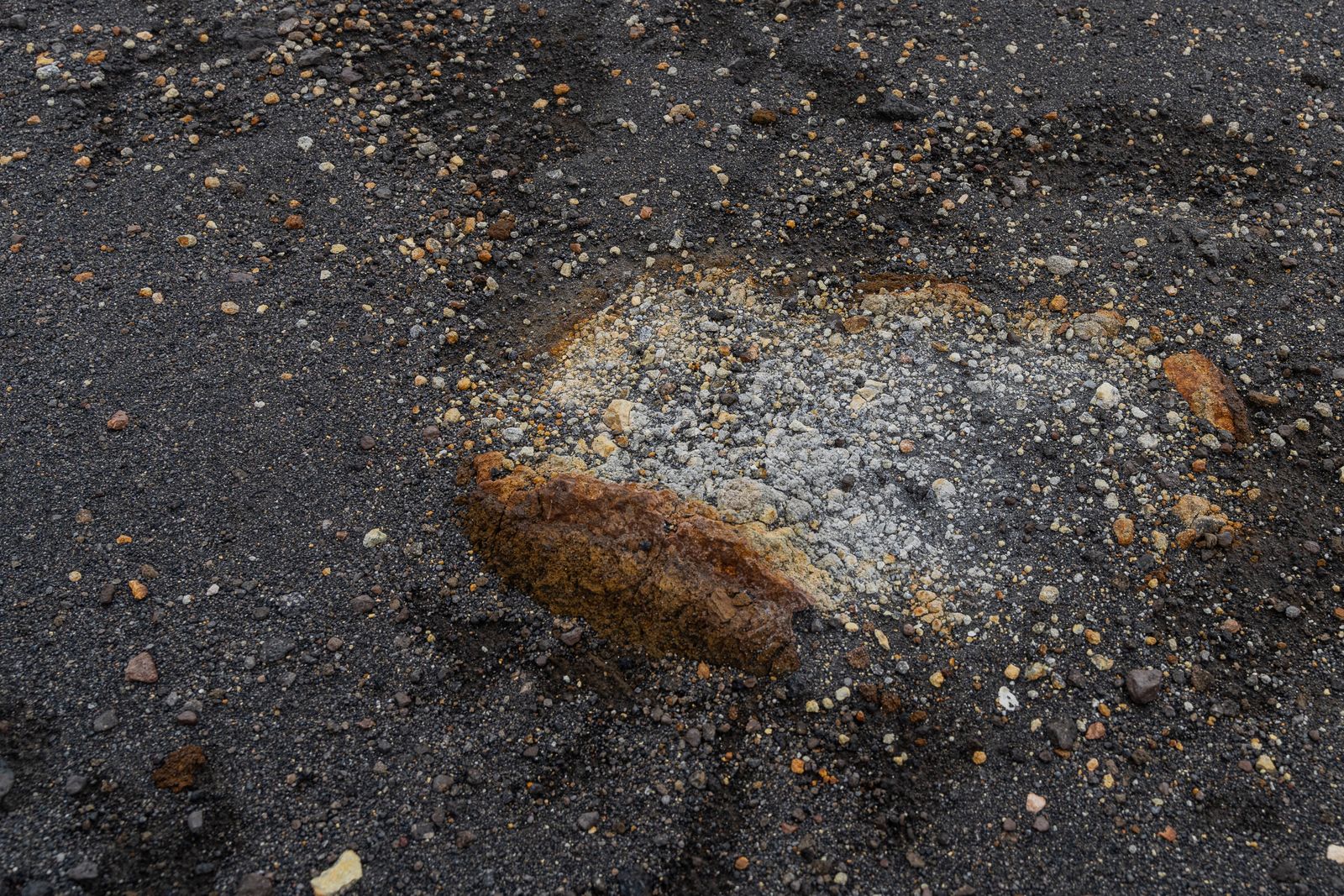
At 10:58 on the morning of September 28, 1969, a bright fireball crossed the sky above Murchison, a farming town about 170 kilometres north of Melbourne. Explosions and sonic booms shook houses, a smoke trail lingered overhead, and fragments of a black carbon-rich meteorite fell across an area roughly 11 kilometres long and 3 kilometres wide. One stone weighing about 680 grams broke through the corrugated roof of a hay shed and landed in the hay below.
Residents recovered fragments from roads, paddocks and dairy farms, eventually making close to 100 kilograms available to museums and laboratories around the world. The smell was nearly as memorable as the noise: locals compared the freshly fallen rock to methylated spirits, an early sign that the stone contained an unusual concentration of organic compounds.
Decades later, researchers extracted microscopic grains of silicon carbide from the meteorite and measured how long they had travelled through interstellar space. The oldest grain examined in the 2020 study led by cosmochemist Philipp Heck was estimated to have formed roughly 7 billion years ago.
The Sun is about 4.6 billion years old and Earth about 4.54 billion. The oldest Murchison grains therefore predate the Sun by approximately 2.5 billion years, making them the oldest solid materials yet dated in a laboratory.
The morning it fell
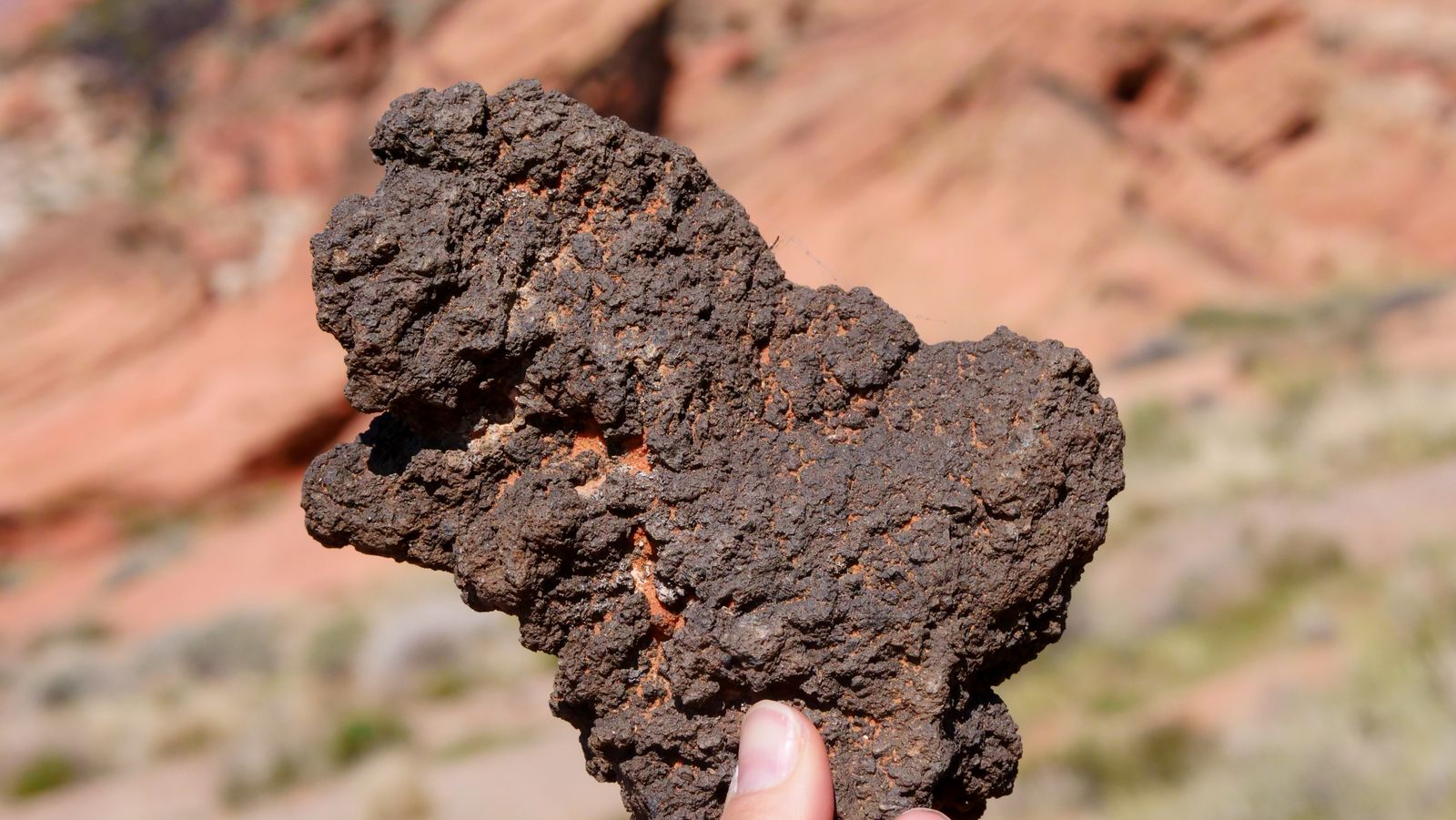
Murchison was an exceptionally valuable fall because it happened in daylight and residents began recovering fragments quickly. That reduced the amount of rain, soil and terrestrial organic matter that could contaminate the newly exposed stone.
The meteorite is classified as a CM2 carbonaceous chondrite, a primitive type of space rock rich in carbon compounds and minerals altered by water on its parent asteroid. It was never melted or completely recrystallised, allowing it to preserve delicate material inherited from the cloud that formed the solar system.
Researchers have identified scores of amino acids in Murchison, including compounds that are rare or are not used to build terrestrial proteins. Studies have continued to use that inventory to investigate how biologically relevant molecules could form before planets existed. One recent project, for example, modelled the optical behaviour of amino-acid precursors associated with the Murchison findings.
What the grains actually are
Embedded in Murchison’s fine-grained matrix are tiny crystals that did not originate anywhere in the solar system. They include silicon carbide, graphite, diamond and several oxide minerals. Most are smaller than a micrometre, although the grains selected for the 2020 dating study were unusually large examples measuring several micrometres across.
Their origins are revealed by their isotopes. Ratios of carbon, nitrogen and silicon isotopes differ radically from solar-system material and instead match nucleosynthesis inside earlier generations of stars.
Most of the dated silicon carbide grains are believed to have condensed in the outflows of asymptotic giant branch stars. These are ageing stars that expand, lose their outer layers and seed surrounding space with newly formed dust. A smaller population of presolar silicon carbide grains carries signatures associated with supernovae.
Each grain is therefore a physical sample of material produced around an individual star. As the Field Museum describes them, they are surviving pieces of stardust that became trapped inside meteorites and remained there for billions of years.
How scientists dated a speck of stardust
Extracting the grains required destroying a small amount of meteorite. Researchers crushed fragments into powder and used a sequence of chemical treatments to dissolve the surrounding silicate minerals. Silicon carbide is highly resistant, so the presolar grains survived after much of the ordinary meteorite material had disappeared.
The dating method relied on cosmic rays, high-energy particles that travel through the galaxy and penetrate solid matter. When cosmic rays strike a silicon carbide grain, they trigger nuclear reactions that produce isotopes including neon-21. The quantity of those cosmogenic isotopes provides an estimate of how long the grain remained exposed in interstellar space.
The researchers calculated exposure ages for 40 large silicon carbide grains. A plain-language account of the work notes that the grains had been isolated from Murchison material and measured individually.
The exposure ages ranged from about 4 million years to roughly 3 billion years before the solar system formed. Adding the solar system’s approximately 4.6-billion-year age gives total grain ages ranging from slightly older than the Sun to approximately 7 billion years or more, although the oldest measurements carry large uncertainties.
Most of the grains were not 7 billion years old. About 60 percent had spent less than 300 million years in interstellar space before entering the solar system’s starting material. At least 8 percent had travelled for more than 1 billion years, and one produced the extreme age estimate that generated the study’s headlines.
A possible burst of star formation
The large number of grains with comparatively short interstellar exposure ages produced another clue. Their parent stars must have formed, evolved into dust-producing giants and released the grains before the solar system began taking shape.
The researchers found that the distribution was consistent with an episode of enhanced star formation in the Milky Way roughly 7 billion years ago. Stars born during that episode could later have reached the asymptotic giant branch stage and released dust between about 4.9 billion and 4.6 billion years ago.
This does not mean the team found a large cluster of grains that were individually 7 billion years old. The 7-billion-year date is an inferred period when many of their parent stars may have formed, based on stellar lifetimes and the younger ages of the dust they later released.
The interpretation contributed physical laboratory evidence to a long-running discussion about whether the Milky Way formed stars at a relatively steady rate or experienced periods of more intense production. “Thanks to these grains, we now have direct evidence for a period of enhanced star formation in our galaxy 7 billion years ago,” Heck said when the study was announced.
Older than anything formed on Earth
The oldest minerals known to have formed on Earth are zircon crystals from Western Australia’s Jack Hills, some of which are about 4.4 billion years old. They appeared relatively soon after Earth formed but are still billions of years younger than the universe, which is approximately 13.8 billion years old.
The oldest dated Murchison grain had already existed for billions of years before the Sun began shining. Its estimated interstellar lifetime alone was longer than the entire history of complex multicellular life on Earth.
Yet these records of ancient stars are almost impossibly small. The largest grains studied measured only a few tens of micrometres, while many presolar grains are far thinner than a human hair. To the unaided eye, they are simply dust.
Why Murchison preserved them
Presolar grains are found only in meteorites that escaped extensive heating and geological processing. If an asteroid melts, recrystallises or experiences severe shock, the grains can be destroyed or their distinctive isotope patterns can become impossible to isolate.
Murchison’s parent body remained comparatively cool. It experienced chemical alteration by liquid water, but it did not heat enough to erase all the fragile stellar material incorporated during the solar system’s formation.
Tens of thousands of grains have been separated from Murchison material, although only a small number are large enough for individual cosmic-ray exposure dating. That combination of scientific value, recovered mass and broad availability has made Murchison one of the most intensively studied meteorites in history.
Australia remains important to meteorite science for a different reason as well. Its dry, sparsely vegetated interior makes dark meteorites easier to recognise and slows their deterioration. The Australian Desert Fireball Network uses autonomous cameras to calculate where incoming objects may have landed so that researchers can recover them before rain and weathering damage the material.
Central Victoria is less arid than the Nullarbor, but it has produced several historically important meteorites. ABC News has described the region as an unusually productive hunting ground, helped by generations of observers, farmers and prospectors who recognised strange rocks and brought them to museums.
The stone that keeps giving
Murchison’s importance extends far beyond its oldest grains. Its amino acids, nucleobases, sugars and other carbon-bearing compounds have shaped decades of research into the chemistry that existed before life emerged on Earth.
The meteorite also provides a comparison point for material returned directly from asteroids. NASA’s OSIRIS-REx spacecraft delivered samples from Bennu to Earth in September 2023, giving researchers asteroid material that had not spent decades exposed to Earth’s atmosphere.
Analysis has already revealed presolar material inside Bennu. A NASA study of several returned particles reported 63 carbon-rich and 25 oxygen-rich presolar grains, including silicon carbide from ageing stars and supernovae.
The findings show that dust made around stars that died before the Sun was widely incorporated into the material from which asteroids formed. Murchison is not a single cosmic anomaly, but it remains one of the richest and most accessible archives of that inherited stellar material.
What a 7-billion-year-old flake means
Many ancient objects remain connected to familiar Earth history. A bristlecone pine may predate the pyramids, and a Jack Hills zircon may preserve evidence from the planet’s earliest crust, but both belong to the same world as the people studying them.
The Murchison grains began elsewhere. They formed around stars that had already consumed much of their nuclear fuel, escaped in stellar winds and travelled through interstellar space before the Sun existed.
They were then mixed into the molecular cloud that formed the solar system, incorporated into an asteroid and eventually delivered to a Victorian paddock. As Silicon Canals summarised the journey, the grains passed from a collapsing cloud into an asteroid before a later collision sent part of that body towards Earth.
Under a microscope, even the oldest grains remain visually unremarkable: tiny, irregular crystals with none of the spectacle of the fireball that carried them to Murchison. Their chemistry tells the larger story. Long before there was daylight on Earth, those grains were already travelling through the dark.