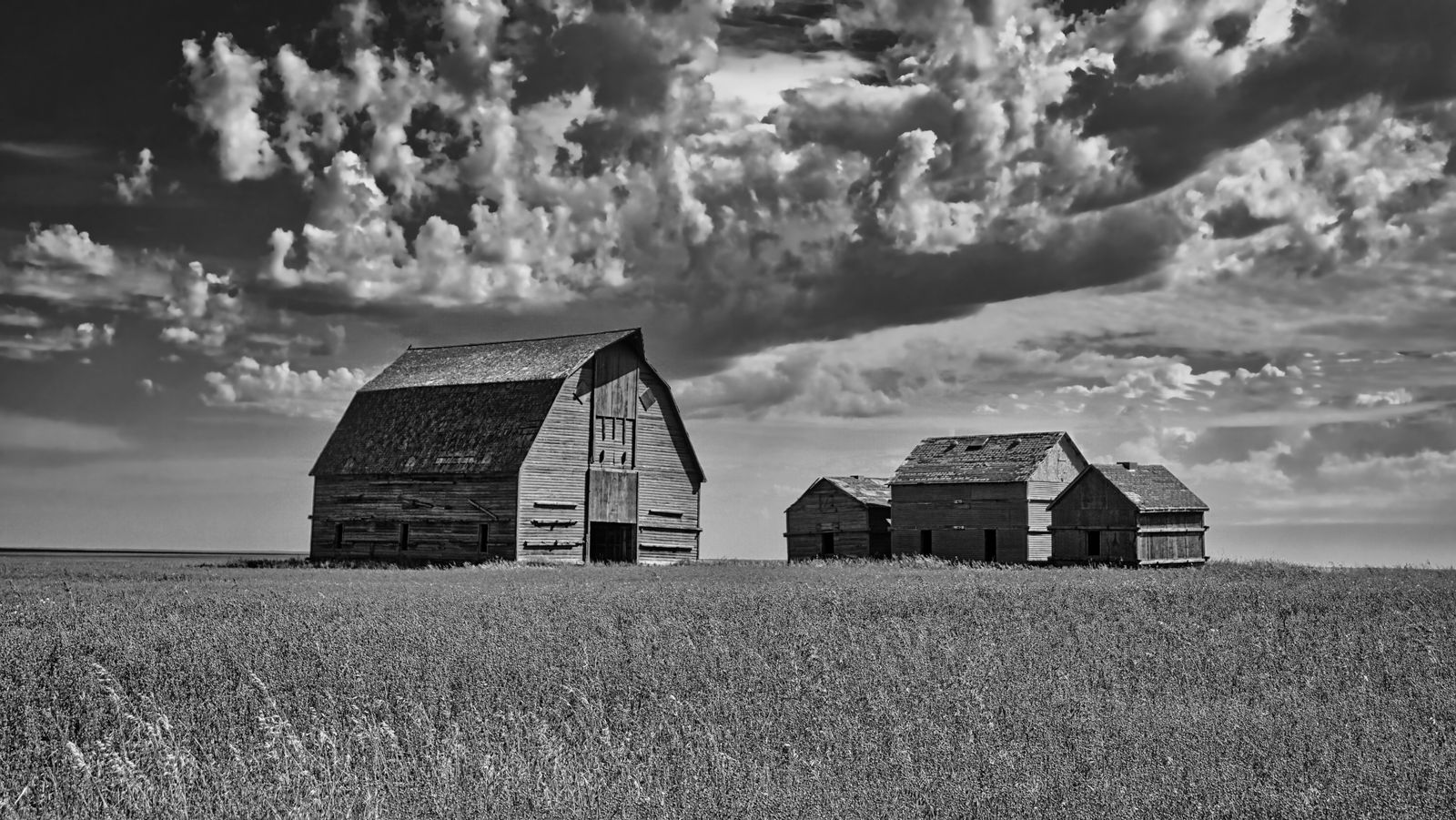
On April 27, 1935, Congress created the Soil Conservation Service — the first federal agency in American history dedicated to keeping dirt where it belonged. Within eight years, its agents had paid farmers across the Great Plains to terrace millions of acres, plough along the curve of the land instead of straight down the slope, and plant a wall of roughly 220 million trees stretching from Canada to Texas. The black blizzards did not stop overnight. But wind erosion on treated land had dropped substantially by the late 1930s, and the phrase “dust bowl refugee” began sliding from newspaper headlines into the past tense.
The agency was Hugh Hammond Bennett’s. The tree programme was Franklin Roosevelt’s. And the mechanism was startlingly simple: the federal government wrote cheques to farmers who agreed to farm differently, and paid the Civilian Conservation Corps to dig the holes for the trees. What followed became one of the most consequential landscape interventions of the twentieth century — a Great Plains Shelterbelt that still shades farmhouses in Nebraska today.
The decade that buried the fences
To understand why the payments worked, you have to picture what came before. Between 1930 and 1936, much of the United States was in drought. In May 1934, a single storm lifted hundreds of millions of tons of topsoil off the Plains and Upper Midwest, darkening skies from Canada to Texas. Dust drifted onto desks inside the White House. Ships in the Atlantic, hundreds of miles offshore, reported grit on their decks.
The storms had a name in local papers: black blizzards. They buried fence lines the way snow does. In Adams County, Wisconsin, highway crews used snowplows to clear sand drifts from roads. In the Oklahoma Panhandle, farm families stuffed wet rags into window frames and still woke up with the outline of their bodies pressed into fine grey dust on the sheets.
The cause was not drought alone. It was drought plus a specific human choice made two decades earlier. During the wet years of the 1910s and 1920s, farmers had ripped up native prairie grasses across the southern Plains and replaced them with wheat. When the rains stopped, there was nothing left to hold the ground down. The difference between the 1930s and modern droughts is largely a story of land use — the grasses had anchored the soil for millennia, and their removal was the trigger, as summarised in a USA Today review of Dust Bowl science.
Hugh Bennett’s theatrical hearing
The Soil Conservation Service exists because of a piece of political theatre. Bennett, a North Carolina soil scientist, had been arguing for years that erosion was a national emergency. In April 1935, he was testifying before a Senate committee in Washington when a dust cloud from the Plains rolled into the capital and darkened the sky outside the hearing room windows. Bennett gestured at the window. “This, gentlemen,” he reportedly said, “is what I am talking about.” The Soil Conservation Act passed shortly thereafter.
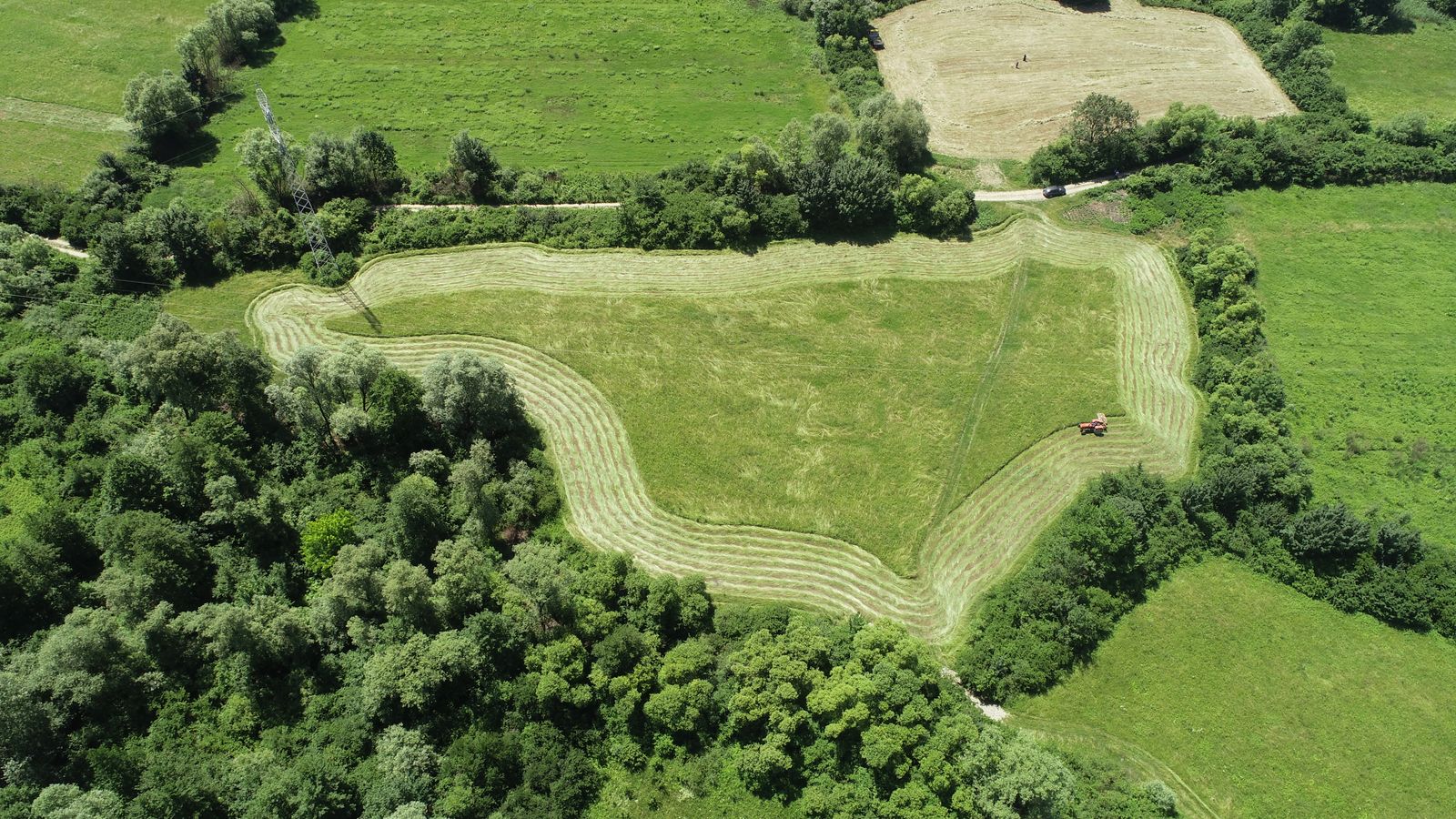
The agency Bennett ran did something the federal government had never done at scale: it paid farmers to change their behaviour on private land. Payments went to those who would terrace hillsides, rotate crops, leave stubble on fields, plant cover crops, and — most visibly — plough along the contours of a slope instead of straight up and down it. Contour ploughing works because water runs downhill, and a furrow cut across the slope becomes a small dam. Straight furrows become gutters.
The great wall of trees
The trees were a separate programme, and stranger. In July 1934, Roosevelt signed an executive order creating the Prairie States Forestry Project, a plan to plant a belt of trees running across the Great Plains. Foresters had known for decades that a row of trees at right angles to the prevailing wind can slow ground-level airflow for a distance of about twenty times the tree height on the downwind side — a tall cottonwood shelters hundreds of feet of field behind it.
Between 1935 and 1942, crews planted approximately 220 million trees across thousands of miles of shelterbelt on more than 30,000 farms in six states. The species were chosen for what would actually survive on the Plains: green ash, American elm, hackberry, bur oak, honey locust, eastern red cedar, cottonwood, Osage orange. Rows were typically ten trees deep. Farmers received the seedlings free and were paid a small fee to prepare the ground and maintain the plantings.
The programme was mocked at first. Congress refused to fund it directly, so Roosevelt paid for it out of drought relief and emergency conservation appropriations. Newspapers called it a boondoggle. But by 1938, aerial surveys showed measurable reductions in wind erosion on fields shielded by mature shelterbelts, and dust storm frequency on the southern Plains had begun to fall.
What the money actually bought
The Wisconsin experience gives a sense of the numbers on the ground, as detailed in a Wisconsin State Farmer account of the state’s own 1934 dust storm. Adams County alone saw more than three-quarters of its farmers enroll in federal drought-relief programmes. Wisconsin received roughly $10 million in federal drought relief between 1934 and 1936 — real money in a Depression-era decade. The county agricultural agent, who had been giving the same soil-conservation advice for years to indifferent audiences, suddenly became the man who signed the cheques, and the advice suddenly got taken.
Farmers spread marl to reduce soil acidity. They planted alfalfa and clover in rotation with row crops. They left tree strips as windbreaks. The federal seed programme shipped surplus alfalfa, clover, oats, wheat, soybeans, millet and sudan grass into drought-stricken counties, and rare crops like millet became common sights across central Wisconsin. Federal investigators had identified the Plainfield Sand region as one of the most severely wind-eroded landscapes east of the Mississippi. Within a decade, most of it was stabilised.
The Wisconsin Resettlement Administration went further, buying out families on the most marginal land and returning those acres to forest and wildlife habitat. Wood County zoned large marshland areas for cranberry production, recognising that wet peat soils suited cranberries far better than corn. Wisconsin is now the largest cranberry-producing state in the country — a direct descendant of that Depression-era zoning decision.
The physics of a windbreak
A shelterbelt does not stop wind. It disorganises it. When a steady 40-mph gust hits a row of trees, most of the air is forced up and over, but a fraction filters through the branches and re-enters the downwind side as turbulence rather than laminar flow. Turbulent air lifts less soil. Ground-level wind speeds on the leeward side of a well-designed belt typically drop substantially for a distance of about ten tree heights, and remain reduced out to twenty.
The trees do other work too. Their roots hold soil against water erosion in the spring melt. Their leaf litter builds organic matter. They shade livestock, reduce evaporation from adjacent fields by cutting wind desiccation, and provide habitat for the insect predators — wasps, ground beetles, songbirds — that keep crop pests in check. Fields protected by shelterbelts have been shown to produce yields higher than unprotected fields nearby, even accounting for the acreage lost to the trees themselves.
What survived, what didn’t
Not all of the Great Wall of Trees is still standing. A 2013 NPR assessment found many shelterbelts dying from drought and old age as farmers weighed the trees against a few more acres of cropland. A closer investigation by the Food and Environment Reporting Network traced the losses further: Dutch elm disease took out the American elms, and modern centre-pivot irrigation rigs — which rotate in a circle and cannot turn corners around a planted row — have forced farmers to clear at least part of any shelterbelt standing in their path. Some belts had been bulldozed to squeeze in a few more acres of corn when commodity prices rose. Others simply reached the end of their species’ natural lifespan without replanting.
Still, the underlying practices Bennett’s agency established never went away. The Soil Conservation Service was renamed the Natural Resources Conservation Service in 1994 and still administers cost-sharing for terracing, contour farming, cover crops, and buffer strips. The Conservation Reserve Program, created in 1985, pays farmers to retire highly erodible land entirely and plant it back to grass or trees. Roughly 23 million acres are currently enrolled.
The result is that even during the severe drought of 2012 — a genuinely brutal year across the Plains — there was no black blizzard. As University of Richmond geographer Stephanie Spera told Bloomberg Opinion columnist Mark Gongloff in a July 2026 column, the 2012 drought was very, very bad, yet it produced no mini-Dust Bowl. The soil stayed put because ninety years of paid conservation had built a landscape that could take a punch.
The pattern repeats elsewhere
The idea that a state can pay its way out of an ecological disaster by subsidising a landscape defence has become one of the durable exports of the 1935 Soil Conservation Act. Bangladesh planted mangrove belts along the Bay of Bengal after the 1991 cyclone killed roughly 138,000 people — a coastal shelterbelt working on the same principle Roosevelt’s foresters applied in Oklahoma. Iceland has spent decades clawing birch woodland back onto slopes of black volcanic ash using state-funded planting crews. The mechanism is the same one Bennett described in 1935: the land will heal if you give it the trees and pay someone to put them in the ground.
Why the black blizzards may return anyway
The reason all of this matters again is that the ingredients are back. Nebraska, Oklahoma, Colorado and Wyoming have each gone from essentially no extreme drought in mid-2025 to at least 30 percent of their area in extreme drought by mid-2026, according to U.S. Drought Monitor data cited by USA Today. AccuWeather founder Joel Myers has warned of a possible “mini-Dust Bowl” scenario if a developing super El Niño extends dryness across the northern Plains for two to three more years.
The soil is better anchored than it was in 1934. But it is not invulnerable. A study reported by WBUR found a megadrought across the western United States that is now the worst in roughly twelve centuries, with human-caused warming responsible for much of that severity. Dry hot soil absorbs less heat, which warms the air, which speeds evaporation, which dries the soil further — the same feedback loop that gave the 1930s its freakish temperature records, many of which still stand.
Historical images collected by All That’s Interesting show what the endpoint looked like the first time: dead livestock lying beside dry stock tanks, children in gas masks walking to school, farmhouses buried to the eaves. The Business Insider account of why the Dust Bowl hit so hard puts the human cost at roughly 2.5 million people displaced from the Plains between 1930 and 1940 — one of the largest internal migrations in American history.
What the trees are still doing
Drive west out of Lincoln, Nebraska, today and the shelterbelts are still there, ninety-one years after the first seedlings went in. Some rows are ragged, missing teeth where an elm died or a farmer took a chainsaw to widen a field. Others are dense and healthy, second-generation cedars and hackberries growing up beneath the older cottonwoods. In a stiff October wind, you can stand on the leeward side of one and feel the air go quiet — the same trick of physics that Roosevelt’s foresters were betting on in 1934, working exactly as advertised, on land that once buried its own fences under the sky.