Iceland is among the least forested countries in Europe, with woodland covering roughly 2% of its surface. A thousand years ago, when Norse settlers first pulled their longships onto black sand beaches, that figure was somewhere between 25% and 40%, depending on which pollen core you trust. The birch went first, cut for charcoal, cleared for sheep pasture, and burned for winter fuel. What replaced it was wind, ash, and erosion — some of the fastest topsoil loss anywhere in the North Atlantic. The clawing back is happening now, mostly through downy birch and Sitka spruce planted by a state forestry apparatus that traces to the forestry and soil conservation act of 1907.
The mechanism is a mix of hardy nursery stock, volcanic soil chemistry that punishes and rewards in equal measure, and a slow shift from sheep to seedlings on marginal land. After a decade-long lull following the 2008 financial crash, planting climbed back to around six million seedlings in 2022 and has risen since. Forest cover stood well below 1% in the 1950s and has now reached about 2%. Since 1 January 2024 the work sits with a single agency, Land og skógur — Land and Forest Iceland — formed by merging the Icelandic Forest Service with the Soil Conservation Service, two bodies that had run separately for 110 years.
What the settlers found, and what they left
The 12th-century Íslendingabók, written by the priest Ari Þorgilsson, contains the most quoted line in Icelandic environmental history: at the time of settlement, the country was viði vaxit á milli fjalls ok fjöru — wooded from mountain to shore. Pollen records from lake sediments across the south and west back the general claim, if not the poetry. Downy birch (Betula pubescens) dominated, with willow, rowan, and aspen mixed in. Trees rarely grew tall — the growing season is short and the wind relentless — but they held the soil.
Within a few centuries of the Norse arrival around 874 CE, most of that woodland was gone. Axes did the first work. Sheep, browsing every new birch shoot before it could get above ankle height, did the rest, and they kept doing it for a thousand years. In Þjórsárdalur, a single valley in the south, researchers reconstructed the losses from written archives and mapping and found that 94% of the birch woodland disappeared between 1587 and 1938 — and that was already the tail end of the process. Without root systems to anchor the tephra, the layered volcanic ash that makes up much of Iceland’s soil profile, wind and meltwater began stripping topsoil down to bedrock. Estimates of how much post-settlement soil has simply blown into the sea run to roughly half the country’s total.
Andosols: the soil that both feeds and betrays
The reason Icelandic forests grew in the first place, and the reason their loss was so catastrophic, comes down to a specific class of soil. Volcanic ash soils, or Andosols, are unlike almost anything else in the temperate world: low-density, porous, and rich in amorphous aluminium and iron phases — allophane and ferrihydrite, minerals with surface areas so large they hold water and nutrients like a sponge.
Fresh basaltic ash weathers fast. Within decades of falling, it can start hosting lichens, mosses, and the first vascular plants. Given centuries, it develops organic horizons deep enough to carry woodland.
But the same porosity that makes Andosols productive also makes them fragile. Strip the plant cover, and a single winter storm can lift centimetres of ash into the air. Research from Scripps Institution of Oceanography, in collaboration with the University of Greifswald, found that adding roughly three percent basaltic volcanic ash to forest soil in a greenhouse experiment tripled plant productivity, not by acting as a mineral fertiliser but by reorganising the soil microbiome — boosting growth-promoting bacteria and fungi while suppressing parasitic nematodes. The fertility is real. So is the vulnerability when the anchoring vegetation goes.
A century of trying, and mostly failing
Iceland’s own parliament, the Althingi, passed the forestry and soil conservation act in 1907, and the Icelandic Forest Service was up and running the following year. Early attempts were small and often disastrous. Norway spruce could not take the strong, cold winds and survived only on the most sheltered sites. Scots pine was abandoned outright after the woolly aphid Pineus pini tore through the plantations in 1962, and Sitka spruce nearly went the same way when a mild winter followed by a hard spring frost in 1963 killed almost everything planted. The soil was there, more or less. The species, and the seed sources, were wrong.
By the 1980s, foresters had settled on a shortlist that could actually survive Icelandic conditions: native downy birch for the harshest sites, Sitka spruce and lodgepole pine from coastal Alaska and British Columbia for slightly sheltered ground, and Siberian larch from the Arkhangelsk region for the interior. All of them evolved in places with similar day length, wind exposure, and short summers. The genetic match matters more than the species name. A Sitka spruce from Oregon will not survive its second Icelandic winter. One from Kodiak Island will stand for centuries.
Hekla, Hallormsstaður, and the slow return
The largest forest in Iceland today is Hallormsstaðaskógur, in the east, covering about 740 hectares. The birchwood remnants at Hallormsstaður farm were protected in 1905, making it the country’s first national forest — one of the last patches of native birch that had somehow survived the sheep — and it has been steadily expanded with larch, spruce, and pine. Walking through it now, the canopy reaches 20 metres in places. That is roughly the height of a six-storey building, and by Icelandic standards, it is a cathedral.
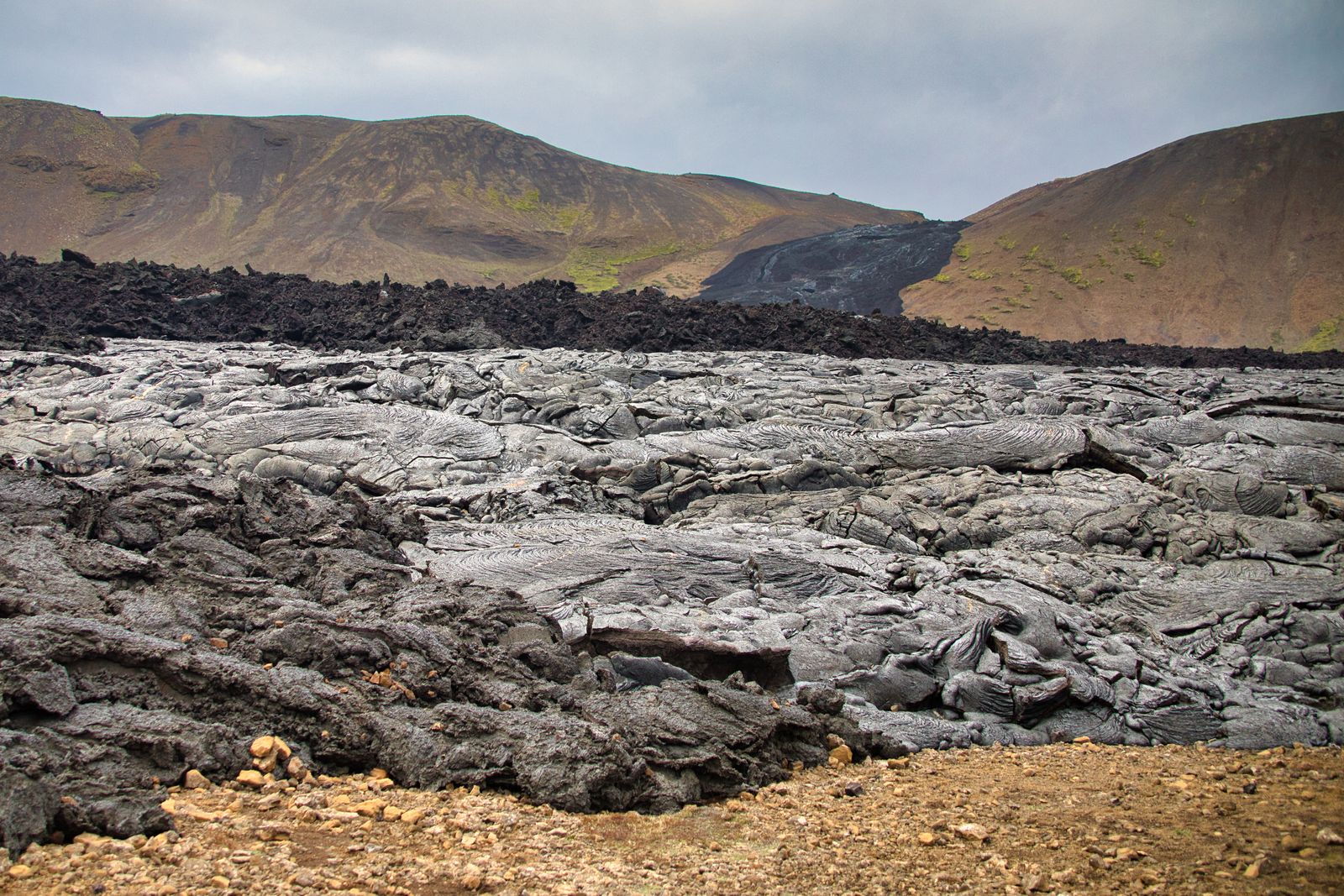
Elsewhere, the work is harder to see. Around the volcano Hekla, which last erupted in 2000, crews have been planting birch and willow into raw tephra fields since 2005. The programme, Hekluskógar, covers roughly 90,000 hectares — about 1% of Iceland — most of which carried birch woodland at the time of settlement. Seedlings go into ground that looks, at first glance, like the surface of a burnt-out fireplace. Within five years, the survivors are knee-high. Within twenty, they start producing their own seed.
The logic is not simply that trees are good. Before settlement, ash and pumice from Hekla’s eruptions settled onto the forest floor and stayed there. Strip the woodland and the same ash gets picked up and redistributed by wind, scouring whatever vegetation is left. Restoring the birch restores the trap. The project, based on research by the forester Úlfur Óskarsson, runs in three stages: stop the sand drift, plant birch and willow in clusters, then let the woodland spread itself over decades. Planting the whole 90,000 hectares was never the plan. Planting enough islands to seed the rest was.
Sheep, subsidies, and the real bottleneck
The single largest constraint on Icelandic reforestation has never been climate or soil. It has been sheep. The flock peaked in 1977 at 896,000 winter-fed animals against a human population of 222,658 — four sheep per person, most of them free-ranging across the highlands every summer. A birch seedling has essentially no chance against that kind of pressure. It is why almost every planted stand in Iceland still has to be fenced.
Numbers have since collapsed. The winter count fell to 400,724 in 2020, the lowest since a scab epidemic in 1861, and has kept sliding since — partly because lamb export markets contracted and domestic consumption shifted to poultry and pork, partly because the government began paying farmers to convert marginal grazing land to forestry. Farms enrolled in the regional afforestation programmes receive planting stock, technical support, and per-hectare payments spread across decades.
Some of the country’s most successful new woodlands are on former sheep farms in the Westfjords and the east. What is happening at national scale is a slow experiment in what a landscape does when a single pressure is lifted, rather than when something is added to it. The trees that come back fastest are usually the ones nobody planted: birch seeding itself out from a fenced remnant into ground that has finally stopped being eaten.
What the ash remembers
Reforestation in Iceland runs on a longer clock than most tree-planting programmes. A downy birch planted in 2026 will not reach its full eight-to-twelve-metre height until well past 2080. A Sitka spruce might not be considered mature until the next century. Forestry planners here talk in rotation periods of 80 to 120 years — timeframes that outlast most political careers and every quarterly report.
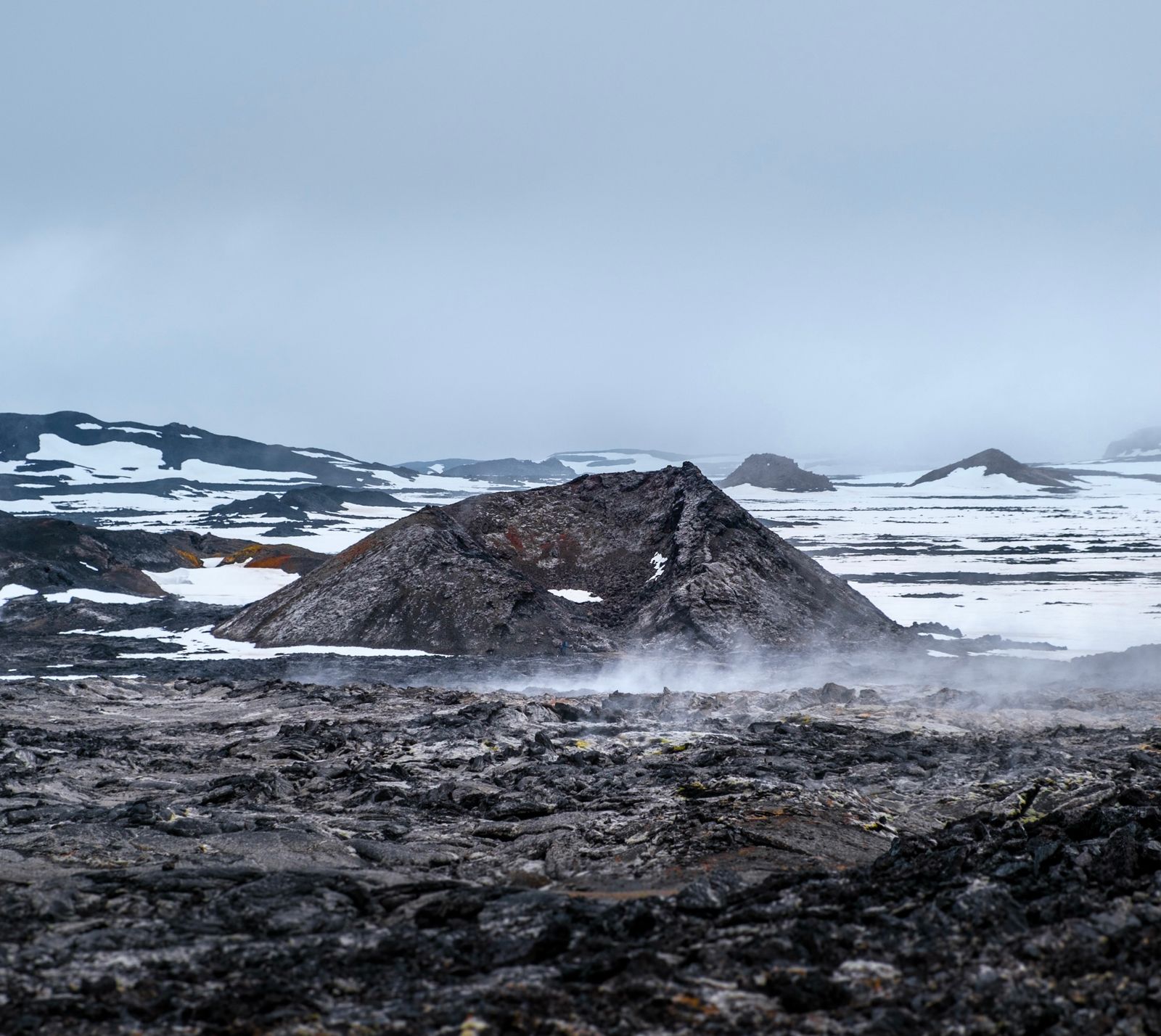
The geology does not wait for them. Iceland averages an eruption every few years, and the Reykjanes peninsula alone has erupted repeatedly since 2021. Each event lays fresh basalt across some part of the island. Each layer adds mineral nutrients to the soil column. Each layer also, in principle, buries whatever seedlings were already there.
Trees planted around Reykjavík in the 1950s are now old enough to throw seed onto lava that was liquid rock in 2021. Almost none of it will take. Bare basalt has to go through mosses and lichens first, and that takes decades before birch has anything to root into. The seed arriving now is a deposit against a much later date.
The headline numbers, meanwhile, hide as much as they show. Woodland cover sits at around 2%, up from well under 1% in the 1950s, and the national forestry strategy’s stated goal is 12% forest cover by 2100. Hitting that would mean sustaining planting rates far above anything achieved so far, across three human generations, on land that has to be fenced first.
The country has committed to it in fits and starts. A carbon offset market has emerged around Icelandic afforestation, with companies buying credits tied to specific plantations. Some of the ecology is genuinely restorative. Some of it is monoculture Sitka spruce planted for accounting reasons on ground that would host richer native birch given more patience, and the argument over native versus productive species is the loudest one in Icelandic forestry.
Sediment cores and tephra layers keep sharpening the picture of what the pre-Norse landscape actually looked like, and the picture is more uneven than the sagas suggest — exposed coasts and high ground were probably always open. The forest being rebuilt now is not, and cannot be, the same one. The climate has shifted, warm enough that the workable elevation for forestry has risen roughly a hundred metres since the 1980s. The species mix is different. The sheep are still there, in smaller numbers.
If you stand on a hillside above Hvalfjörður, north of Reykjavík, and look south, you can see two kinds of ground. The lower slopes are green with planted spruce and larch, some of them now 15 metres tall, planted in the 1960s. Above them, the ground turns grey — bare tephra, scoured by wind, with occasional tufts of moss campion clinging on. The line between them is roughly the tree line, roughly the sheep-grazing line, roughly the line where a century of forestry has and has not reached.
A downy birch seed weighs a fraction of a milligram; a thousand of them together come to about a fifth of a gram. It travels on wind. In a good year, a mature tree at Hallormsstaður will release them in the millions. Most land on rock, or ash, or the wrong side of a sheep fence. A few land on ground that has just enough moss, just enough shelter, just enough of last year’s leaf litter, to hold moisture through a summer. Those seedlings become the next forest. Slowly, at the speed of birch, on soil that remembers every eruption for the last thousand years.