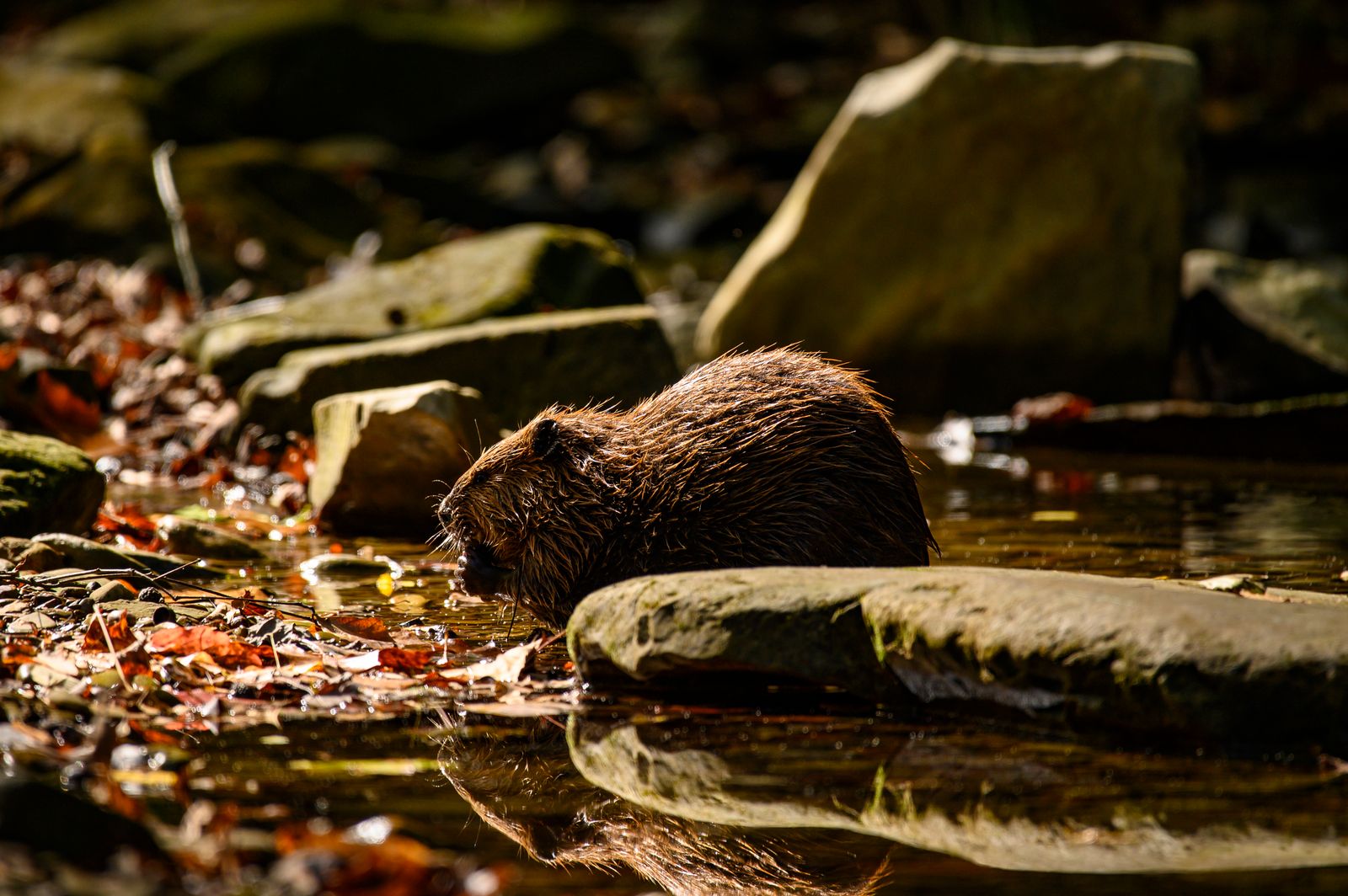
The rodent is the beaver, and the answer begins with a wall that leaks. Beaver dams lift the stream surface, push water sideways into floodplain gravel and soil, and hold sediment and wood where carbon can accumulate. In a Washington relocation study, successful releases raised water tables by as much as 0.33 metres, stored about 2.4 times more groundwater than surface water, and lowered downstream summer temperatures by an average of 2.3°C. In a separate Swiss carbon study, beaver-wetland sediments contained 1.5 to 8.1 times as much organic carbon as adjacent forest soils or the floodplain sediment that preceded the beavers.
No single valley has supplied every number in that answer. The water-storage and cooling measurements come from western North America, while the most complete carbon budget comes from an 800-metre stream corridor in northern Switzerland. What joins them is not a metaphor but the same piece of plumbing: a dam raises hydraulic pressure, lengthens the route water takes through the valley, and turns a fast channel into a wet mosaic of ponds, side channels, saturated soil and buried material.
The beaver does not set out to recharge an aquifer or build a carbon sink. It needs deep water around its lodge and a safe route to food. The larger transformation follows from that private requirement.
A leaky wall changes the valley’s plumbing
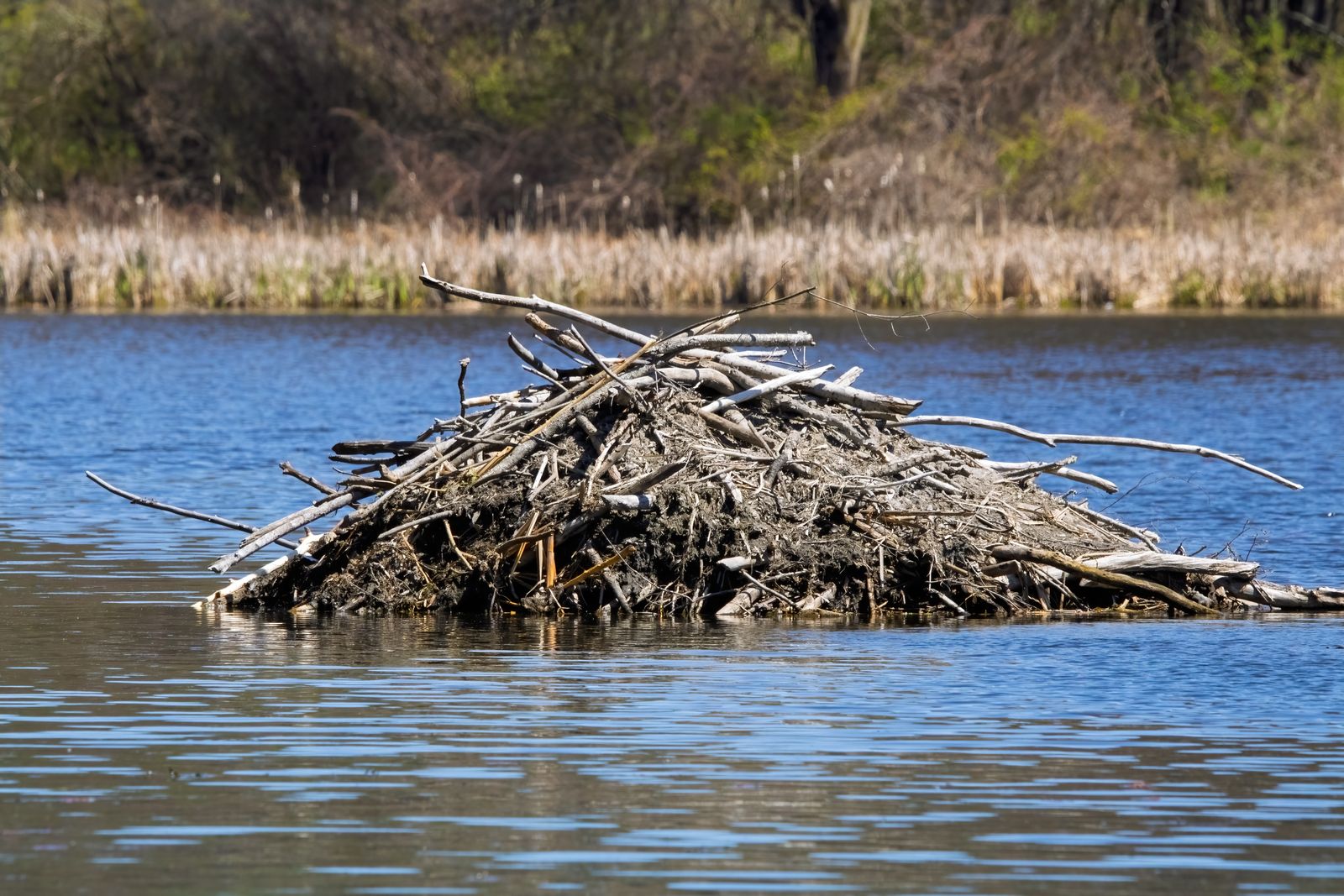
A beaver dam is neither watertight nor permanent. Branches interrupt the current, leaves and mud close some of the gaps, and water escapes through the structure, around its ends and into the ground beneath it. The pond is the visible part of a much larger change in pressure.
That matters most in an incised stream, where years of straightening, grazing, drainage or erosion have cut the channel below its former floodplain. Rain and snowmelt then run along the trench without reaching the soil on either side. The stream may still contain water, but the valley above it dries because plant roots can no longer reach the lowered water table.
At Bridge Creek in north-central Oregon, researchers tested whether simple post-and-willow structures could give beavers a foothold in such a channel. The watershed-scale experiment began with 76 beaver dam analogues across 3.4 kilometres of stream in 2009. By 2012, 121 analogues were functioning, and by 2013 beavers had built 115 natural dams. Inundated area in the treatment reaches had expanded by 228%, while the area occupied by side channels had increased by 1,216%.
The dam does not have to last for decades to alter subsurface flow. On Colorado’s East River, a dam that appeared during the historic low-water summer of 2018 remained for only 68 days. Yet measurements across the adjoining floodplain found that the hydraulic gradient created by the dam was 10.7 to 13.3 times greater than the gradients produced by seasonal hydrological extremes.
There is a family resemblance here to the terraces and restored vegetation of China’s Loess Plateau. Both interventions take energy out of moving water and give sediment somewhere to stop. The difference is that a beaver keeps revising its structure after every high flow.
Why the water table rises
Once the upstream water surface rises, the difference in pressure between the pond and the surrounding floodplain grows. Water begins moving laterally through permeable sediment, following old channels, root paths and gravel lenses that may lie well beyond the pond’s edge. Some remains underground for days or months before returning to the stream farther downstream.
The Washington experiment followed 69 relocated beavers placed in 13 headwater reaches of the Skykomish River watershed. During the first year after successful relocation, their dams created 243 cubic metres of surface-water storage per 100 metres of stream. The larger reservoir was hidden below ground, where the researchers estimated roughly 2.4 times as much new storage as they could see on the surface.
The same basic effect appears in a wetter climate. In 2024, the University of Exeter reported that beaver wetlands across four family territories in Devon held more than 24 million litres of water, an average of 6 million litres per site. The monitored dams reduced storm flows by an average of 30%, while their slow release of stored water helped sustain local flows and wet habitat during the 2022 drought.
A beaver dam does not manufacture water. It changes when and where existing water travels, which can temporarily reduce flow for downstream users while a pond fills and can increase evaporation from a broader wet surface. Valley slope, soil permeability, channel shape and the condition of an old pond complex determine whether a release produces a large reservoir, a modest patch of wet ground or no lasting dam at all.
When the stream cools, and when it does not
A shallow pond exposed to the sun can warm quickly. That is why the cooling claim sounds wrong at first, and why it must be stated carefully. Beavers do not guarantee a colder stream; they rearrange the places where heat is absorbed, stored and released.
At Bridge Creek, maximum temperatures were on average 1.47°C lower in reaches that gained beaver dams than in a reference reach without them. Water moving through dammed reaches either cooled or held its temperature, while undammed reaches warmed. The ponds also produced a patchwork of warm and cold water rather than one uniform temperature.
The likely mechanism is a loop through the bed and banks. Higher water pressure above a dam drives some pond water downward, which can displace cooler groundwater and bring it back to the surface through seeps downstream. Deeper pools provide cool layers and shade can limit solar heating, while slower flow reduces the sharp day-and-night temperature swings of an exposed channel.
That sequence worked strongly in the Washington relocation study, where downstream reaches cooled by an average of 2.3°C during summer base flow. It is not universal. A 2026 study of 24 beaver-pond sites across 17 streams in Washington found that ponds often increased downstream temperatures, although pond bottoms still offered cooler water during the hottest part of the afternoon.
For fish, that variety can matter as much as the average. In Bridge Creek, juvenile steelhead survival increased by 52% and production by 175% relative to the control watershed after natural and simulated dams expanded the available habitat. Tagged adult steelhead still moved upstream, with several passing more than 200 dams and analogues during migration.
Where the carbon goes
The carbon story begins with material that no longer washes away. A dam traps fine sediment, leaves, twigs and pieces of wood. Flooded trees become deadwood, wetland plants replace parts of the former canopy, and low-oxygen mud slows the decomposition of some organic matter.
The Swiss study assembled a full annual carbon budget for a 3.6-hectare beaver wetland that formed in 2010. Across the monitored 800-metre reach, the researchers calculated a net sink of 98.3 plus or minus 34.4 tonnes of carbon in one year. The study inventoried about 1,106 tonnes of carbon in sediment, green biomass and deadwood, with deadwood accounting for roughly 45% of that stored total.
The comparison with forest needs precision. Organic carbon content in the wetland sediment was 1.5 to 8.1 times higher than in adjacent forest soil or pre-beaver floodplain sediment, and the study’s upper long-term estimate was 10.1 tonnes of carbon per hectare per year while the wetland remained active. When the authors extrapolated that burial rate across Swiss floodplains considered suitable for beavers, an area equal to 2.4% to 3.6% of the country’s forest area could contribute an estimated 5% to 8% of its national forest carbon sink.
Those numbers do not mean every beaver pond stores more total carbon than a mature forest. The Swiss wetland became a seasonal carbon source during summer water recession, the long-term fate of carbon entering groundwater remains uncertain, and dam failure can move buried sediment downstream. The measured result is narrower and more useful: under the conditions at this site, beaver-driven hydrology greatly increased carbon retention per unit area compared with the forested stream corridor that came before it.
The engineer does not stay on the plan
Moving beavers is not the same as placing a machine. The California Department of Fish and Wildlife’s July 2026 status report records 42 beavers translocated through the end of 2025. Dam building occurred at five of eight release sites, but exploratory movement or dispersal occurred at seven. During the first four weeks after release, the average exploratory movement was 2.5 kilometres.
The differences between valleys were stark. At Tásmam Koyóm, aerial imagery showed surface water increasing by 30.5% between November 2023 and November 2025 after beavers established dams and linked ponds. On the Tule River Reservation, 18 beavers were released across three sites in 2024 and 2025, yet none built dams at the original release sites before dispersing. Crews are now improving possible sites with dam analogues and willow planting before attempting more releases.
The California report places post-release survival across the programme at an estimated 50% to 60%, although revised procedures produced 79% initial survival for animals moved in 2025. Predation, illness and tularemia all caused confirmed deaths. The state is learning that the valley must already offer enough deep water, food and escape cover for the engineer to survive long enough to begin engineering.
The public works are not free merely because the builder has orange teeth. At one Wisconsin project, Wisconsin Watch reported that the landowner spent more than a year and $20,000 obtaining permission for a series of dam analogues. Real beavers can also flood roads, culverts and productive fields, leaving costs with the people immediately upstream while water and flood benefits travel downstream.
That conflict is now part of the management system rather than an argument that can be wished away. England added the Eurasian beaver to its list of protected species when the Beavers (England) Order 2022 took effect on 1 October 2022. Protection did not remove the need for flow devices, tree guards, compensation and, in some places, licensed intervention.
The bargain resembles other landscape projects that make room for living infrastructure. SpaceMart has followed the same negotiation where Bangladesh planted salt-tolerant coastal forest to absorb part of a cyclone’s force. In both cases, the protective system spreads across land that still has owners, crops, roads and other purposes.
By April 2026, California had received 26 beaver-restoration proposals across 18 counties. Some valleys will gain ponds; some animals will leave; some dams will break and be rebuilt downstream. Where the geometry works, the first visible sign will be a dark line of water pressed against woven branches. The slower change will happen underfoot, as the valley floor stays wet later into summer and the stream begins finding routes it lost generations ago.