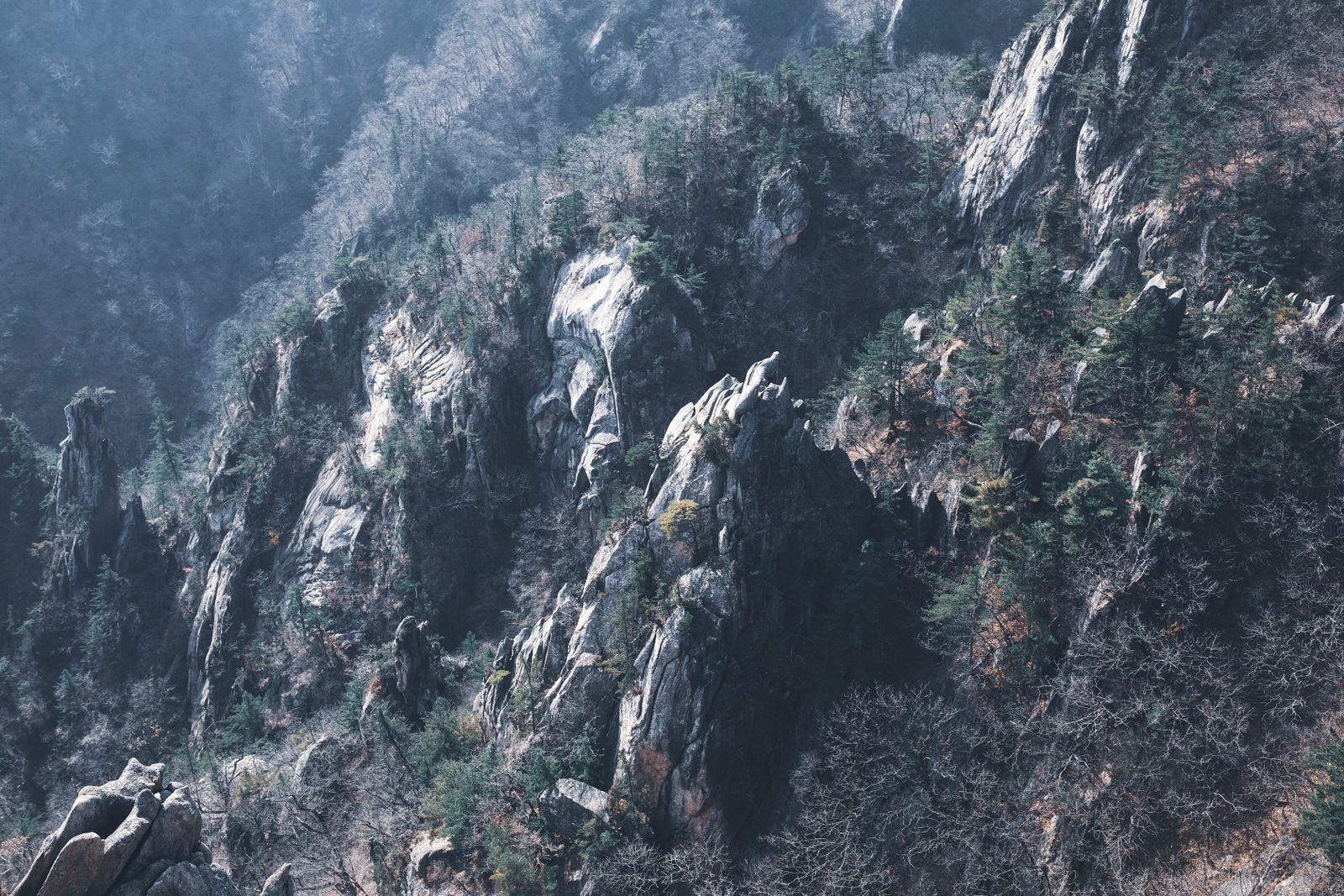
South Korea answered the crisis with a state-led programme that did far more than plant seedlings. After the Korean War, its forests held only about 6 cubic metres of growing stock, meaning standing wood, per hectare; by the 2020 national inventory, that figure had reached 165.2 cubic metres. The decisive turn was the First Ten-Year Forest Rehabilitation Plan, launched in 1973, which combined mass planting, erosion control, local enforcement, village participation and a gradual shift away from firewood.
The result is visible in the national map. South Korea now has about 6.3 million hectares of forest, covering roughly 63 percent of its land, according to the Korea Forest Service. That makes it one of the more heavily forested countries in the OECD, even though most of the trees standing there are younger than the people who directed the recovery.
Forest area, however, is only part of the answer. Much of the country was still classified as forest land in the 1950s even when the slopes carried little usable timber and could no longer hold soil or water. The more revealing measure is growing stock, which tracks how much wood is actually standing on each hectare and shows how thin, degraded woodland became a dense national forest.
What 6 cubic metres per hectare looked like
The collapse began before the republic existed. Logging intensified during Japanese colonial rule from 1910 to 1945, while war, displacement and the division of the peninsula placed further pressure on forests. By 1952, a recent reconstruction of South Korea’s forest history estimated average growing stock at just 5.6 cubic metres per hectare, a level associated with severely depleted woodland rather than intact forest.
The Korean War added direct damage, but poverty kept the crisis going after the fighting stopped. Rural and urban households still needed wood for cooking and winter heat, while illegal cutting and shifting cultivation continued on already fragile slopes. A Convention on Biological Diversity case study identifies fuelwood collection, illegal logging and cultivation as the immediate drivers, with war, weak institutions and rural poverty underneath them.
Monsoon rain turned forest loss into a national infrastructure problem. Water ran quickly off bare hills, carrying sediment into fields, reservoirs and settlements. The government therefore came to treat reforestation not as scenery or conservation alone, but as flood control, soil protection, fuel policy and rural development.
Earlier planting campaigns struggled because the surrounding system had not changed. A seedling placed on a hillside could not become a forest while households still depended on the same slope for fuel and while no local organisation was responsible for protecting the young trees. South Korea’s eventual success came from changing those conditions at the same time.
The plan that turned forestry into state administration
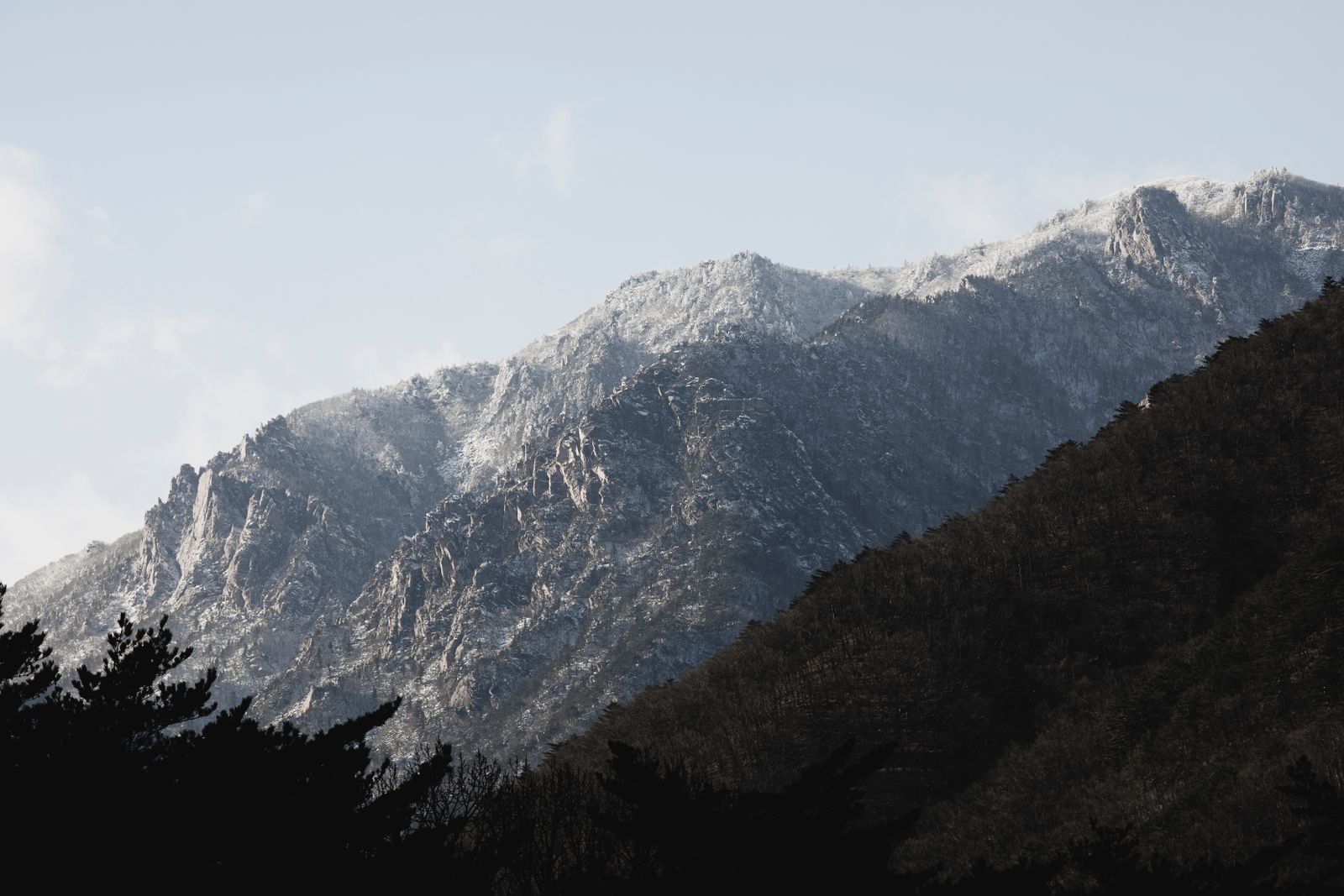
President Park Chung-hee’s government had already passed a new Forest Law in 1961 and created the Korea Forest Service in 1967. The 1973 plan raised the effort to a different scale, with fixed planting and erosion-control targets, national reporting and direct coordination through provincial and village administrations.
That same year, the Forest Service was moved under the Ministry of Home Affairs. The transfer gave forestry officials access to the administrative machinery that reached into every province, county and village. A 2026 peer-reviewed reconstruction describes this institutional shift as central to coordinating local government, police, residents and forestry officers.
The first plan aimed to restore 1 million hectares, plant about 2.1 billion seedlings, stabilise tens of thousands of hectares of eroding land and tend millions more. Those numbers mattered because the programme was not simply a ceremonial planting drive. It included nurseries, species selection, site preparation, follow-up care and controls on cutting.
Fast-growing species such as black locust, pitch pine and poplar were used where rapid cover, fuel supply or erosion control was the priority. Other sites were planted for longer-term timber production. The choices produced quick gains, although some of the single-species stands created ecological problems that later managers would have to address.
By 1978, the first plan had planted about 1.08 million hectares with more than 3 billion seedlings, exceeding its principal targets and finishing four years ahead of schedule. A second national plan followed, shifting more attention toward commercial forests, tending and the quality of what had already been planted.
The fuel switch and village machinery
The programme worked because it treated protection as seriously as planting. Village forestry associations, often called forest kyes, helped raise seedlings, organise labour, patrol hillsides and distribute benefits. Some communities also participated in profit-sharing arrangements that gave residents a material interest in keeping the trees alive.
The New Village Movement, or Saemaul Undong, connected forestry to a much larger rural modernisation campaign. Village nurseries and planting work became part of a national mobilisation that combined public funds, local labour and close administrative supervision. It was effective, but it was also unmistakably top-down, reflecting the authoritarian politics of the period.
Household energy use changed alongside the planting. Coal briquettes increasingly replaced wood in cities and later in rural areas, reducing pressure on nearby hills. Research on South Korea’s forest transition cautions that the switch did not produce an instant fall in national firewood use, because population and energy demand were still growing, but it gradually removed one of the main reasons new trees were being cut.
Law enforcement supplied the other half of the bargain. Restrictions on illegal logging became more credible once forest officers could work through local government and police networks. Planting, alternative fuel, village organisation and enforcement reinforced one another, which is why the 1970s campaign held where earlier efforts had faded.
Why the numbers held
The clearest long-term signal is the rise in growing stock. Official inventories put it at about 10 cubic metres per hectare in 1960, 22 in 1980, 60 in 2000 and more than 125 by 2010. By 2020, it had reached 165.2 cubic metres per hectare, more than 29 times the estimated 1952 level.
An FAO review of the Korean experience reported that roughly 12 billion trees had been planted across 4.25 million hectares between 1945 and the late 1990s. Those cumulative totals include several programmes and repeated planting, so they should not be confused with the area of forest standing today. They do show the extraordinary scale of the national effort.
The distinction between forest area and forest condition also explains why saying the country went from almost no forest to 63 percent forest is too simple. South Korea retained large areas legally or statistically designated as forest even when they were thinly stocked. What changed most dramatically was the density, age and protective function of the vegetation on that land.
Modern satellites can now track those changes in ways the planners of 1973 could not. Space Mart has previously covered how the SMOS mission revealed 15 years of forest carbon trends, but South Korea’s older ground inventories remain unusually valuable because they show the recovery decade by decade.
What the success story leaves out
Rapid restoration came with ecological compromises. Large areas were planted with a narrow range of fast-growing conifers, leaving some stands vulnerable to disease, insects and fire. The next stage is therefore less about putting any tree on an empty slope and more about building mixed, structurally varied forests that can survive a warmer and more volatile climate.
The danger became visible during the March 2022 wildfire in Uljin on the east coast. The Korea Forest Service later announced a multi-year project to restore more than 1,000 hectares of damaged protected forest and monitor the recovery for a decade. Its restoration plan reflects the shift from maximising tree numbers to rebuilding resilience.
Age creates another problem. The plantation generation is reaching maturity, so growth and carbon uptake will not continue rising at the same rate forever. That makes species composition, selective harvesting and regeneration increasingly important, the same kinds of differences that modern researchers try to capture when mapping the functional diversity of forests from space.
The fuel transition also carried costs outside the forest. Coal briquettes reduced demand for firewood, but they replaced one environmental pressure with fossil-fuel pollution and a serious household carbon-monoxide hazard. A nationwide historical analysis found that poisoning from coal-briquette combustion became a major public-health problem as the fuel spread through Korean homes. South Korea’s recovery was therefore not a cost-free ecological conversion; it was a political decision to move the burden of an energy shortage away from denuded hillsides.
What stands there now
Many forests around Seoul and across the country’s mountain spine are now between 40 and 70 years old. They are not restored old-growth, and their species mix does not perfectly reproduce the forests that colonial logging and war removed. Yet their roots hold soil, their canopies slow rain and their accumulated wood records a transformation that is measurable rather than merely photographic.
In 2025, UNESCO added the Korea Reforestation Archives to the Memory of the World Register, recognising records that document the public and private machinery behind the recovery. The archive matters because the achievement was not one policy or one president, but decades of plans, village records, nursery work, enforcement and repeated planting.
South Korea’s forests now sit inside a larger question about what kind of ecosystems nations rebuild. A hectare of temperate plantation does not store carbon or support life in the same way as an old forest, a peat swamp or the coastal systems examined in Space Mart’s explainer on mangroves and carbon storage. The Korean achievement is still remarkable because the hills that once shed soil into fields now carry a living canopy, and the challenge has shifted from making trees stand to helping a young national forest grow old.