Honey pulled from sealed jars in Egyptian burial chambers, some laid down more than three millennia ago, has been reported edible when the wax seals held. The chemistry that makes this plausible is straightforward and unforgiving to microbes: water activity so low that yeasts cannot metabolise, a pH somewhere between 3.4 and 6.1 that keeps most pathogens dormant, and a slow trickle of hydrogen peroxide released by an enzyme bees add to nectar inside their own bodies. The famous tomb jar of viral legend has patchier documentation than the anecdote suggests, but the underlying science is real and well-characterised.
Honey does not spoil the way bread, meat, or milk spoil. Under the right seal, it simply waits.
The jar in the tomb
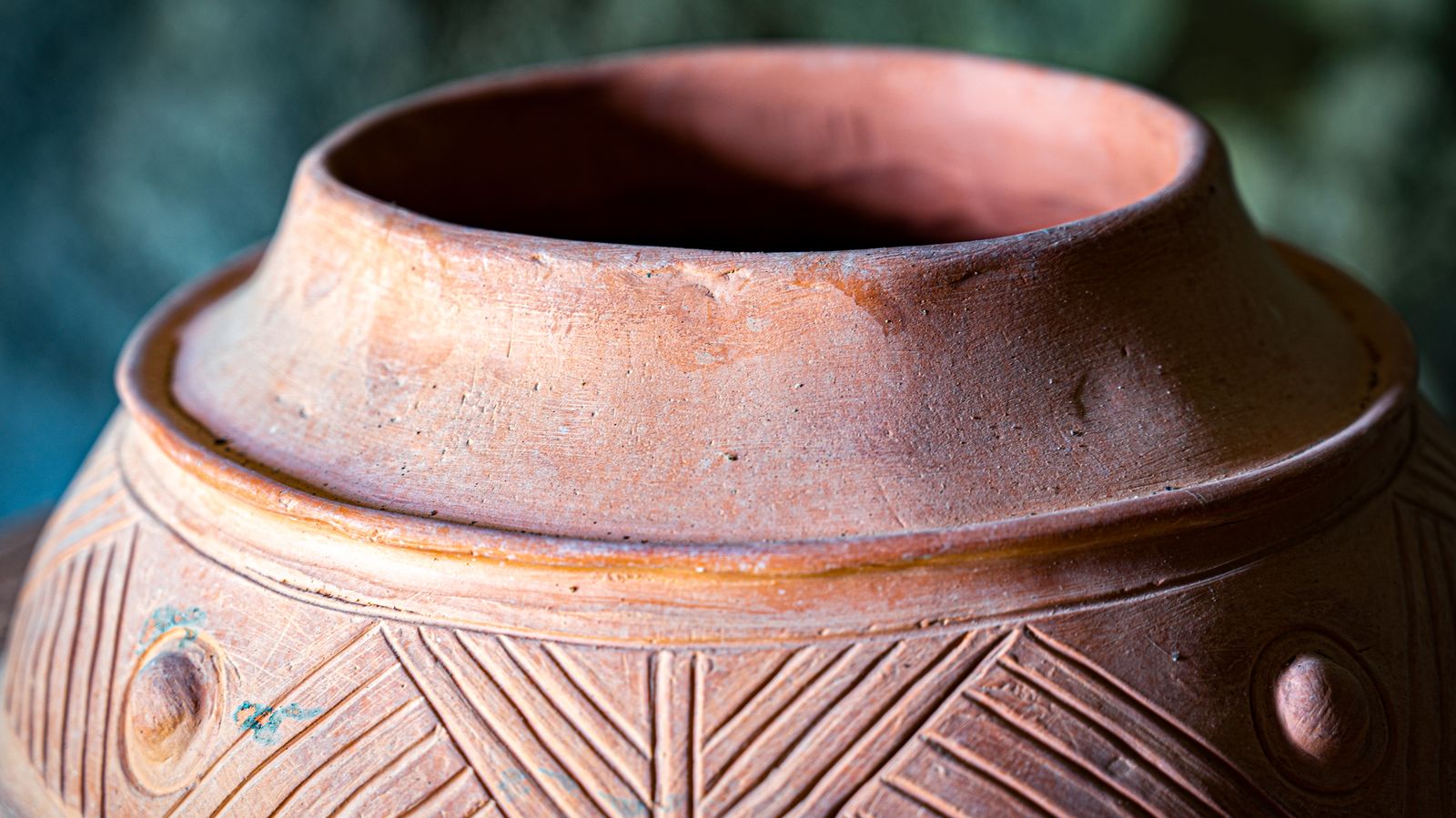
The story usually begins the same way. Archaeologists open a sealed pot inside a tomb. The contents are darkened, crystallised, sometimes fragrant. A researcher tastes it. It is still honey.
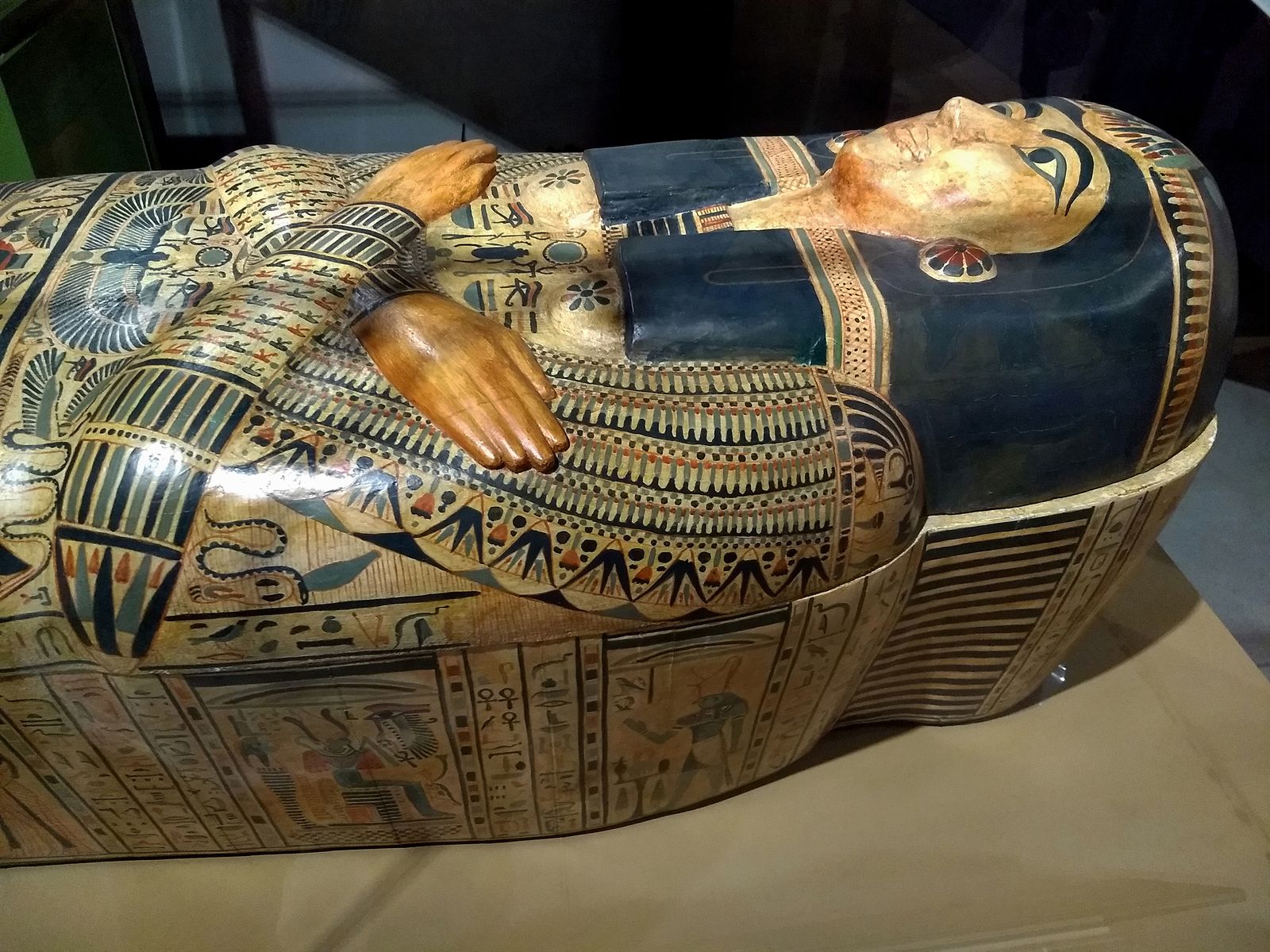
Ancient Egyptians treated honey as something between food, medicine and offering. It appears in grave goods and in medical papyri prescribing it for wounds and gut ailments. Reports of edible honey from Egyptian tombs have circulated for decades, occasionally spiking on social media when a fresh dig produces another sealed vessel.
The archaeological record itself is more cautious than the meme. As one recent review pointed out, the most-cited jar and taste test are difficult to pin down to a specific excavation, archaeologist, or lab result. A 1975 archaeological review of two vessels from Tutankhamun’s tomb labelled “honey of good quality” found them almost empty, with the remaining material never confirmed as honey. The chemistry, though, does not need the anecdote to be true. It works whether or not any pharaoh’s pantry ever fed a modern mouth.
Why honey doesn’t rot
Three properties do the work.
The first is water. Bees reduce nectar’s water content through evaporation, fanning it with their wings inside the hive. At the resulting concentration, there is simply not enough free water in a jar of honey for a microbe to drink.
The second is acidity. Honey is acidic enough to keep most spoilage bacteria at bay. Botulism spores can survive in it — which is why honey should not be given to infants under 12 months — but they cannot grow or produce toxin in the jar itself.
The third is hydrogen peroxide. When a foraging bee stores nectar in its honey stomach, it adds an enzyme called glucose oxidase. Once the nectar is deposited and diluted with a little moisture — say, on a wound, or if a jar draws humidity from the air — the enzyme starts converting glucose into gluconic acid and hydrogen peroxide. In slow, low-dose form, it is a built-in sterilising agent.
The bee’s chemistry set
Every step of honey production shifts nectar further from perishability. A field of clover or mānuka offers up sugary water; the hive turns it into something closer to a preservative than a food.
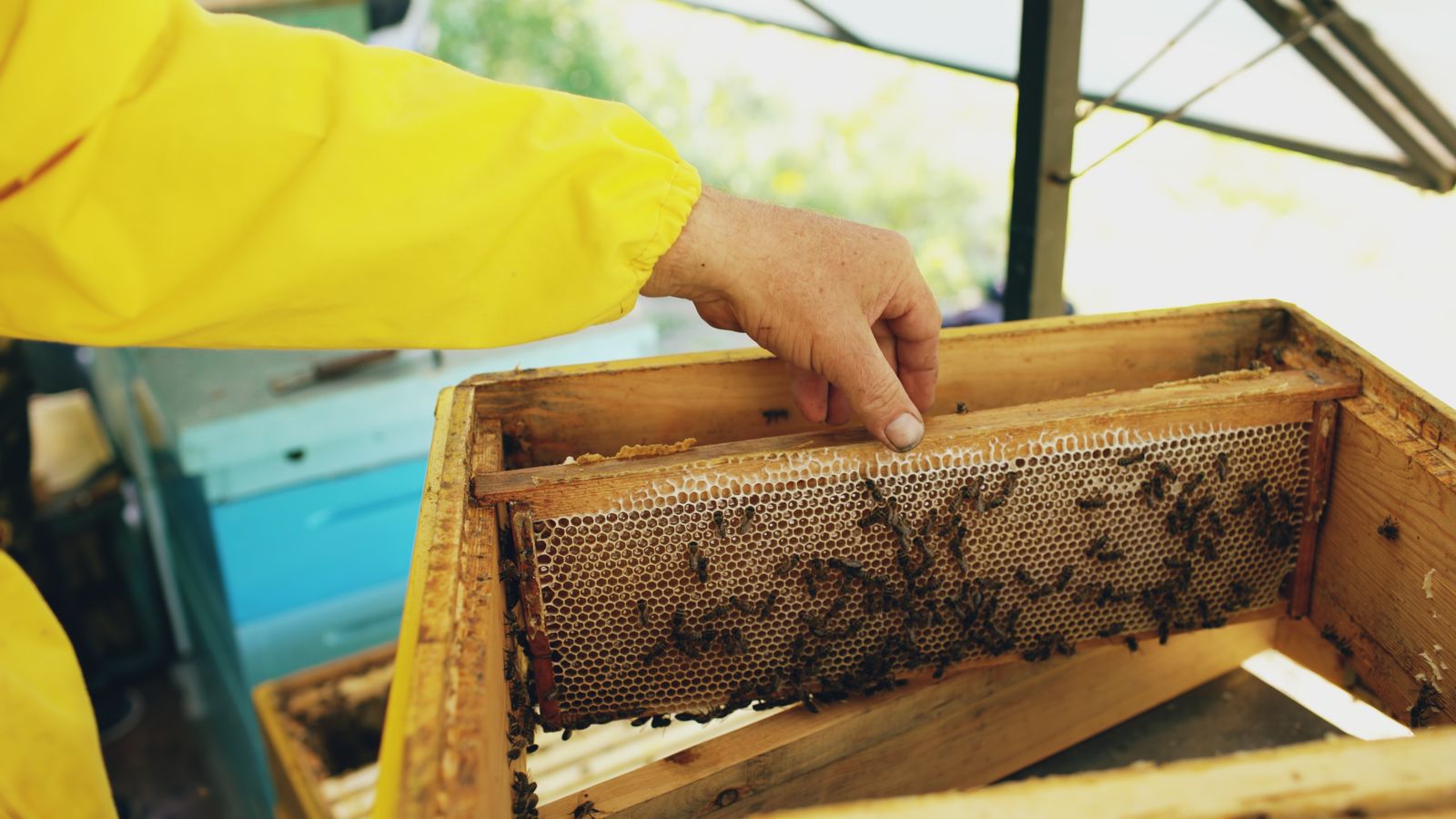
The wing-fanning behaviour that drives off water is essentially industrial dehydration performed at insect scale. Multiply it across tens of thousands of workers per hive and the colony can reduce a heavy nectar flow to storage-ready honey within days. The wax caps that seal each cell are impermeable. Inside a properly capped comb, or a properly sealed jar, honey is cut off from the outside world’s moisture and microbes alike.
That is the piece the Egyptians got right. The pots recovered from tombs were often stoppered with wax or resin and buried in dry, temperature-stable rock chambers. Break the seal and expose the honey to humid air and it will slowly absorb water, ferment, and go the way of any sugary liquid. Keep it sealed and it enters a kind of chemical stasis.
Antibacterial by design
Modern medicine has been circling back to what Egyptian physicians already prescribed. Medical-grade honey is used today on burns, ulcers and post-surgical wounds, and the antimicrobial mechanism is more than just sugar drawing water out of bacteria.
Researchers looking at honey from Australian wildflowers have shown that different floral sources produce dramatically different antibacterial strengths, depending on the balance of hydrogen peroxide activity and non-peroxide compounds inherited from the plants themselves. Honeys drawn from mixed floral sources proved the most antimicrobial of the samples tested, and more than three-quarters of them halted bacterial growth against Staphylococcus aureus and E. coli even when heavily diluted.
Mānuka honey gets its antibacterial properties from methylglyoxal, a compound that does not degrade when the honey is diluted or heated gently, which is why medical dressings often specify mānuka.
The 3,000-year marketing pitch
The Egyptian tomb story has become a selling point at the very top of the honey market. In November 2025, the New Zealand mānuka brand Naki unveiled what it calls the world’s most expensive honey, a €250,000 ceramic vessel holding two litres of UMF 25+ mānuka, pitched explicitly as an heirloom inspired by the Egyptian finds.
Only 73 pieces were made, across three tiers, with the smallest vessels priced at around €500. The top-tier jar holds two litres — the company frames it as a legacy piece to be handed down through generations, echoing the tomb-jar idea that a spoonful today and a spoonful in a century could come from the same vessel.
Derek Burchell-Burger, general manager of sales and marketing at Naki, told RNZ that the company develops its most potent strand of mānuka only every two years, with the UMF 25+ grade harvested only when Taranaki’s weather and flowering conditions line up. Naki’s launch announcement credits the handcrafted ceramic to South African artist Gabrielle Weinstein, paired with a gold-plated dipper by Cape Town jeweller York Van Rheede Van Oudtshoorn. The collection was unveiled at the New Zealand Liberation Museum – Te Arawhata in Le Quesnoy, northern France.
Whether anyone will still be dipping into that jar in the year 5026 is, of course, a marketing hypothesis. The chemistry says it is possible. The wax seal on the ceramic will have more to say about it than the honey inside.
What crystallisation actually means
Honey that has sat in a cupboard for a year often turns cloudy, then grainy, then solid. Consumers frequently throw it out. They shouldn’t.
Crystallisation is a physical process, not spoilage. Glucose in the honey drops out of solution and forms crystals around dust particles, pollen grains, or the walls of the jar. Fructose, more soluble, stays liquid longer. The result is the pale, spreadable texture found in raw honeys after a few months. A brief warm-water bath returns it to liquid.
Tomb honeys recovered by archaeologists are usually described as darkened and partly crystallised, sometimes with a hard sugar crust and a softer amber layer beneath. That is exactly what centuries of slow glucose migration should produce in a sealed pot. Microbiologically stable is not the same as pleasant to eat, though: time and warmth darken honey, flatten its aroma and strip out enzyme activity long before anything spoils.
Not the only ancient food to survive
Honey is the headline act, but it is part of a broader pattern of food chemistry that outlasts civilisations. In 2019, dormant yeast was extracted from ancient Egyptian ceramic vessels once used to brew beer and bake bread. Cultured back to life, the yeast produced functional loaves.
Similar projects have revived yeast from other ancient sources, producing sourdough from dormant microorganisms. These are not edible in the same way tomb honey is claimed to be — the yeast was dormant, not the bread — but they show how tightly the right microenvironment can lock biological time.
Salt-cured, smoke-dried and fermented foods do something similar through different chemistry. The common thread is the removal or acidification of water. Take water away from a microbe, or make its home too acidic, and centuries begin to feel like weeks. The preservation properties documented in tomb-recovered honey are the same ones food scientists chase in freeze-drying rooms and low-water-activity formulations today.
The seal is everything
None of honey’s defences work if the jar is left open in a damp kitchen. Honey is hygroscopic — it pulls moisture out of the air. Push its water content up past a certain threshold and yeasts that were dormant begin to ferment the sugars. The pH stays low, but suddenly the water activity is high enough that microbial life stirs. This is how mead is made deliberately, and how a neglected pot goes off.
Every tomb honey story is really a seal story. Wax over the mouth of a pot, sealed inside a stone chamber, kept dry by desert bedrock — these are the conditions that let the chemistry hold. The Egyptians did not know about water activity or glucose oxidase. They knew, from generations of practice, that sealed honey lasted.
SpaceMart has looked before at how simple observations lock in scientific knowledge long before the mechanism is understood, as with the story of Robert Hooke naming the cell in 1665, more than a century before anyone knew what was inside one. Honey preservation follows the same shape: the technique came first, the enzyme names came 3,000 years later.
A spoonful across time
Somewhere in a climate-controlled museum store, a small ceramic pot sits sealed with resin, its contents darker than they were when a Theban priest set it down. The sugars inside have been slowly, imperceptibly rearranging themselves for longer than the Roman Empire lasted. The glucose oxidase is exhausted; the hydrogen peroxide long since dissipated. The pH is still low. The water is still bound. The bees that made it died within weeks of finishing their work, and their honey has now outlived roughly a hundred generations of their descendants.
Break the seal in a thousand years and, if the wax holds, it will still be honey.