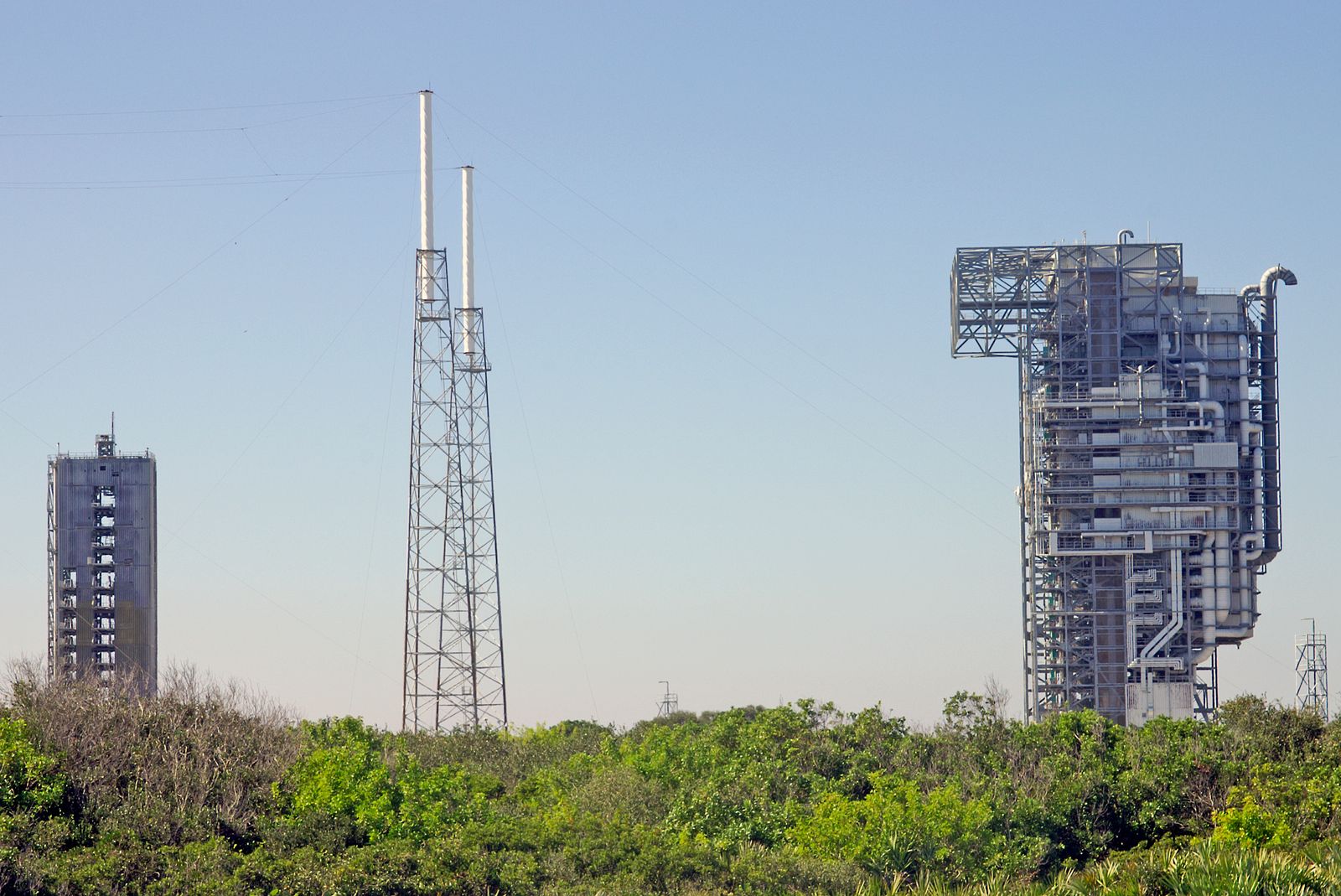
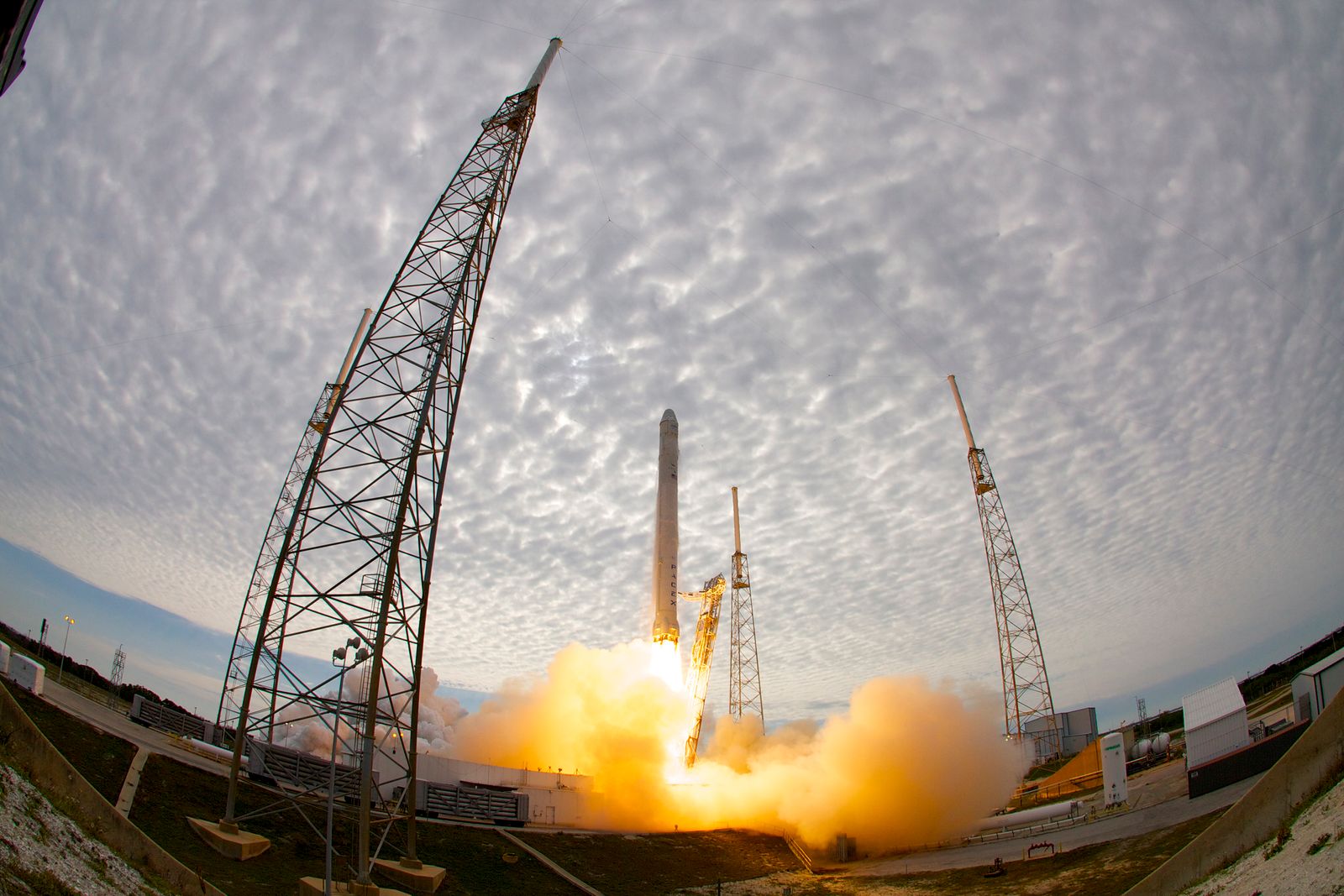
At 7:26 a.m. EDT on August 30, 2026, a SpaceX Falcon Heavy lifted NASA’s Nancy Grace Roman Space Telescope from Launch Complex 39A at Kennedy Space Center. Roman separated from the upper stage a little more than 31 minutes later and began its journey toward the Sun-Earth L2 region, roughly a million miles from Earth.
The launch also completed a specific NASA sequence. NASA identified Roman as the sixth primary agency mission launched with SpaceX on a Falcon rocket from Kennedy, following IXPE, Psyche, NOAA’s GOES-U, Europa Clipper and IMAP.
The list, in order
IXPE opened the run in December 2021, riding a Falcon 9 to begin its study of polarized X-rays from objects including black holes and neutron stars. Psyche followed in 2023 aboard Falcon Heavy on its journey toward the metal-rich asteroid 16 Psyche.
GOES-U and Europa Clipper both launched on Falcon Heavy in 2024. IMAP followed in 2025, and Roman became number six in August 2026.
The list mixes astrophysics, planetary science and weather observation rather than one narrow class of spacecraft. What connects the missions is NASA’s repeated use of SpaceX’s Falcon family for high-value primary payloads from Kennedy.
Why Kennedy, why Falcon
Launch Complex 39A predates SpaceX by decades, having supported Apollo and Space Shuttle missions before the company began operating the pad under its lease with NASA. Roman added another flagship science mission to that history.
The launch also came with a clearly documented price. NASA awarded SpaceX the Roman launch-service contract in July 2022 for approximately $255 million, including the launch service and other mission-related costs.
That contract is evidence of how deeply commercial launch services are now embedded in NASA’s science program. It does not, however, mean every later feature of Roman can be credited to launch price alone; the telescope’s unusually large fuel reserve, for example, has a different and much more specific explanation.
What Roman actually is
Roman is built around a 2.4-meter primary mirror, the same diameter as Hubble’s. NASA says Roman’s primary mirror weighs less than one-fourth as much as Hubble’s, reflecting decades of advances in telescope materials and engineering.
Its main science camera is the Wide Field Instrument. NASA describes the WFI as a 300-megapixel near-infrared camera with a 0.281-square-degree field of view, designed for imaging and slitless spectroscopy.
That combination is Roman’s central advantage. It approaches Hubble-class image sharpness while covering vastly more sky in each exposure, making it a survey telescope rather than a machine optimized mainly for narrow, deeply targeted views.
NASA’s prelaunch briefing roster identified Nicky Fox as associate administrator of the agency’s Science Mission Directorate, Denton Gibson as launch director for the Launch Services Program, and Julie McEnery as Roman’s senior project scientist. Those roles are documented in NASA’s August 29 briefing notice.
The data firehose
Roman is designed to produce data on a scale unusual even for a flagship observatory. NASA says it will return about 1.4 terabytes a day, the highest daily data rate yet for one of its astrophysics missions.
That volume is why automated analysis will matter. NASA expects machine learning, artificial intelligence tools and citizen-science projects to help identify noteworthy objects and events in the stream before astronomers examine the most promising targets in greater detail.
Nine months early
Roman’s schedule is one of the more unusual parts of the mission. GCN’s September 3 launch recap noted that NASA’s formal readiness commitment extended to May 2027. Launching on August 30 put Roman roughly nine months ahead of that commitment.
GCN also traced the accelerated build sequence through spacecraft-bus completion in September 2024, spin testing the following month, integration work later that year, completion of the assembled observatory in November 2025 and shipment to Kennedy in June 2026. Those dates help explain why NASA was able to pull the mission forward rather than simply meeting its original deadline.
Denton Gibson’s verified role in that campaign was launch director for NASA’s Launch Services Program. The launch itself succeeded on the first August 30 attempt, but there is no need to embellish that record with an untraceable claim about it being the smoothest campaign of his career.
Fuel for at least 22 years
Roman’s primary science mission is planned for five years, but its propellant margin is now much larger than that figure suggests. Ars Technica reported NASA’s estimate that Roman now carries enough fuel for at least 22 years of potential science operations.
The reason is not simply that Falcon Heavy was cheaper than an older launch vehicle. Roman finished lighter than the conservative mass used for its fuel planning, allowing engineers to load more propellant than the original 10-year requirement demanded. Its first post-launch course correction was also exceptionally accurate and consumed far less fuel than budgeted.
That distinction matters. Roman’s long potential life is partly a spacecraft-engineering story and partly a trajectory-accuracy story, not a straightforward consequence of commercial-launch economics.
The Falcon Heavy choreography
The flight profile was precise. NASA’s published launch timeline records side-booster engine cutoff at T+2:24, separation at T+2:27, landing burns beginning at T+7:23 and both boosters touching down at T+7:40.
The center core was expended rather than recovered, leaving the vehicle’s performance focused on sending Roman onto its outbound trajectory. The upper stage completed a second burn before deploying the observatory at T+31:31.
The mirror that once looked the other way
Roman’s primary mirror began as government hardware built for another purpose. NASA says the National Reconnaissance Office made the inherited optical hardware available to the space agency, after which it was reshaped and adapted to Roman’s requirements.
That is the well-documented version of the mirror’s unusual origin. Because the predecessor system was classified, it is safer not to overstate details about the exact intelligence mission for which the hardware was originally intended.
L3Harris provided Roman’s 2.4-meter Optical Telescope Assembly, with much of the optical work performed at the company’s Rochester, New York facilities. The inherited mirror became part of a system designed to produce stable, wide-field astronomical imaging from L2.
What Roman is hunting
Roman’s science program spans dark energy, dark matter, galaxy evolution and exoplanets. Julie McEnery, NASA Goddard’s senior project scientist for Roman, has emphasized that the observatory’s broad surveys are designed not only to answer planned questions but also to expose objects and phenomena researchers did not know to look for in advance.
The Wide Field Instrument will repeatedly survey dense regions of the Milky Way, using gravitational microlensing to detect planets when their gravity briefly magnifies the light of more distant stars. That gives Roman sensitivity to planetary populations that are difficult to reach with methods that depend on a planet crossing directly in front of its star.
Roman also carries a Coronagraph Instrument, a technology demonstration intended to suppress starlight so faint planets and surrounding material can be observed more directly. The instrument is part of the technology path toward future observatories designed for much more demanding direct imaging.
One of the people involved in that next generation is L3Harris executive Charles Clarkson. L3Harris identifies Clarkson as vice president and general manager of Space Superiority & Imaging and says the company has a NASA contract to mature technologies for the planned Habitable Worlds Observatory.
Watching from Ohio
Roman’s scientific community stretches well beyond Kennedy and Goddard. WOSU reported that Ohio State professors and students traveled to Florida to watch the launch of a project they had helped develop.
Ohio State researchers have spent years contributing to Roman science planning in areas including cosmology, exoplanets and stellar astronomy. Their role is a useful reminder that the enormous dataset Roman will produce is intended for a broad scientific community rather than a single mission team working behind closed doors.
The pattern behind the six
IXPE flew in 2021. Roman followed in 2026. In between came Psyche, GOES-U, Europa Clipper and IMAP, giving NASA six primary missions on SpaceX Falcons from Kennedy in less than five years.
That is the defensible pattern: Falcon launches have become a recurring part of NASA’s science and observation manifest. The stronger claim that lower launch prices directly produced Roman’s extra fuel, Europa Clipper’s instrument complement or Psyche’s solar-array design goes beyond what the evidence establishes.
Roman’s post-launch fuel windfall illustrates the difference. NASA’s own engineering account points to lower spacecraft mass, additional propellant, an exceptionally efficient first correction burn and expected savings from the remaining maneuvers.
What comes next
Roman is still in commissioning as it travels outward. NASA’s September 14 update places insertion into the observatory’s final L2 orbit at about 100 days after launch, or around early December 2026. Instrument activation and calibration are already underway, and NASA expects the first science images in early 2027.
The Falcon Heavy science manifest also continues. NASA has selected Falcon Heavy to launch Dragonfly toward Saturn’s moon Titan during a July 2028 launch period from Pad 39A.
Roman, meanwhile, is already far beyond the Florida coast. A mirror built from inherited national-security hardware is being prepared to spend years looking in the opposite direction, across enormous stretches of the universe, while the two side boosters that began its journey were back on the ground less than eight minutes after liftoff.