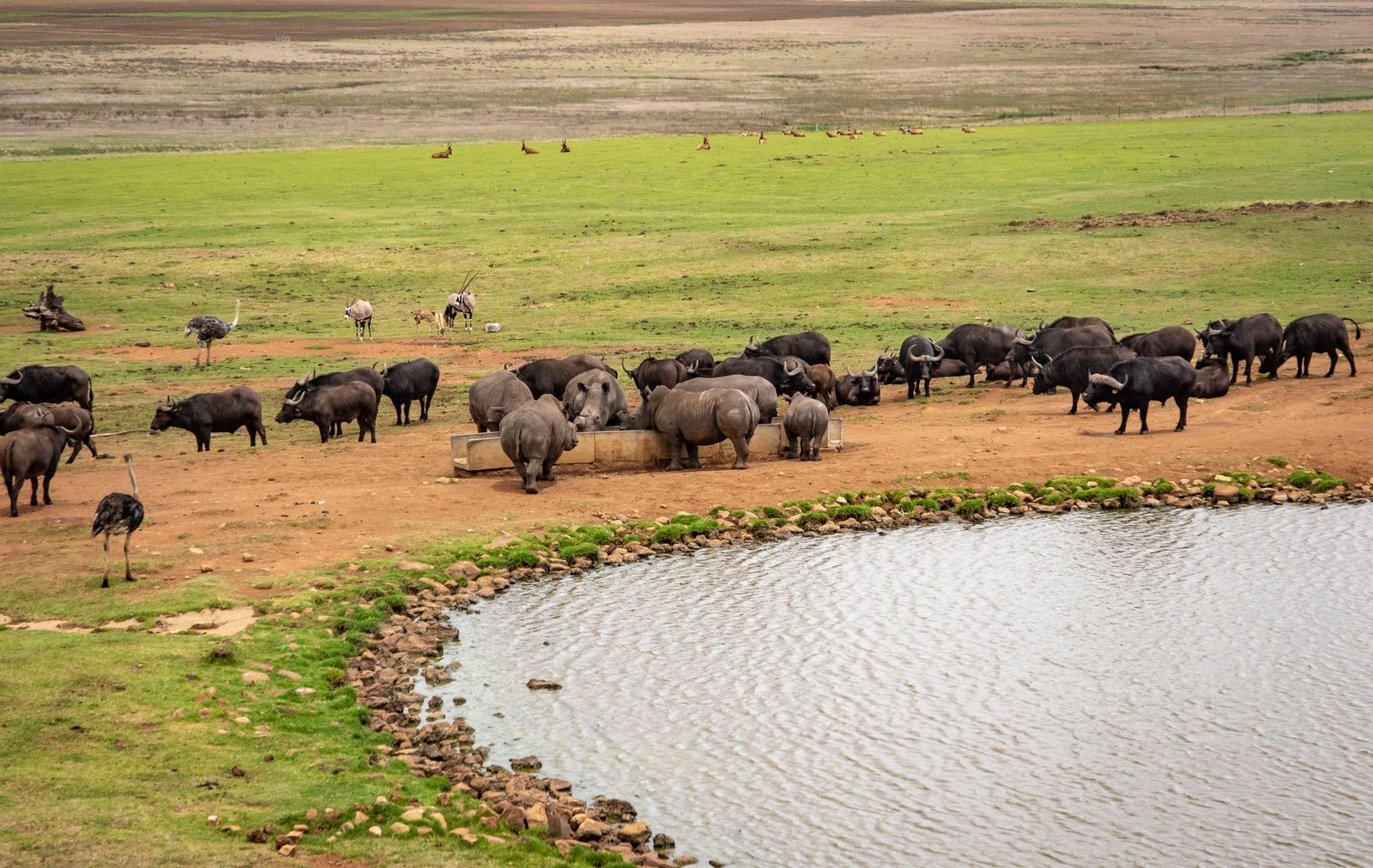
In Kenya’s Mara Naboisho Conservancy, on the northern edge of the Maasai Mara ecosystem, several hundred Maasai landowners have done something that runs against every fence-and-exclude instinct in twentieth-century conservation. They pooled their private parcels into a single rangeland of more than fifty thousand acres, kept their cattle on it, invited wildlife back onto it, and now collect monthly lease payments while the block carries one of the highest predator densities in the Mara.
The mechanism is a legally registered community conservancy, established in 2010, in which individual title-holders lease their land into a common pool managed collectively for grazing and tourism. Cattle still move across it. Lions, elephants and giraffes moved back. According to reporting in Forbes on the Nawiri Group’s two decades of impact work, the Naboisho block today supports one of the region’s highest predator densities, and hundreds of landowners receive regular lease payments.
The land that was almost sold out from under them
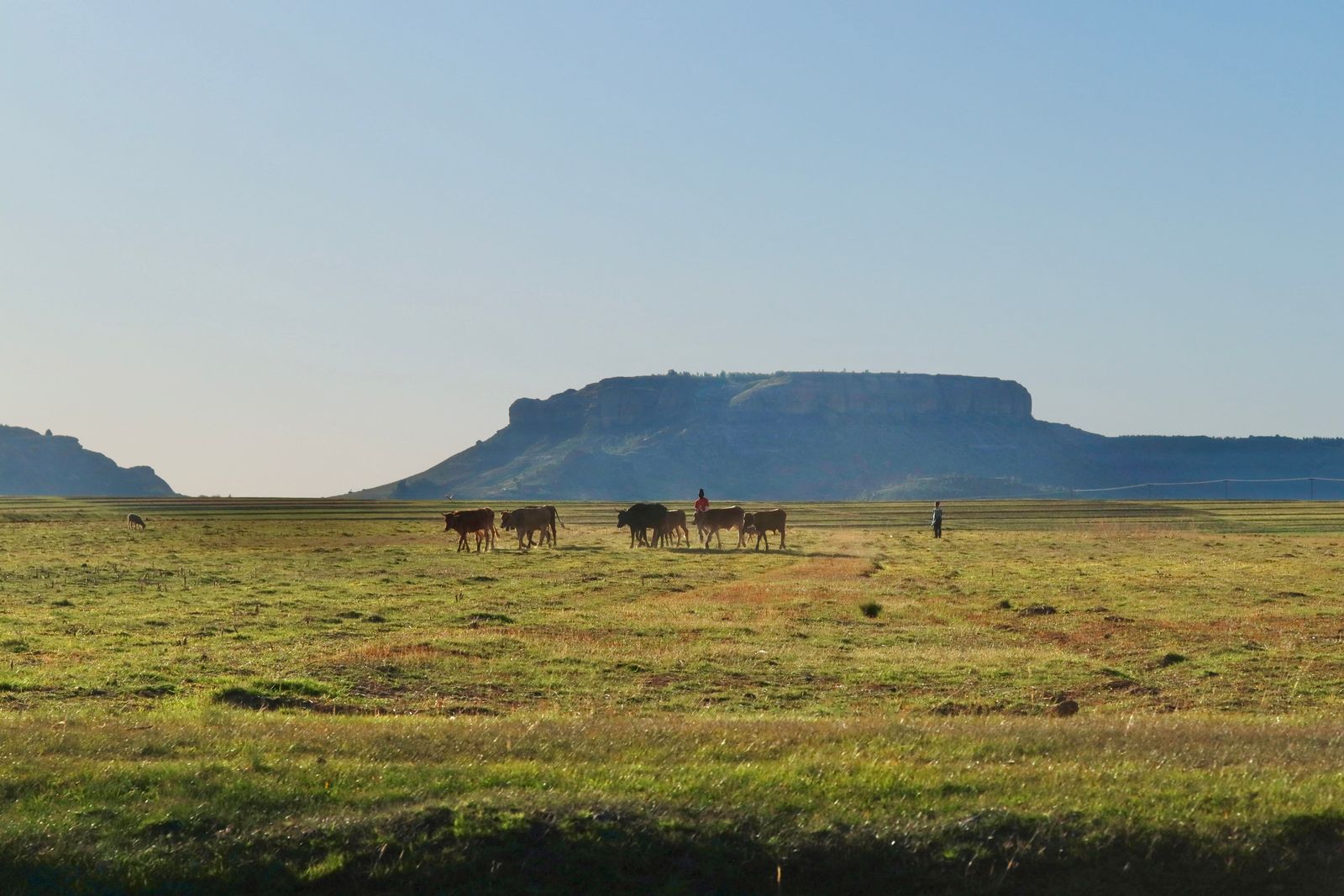
The plains north-east of the Maasai Mara National Reserve were once part of the Koiyaki-Lemek Group Ranch, held communally. Kenya’s move to individual land titling broke that block apart: the conservancy’s own account of its formation places the subdivision of the former group ranch at the end of the 1990s, after which the land existed as thousands of separately titled parcels.
What followed was fencing, further subdivision, and sale to outside buyers. Wildlife corridors that had carried wildebeest, zebra and elephant for generations were closing in a matter of seasons. Kate Waite, head of communications at the Nawiri Group, told Forbes that through the late 2000s the land was divided, fenced and sold while local communities saw little benefit from tourism and wildlife numbers dropped sharply.
The default conservation response of the era was to draw a harder line around the reserve and push livestock out. Naboisho did the opposite. It kept the herders on the land and made the wildlife pay rent.
How the lease actually works
Landowners retained legal title to their individual parcels. They then signed long-term leases handing management rights to the conservancy, which in turn contracts a small number of tourism operators to run low-bed-density camps. Tourism revenue flows back as fixed monthly lease payments to every title-holder in the pool.
The design detail that matters most is how the fee is set. Saruni Basecamp, the founding tourism partner, describes three principles fixed at the start and unchanged since: guaranteed monthly lease payments to all landowners, grazing access for cattle under a managed rotation, and employment and community programmes. The lease fee is calculated on acreage rather than on the quality or scenery of the parcel, so a family holding thinner ground is not left behind, and Naboisho pushed lease terms out to fifteen years and later twenty-five when five was the regional norm.
The critical clause is that grazing is not excluded. Cattle move under a rotational plan set by the conservancy’s management, which Naboisho describes as sitting under a representative board of Maasai landowners together with tourism partners. Predators, in effect, are treated as a land use rather than an intrusion.
Lions do not need protection from cattle. They need continuous space, prey, and neighbours who will not spear them after a livestock raid. Pooling delivered the first two and the lease cheque addressed the third, by making the presence of a lion economically legible to the person whose calf it might one day take.
What the numbers show, and what they don’t
Naboisho’s headline figures have moved as the block has grown. About five hundred landowners signed the founding lease in 2010. The Maasai Mara Wildlife Conservancies Association now lists the conservancy at more than 52,000 acres contributed by 636 landowners, while the conservancy itself puts the current figure nearer 60,000 acres and over 700 landowners. The direction of travel is the point: more land pooled, more families inside the pool.
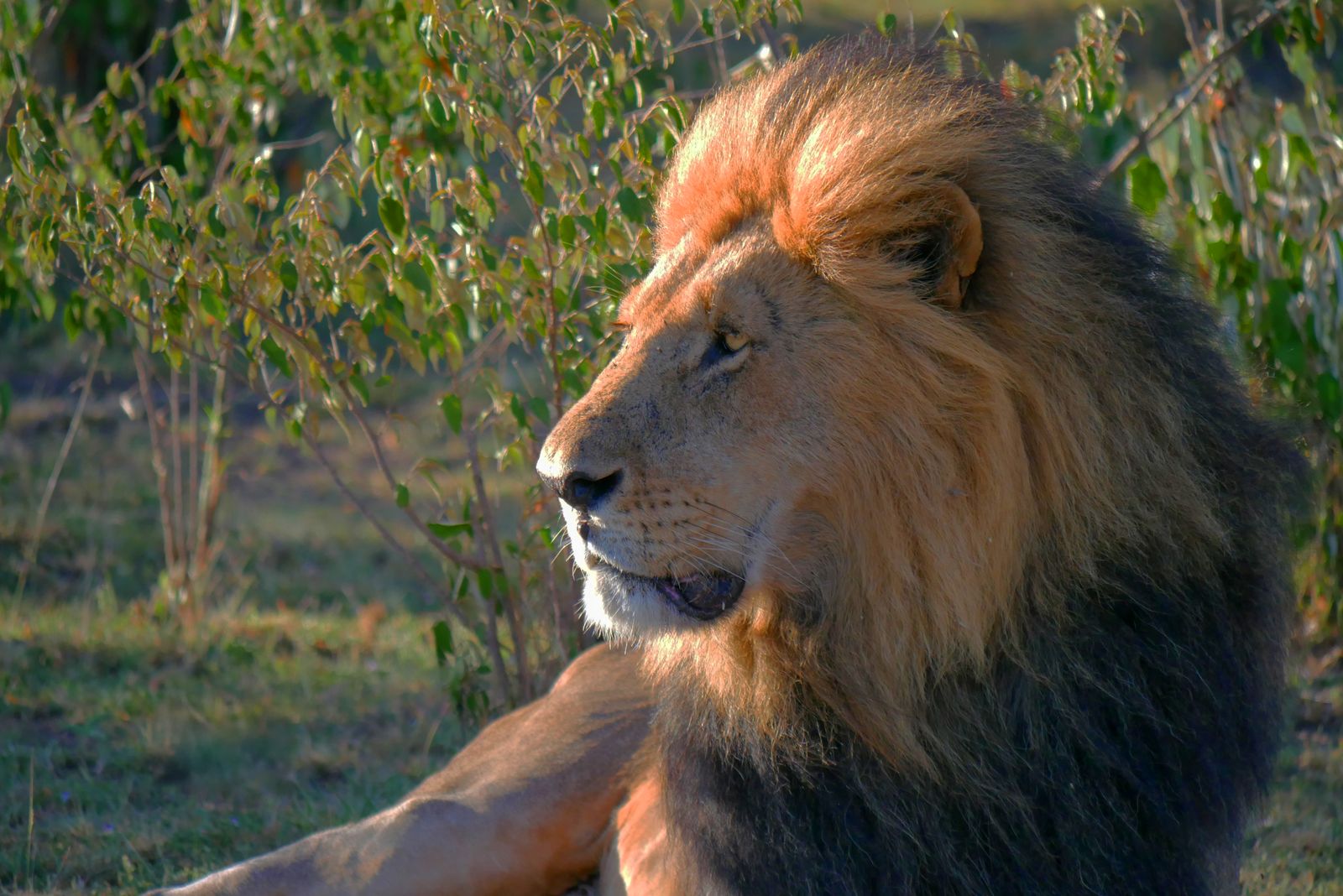
The claim that Naboisho holds one of the highest lion densities in Africa comes largely from the conservancy and its tourism partners, and should be read as their claim. The measured comparison is narrower and more useful. In the association’s Equator Prize profile, the UNDP Equator Initiative recorded lion density across the Mara conservancies running 14 percent above the density inside the government-run reserve, on land that had roughly doubled under conservancy agreements to about 1,420 square kilometres. For elephants the trend is steeper: a Kenya Wildlife Service aerial count cited by the Kenya Wildlife Conservancies Association put elephants in the Maasai Mara ecosystem at 2,493, up from 1,448 in 2014.
Set against that, the wider ecosystem is losing animals fast. A Kenyan government wildlife survey with fieldwork conducted between June 2024 and August 2025, reported by Al Jazeera, found wildebeest down from 58,000 to 34,200 between 2023 and 2025, with lions, buffalo and hirola antelope also falling sharply.
A separate exercise reaches the same conclusion by a different route. Migration maps published in December 2025 by ecologists at the Smithsonian National Zoo and Conservation Biology Institute, in the Atlas of Ungulate Migration, showed routes that carried more than 100,000 wildebeest as recently as 2020 now carrying fewer than 30,000, and estimated a population of 120,000 to 150,000 in the 1970s reduced to roughly 26,700 by 2024. Al Jazeera notes the figures come from different surveys and studies and are not directly comparable; what they share is the direction.
So the honest version of the Naboisho story is not that lions are recovering in Kenya. They are not. It is that a conservancy block holds more wildlife per square kilometre than the reserve beside it, inside an ecosystem that is otherwise thinning out. The declines cluster where the land was fenced, subdivided and sold. The densities hold where it was pooled.
The cost of living with wildlife
None of this makes the arrangement easy for the people inside it. A single elephant raid can flatten a season’s tomatoes and the loan taken to plant them. Mongabay’s account of what coexistence costs recounts a farmer in East Africa who took a loan to shift from pastoralism to agriculture, leased land, planted tomatoes and paid a guard to watch the fields at night, then lost the entire harvest to elephants during a delay when heavy rain kept the collection vehicle away.
The loss was not only the crop. It was the loan, the labour and the assumption of repayment that had shaped the decision to plant. Households operating with thin reserves cannot absorb that twice. A lion that takes a calf is not an ecological data point. It is a school fee that will not be paid.
The conservancy model does not remove those costs. What it does is put a counterweight on the other side of the ledger. When a lease payment arrives every month, whether the rains fail or the tourists thin out, the calculation of whether wildlife is a burden or an asset shifts.
Researchers surveying more than 1,550 households across twelve communities bordering South Africa’s Kruger National Park found the same underlying preference, writing up their results in The Conversation: more than 80 percent backed wildlife-friendly ways of earning an income over trophy hunting. The preference is not sentimental. It is a wage calculation, and the alternative has to actually exist.
What the courts are now testing
The conservancy answer is not a resolved success. It is a working prototype under pressure from the same market forces that once fenced the plains. A petition filed by the East Africa Law Society, Natural Justice, JustAct and the Africa Centre for Peace and Human Rights seeks orders halting construction and expansion of accommodation inside the reserve. It names the Ritz-Carlton Hotel Company, Marriott International, Lazizi Mara Limited, the Narok County government, the National Environment Management Authority, the attorney general, the Kenya Wildlife Service, The Safari Collection and Minor Hotels. Court documents allege the Ritz-Carlton Maasai Mara Safari Camp was built in a protected ecological zone despite a 2023 moratorium on new accommodation in sensitive areas under the Maasai Mara Management Plan 2023-32, lacks a valid environmental impact assessment licence, and sits on a wildebeest migration corridor. Marriott and Lazizi have said the camp received the necessary approvals.
Wangari Kebuchi, an economist and managing director of Expertise Global, told Al Jazeera that the conservancy model offers the most viable path forward but needs stronger oversight, with future tourism growth guided by ecological limits rather than commercial demand.
The same logic is being tested three hundred kilometres east. Around Amboseli, on the corridor running between Kilimanjaro and the Chyulu Hills, Big Life Foundation rangers have added thermal drones to night patrols. Mongabay reported that in May and June 2026 alone the drones were deployed in 78 elephant incidents, turning animals back through the crop-protection fence on 33 occasions, and that the programme’s director credits them with fewer retaliatory injuries and deaths.
The pattern repeats: legal title stays with the family, management is pooled, income is fixed and predictable, and grazing continues. Wildlife returns because it is finally allowed to move.
What Naboisho actually proves
The twentieth-century instinct was to draw a hard line, put wildlife inside it and people outside it. Across the Mara that logic broke on two facts. More than a million wildebeest, zebras and gazelles move each year between Tanzania’s Serengeti and Kenya’s Mara, and the routes cross land that belongs to Maasai families. And fencing that land pushed pastoralists toward agriculture, which, as the Mongabay reporting documents, brings its own exposure to wildlife through crop raiding. The fence created the conflict it was meant to solve.
The landowners at Naboisho did not reject conservation. They rejected the version that asked them to disappear from their own land so a fence could be drawn around a lion. In its place they built a legal instrument that keeps them present, keeps their cattle moving, and treats predators and elephants as tenants that owe rent.
Whether that instrument survives the next decade depends on whether the tourism revenue holds, whether the courts enforce the 2023 moratorium, and whether the corridors outside the conservancies stay open. Landscape recovery on the scale of China’s Loess Plateau worked on the same condition: it held where the people living on the land were paid to be part of it, and stalled where they were not.
Naboisho’s numbers are smaller. Five hundred signatures in 2010, better than six hundred landowners now, fifty thousand-odd acres of pooled grass. And walking across it at first light, past cattle that were never told to leave, some of the densest lion country left in the Mara.