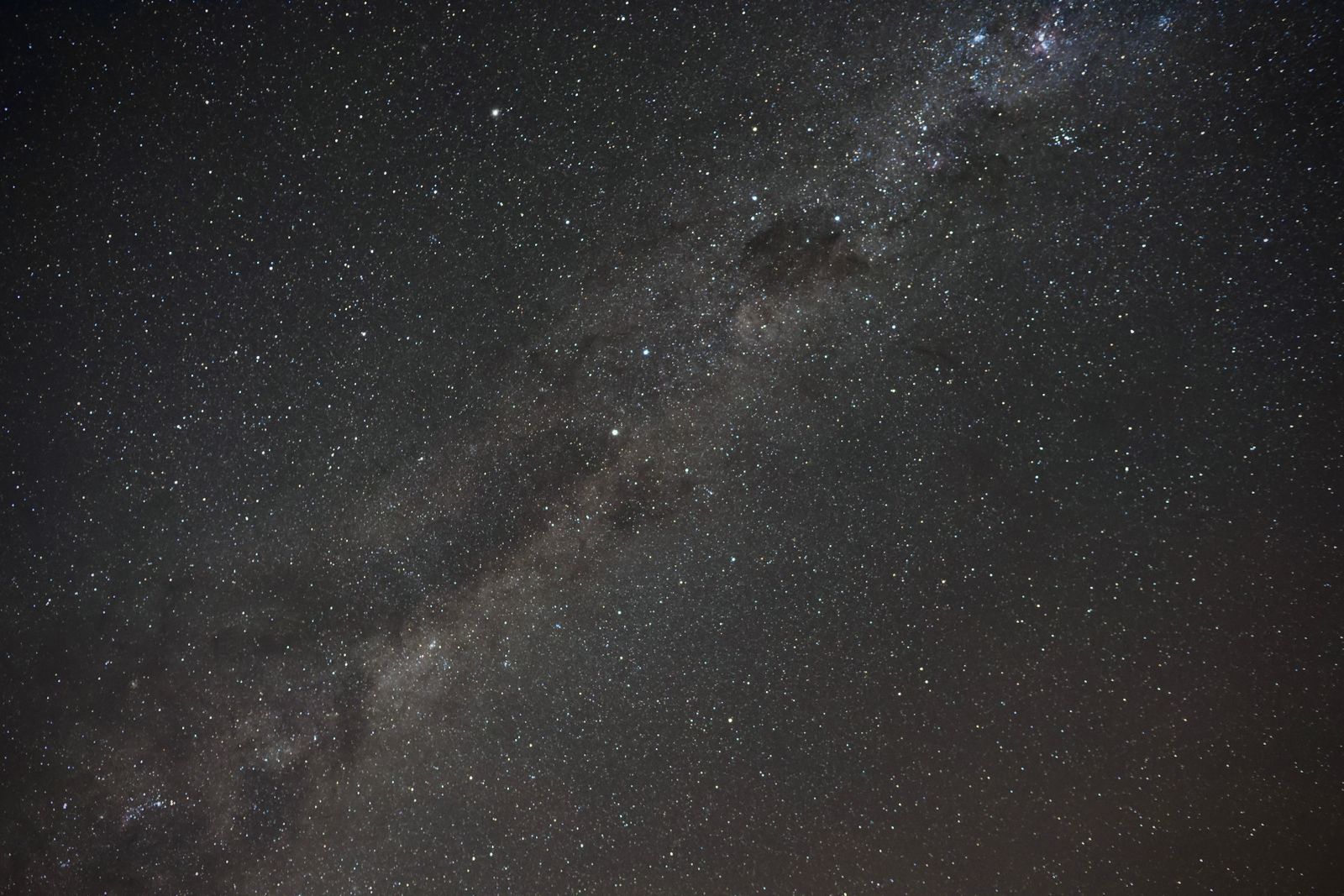
The Nancy Grace Roman Space Telescope carries a 300-megapixel near-infrared camera that combines Hubble-like sharpness with an exceptionally wide view. A single exposure can record foreground objects in the solar system alongside stars, distant galaxies, and variable events occurring much farther away. But Roman’s billion-galaxy catalog and its predicted harvest of thousands of transient objects will be built across repeated pointings and observing campaigns, not packed into one image.
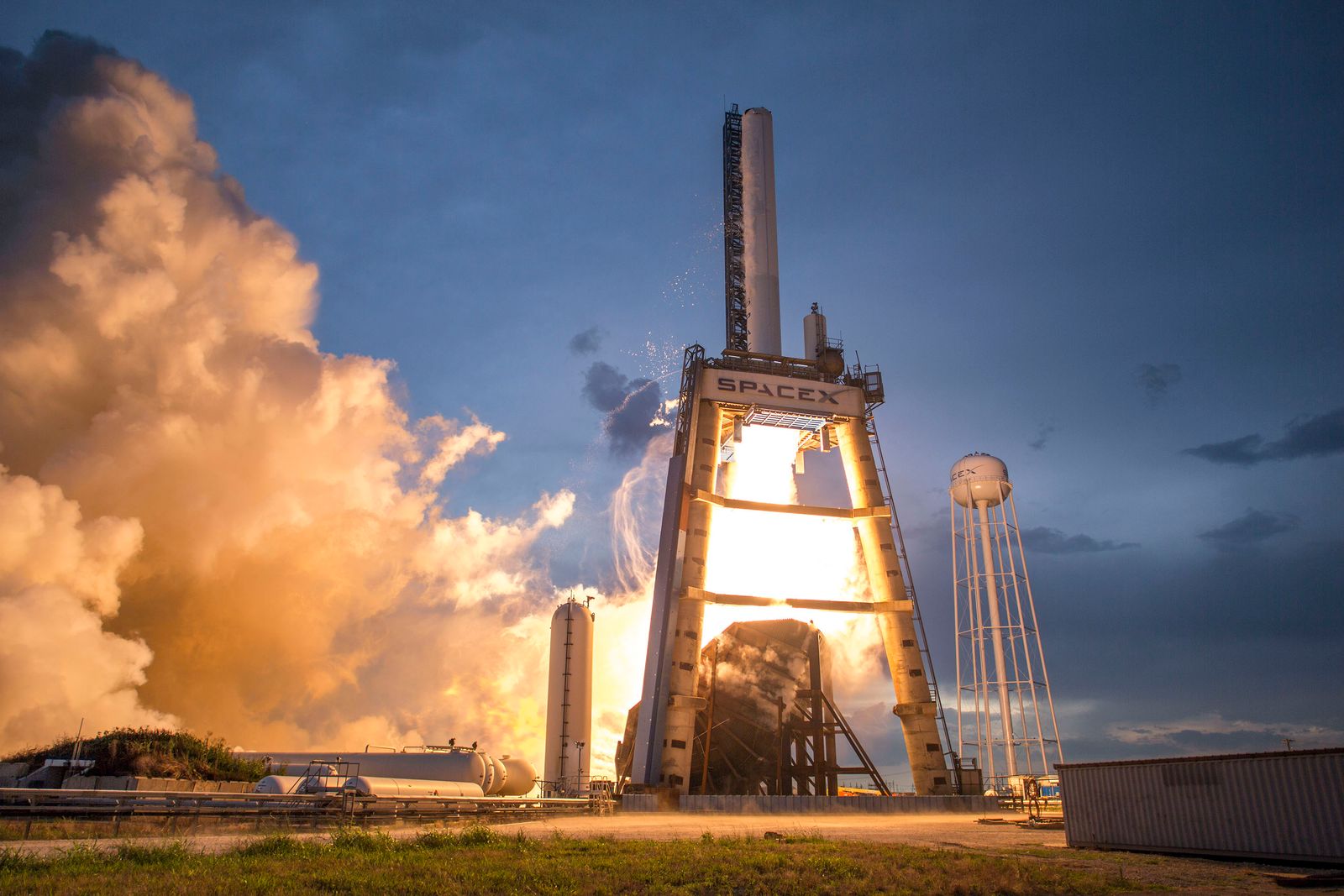
Roman launched at 7:26 a.m. EDT on Aug. 30, 2026, aboard a SpaceX Falcon Heavy from Kennedy Space Center’s Launch Complex 39A, according to NASA’s launch announcement. The observatory is now traveling toward the second Sun-Earth Lagrange point, known as L2, while its commissioning work gets underway.
One frame, a hundred Hubbles
Roman’s Wide Field Instrument sees nearly 100 times as much sky as Hubble’s widest exposures while maintaining similar infrared resolution. NASA says each Roman image covers a patch of sky larger than the apparent size of the full Moon, while Hubble’s infrared Wide Field Camera 3 images cover an area about 200 times smaller.
Over Roman’s first five years of observations, NASA expects it to image more than 50 times as much sky as Hubble covered during its first 30 years. Roman can survey the sky up to 1,000 times faster than Hubble while retaining comparable sensitivity and infrared resolution. That combination, rather than any single exposure, is what makes the survey mathematics so powerful.
The mirror that came from another program
Roman’s primary mirror is 2.4 meters across, the same diameter as Hubble’s main mirror. It was transferred to NASA by the National Reconnaissance Office and subsequently modified for Roman’s scientific requirements. Engineers reshaped and resurfaced the optic, then applied a thin silver coating selected for its ability to reflect near-infrared light.
The inherited mirror gave the project an existing Hubble-size optic, but considerable engineering work was still required before it could become part of Roman. Its surface, coating, support structure, thermal behavior, and alignment all had to meet the observatory’s own specifications.
The camera on the back end
The Wide Field Instrument contains 18 detectors that together form a roughly 300-megapixel near-infrared camera. Its field of view allows Roman to collect high-resolution information about large populations of objects without assembling every broad view from scores of narrowly framed exposures.
A field can contain stars, galaxies, supernovae, variable galactic nuclei, and moving solar system objects at the same time. Finding and classifying them will often require comparisons between exposures taken at different times. The mission’s strength lies in repeatedly observing large areas deeply enough for software to separate a moving object from a fixed source or a transient flash from an otherwise steady galaxy.
Four sciences, one instrument
Roman is often described as an all-purpose survey observatory because the same archive can serve several branches of astronomy. Different discoveries will rely on different filters, cadences, fields, and combinations of exposures, but they can emerge from the same major observing programs.
Outer solar system objects. Roman’s repeated observations near the ecliptic will contain faint moving bodies beyond Neptune. An approved archival program plans to mine the first three seasons of the Galactic Bulge Time Domain Survey for approximately 1,000 Kuiper Belt objects. The detections will come from thousands of measurement opportunities across the survey, rather than thousands of objects appearing in one pointing.
Exploding stars. Repeated imaging will turn the High-Latitude Time-Domain Survey into a powerful detector of changing objects. A NASA-supported simulation estimated that the survey could reveal around 100,000 celestial explosions, including approximately 27,000 Type Ia supernovae and about 60,000 core-collapse supernovae. More than 1,000 of the Type Ia events could have occurred over 10 billion years ago.
Growing black holes. The same time-domain survey is expected to capture activity associated with black holes. NASA’s estimate includes roughly 40 tidal disruption events, in which a star is torn apart and its material heats up while falling toward a black hole. Variability from active galaxies will provide another route for studying how supermassive black holes feed and change over cosmic time.
Galaxies by the billion. Roman’s wide surveys will build enormous galaxy catalogs rather than placing billions of galaxies in an individual frame. WIRED’s mission preview reported that Roman’s observations will encompass more than a billion galaxies. Measurements of weak gravitational lensing, the slight distortion of galaxy shapes by matter along the line of sight, will help astronomers trace the distribution of dark matter and the growth of cosmic structure.
The coronagraph, and why it matters
Roman’s second instrument is a technology-demonstration coronagraph designed to suppress the glare of nearby stars so that much fainter planets and disks can be imaged. Space telescopes including Hubble and Webb already use coronagraphic techniques, but Roman’s instrument introduces more advanced active control of the incoming wavefront.
The system combines masks, detectors, prisms, and deformable mirrors whose shapes can be adjusted using thousands of actuators. NASA expects it to achieve a capability 100 to 1,000 times beyond that of previous space-based coronagraphs. Its formal technology-demonstration work is planned for the mission’s first 18 months, after which the instrument could become available for additional scientific observations.
Roman will use the coronagraph to observe large gaseous exoplanets and disks of dust and gas around nearby stars. The instrument is not designed to deliver a census of Earth twins. Its larger importance is demonstrating technologies that future observatories could use to search for smaller, more Earth-like planets around Sun-like stars.
Getting the hardware to survive the ride
Roman is a large spacecraft, standing more than 42 feet tall and weighing nearly 18,000 pounds. NASA confirmed that mass when the approximately 8,200-kilogram observatory was transported to Kennedy Space Center in June 2026. Launch survival therefore depended on testing the complete observatory and its major structural components against vibration, acceleration, temperature changes, and vacuum conditions.
The Outer Barrel Assembly, sometimes described as Roman’s exoskeleton, surrounds the telescope and helps control stray light and temperature. Before integration, its two main sections underwent centrifuge testing that generated forces slightly above seven times Earth’s gravity. NASA described the assembly’s protective role and the two-part spin test before the structure moved into later environmental and launch-vibration testing.
About 1.4 terabytes a day from a million miles away
Roman is designed to return 11 terabits, or about 1.4 terabytes, of data per day. Its technical specifications list a downlink rate of 250 to 500 megabits per second. NASA describes this as the highest daily data rate yet planned for one of its astrophysics missions.
That volume changes how much of Roman’s science will be conducted. Astronomers will still design observing programs, but many discoveries will also come from querying the public archive and running detection software across large survey fields. A faint moving streak, a temporarily bright point, or a subtly distorted galaxy may be identified long after the original exposure reaches Earth.
The orbit at L2
Roman is traveling toward a halo orbit around the second Sun-Earth Lagrange point, about one million miles from Earth. The trip and commissioning period are expected to take approximately three months. L2 provides a favorable thermal and viewing environment, although Roman will still require periodic station-keeping rather than remaining fixed without intervention.
The James Webb Space Telescope and the European Space Agency’s Euclid mission also operate around L2. Their capabilities differ, but observations from Roman, Webb, and Euclid will complement one another across studies of galaxies, dark matter, dark energy, and the early universe. NASA lists a five-year mission duration for Roman, with a longer operational goal if the observatory remains healthy.
Named for the woman who helped make Hubble possible
The telescope is named for Nancy Grace Roman, NASA’s first chief of astronomy. NASA also identifies her as the first woman to hold an executive position at the agency. In that role, she oversaw the planning and development of major space-astronomy programs.
Roman spent years building scientific and political support for the large space telescope that became Hubble. She organized planning committees, worked with scientists and engineers, briefed officials, and helped secure approval and funding. Those efforts earned her the informal title “Mother of Hubble.”
What early 2027 will actually look like
Roman’s commissioning did not wait for the spacecraft to reach L2. The process began during the cruise, with deployments, communications checks, course corrections, instrument activation, and calibration work scheduled across the journey. NASA planned to power on the Coronagraph Instrument first, followed several weeks later by the Wide Field Instrument.
Commissioning will include checks of focus, alignment, pointing stability, detectors, and observing modes. NASA anticipates releasing Roman’s first images in early 2027. The agency has not confirmed the more specific claim that a preliminary public image will arrive in December 2026.
Once science operations begin, Roman will revisit selected fields on cadences designed to reveal changes. One exposure may contain a foreground solar system object, an active galaxy, a supernova, and many more distant galaxies, but the mission’s largest catalogs will emerge by combining exposures across time and sky area. Roman’s achievement is not that every promised discovery fits literally inside one frame; it is that the same wide-field survey archive can support all of them.