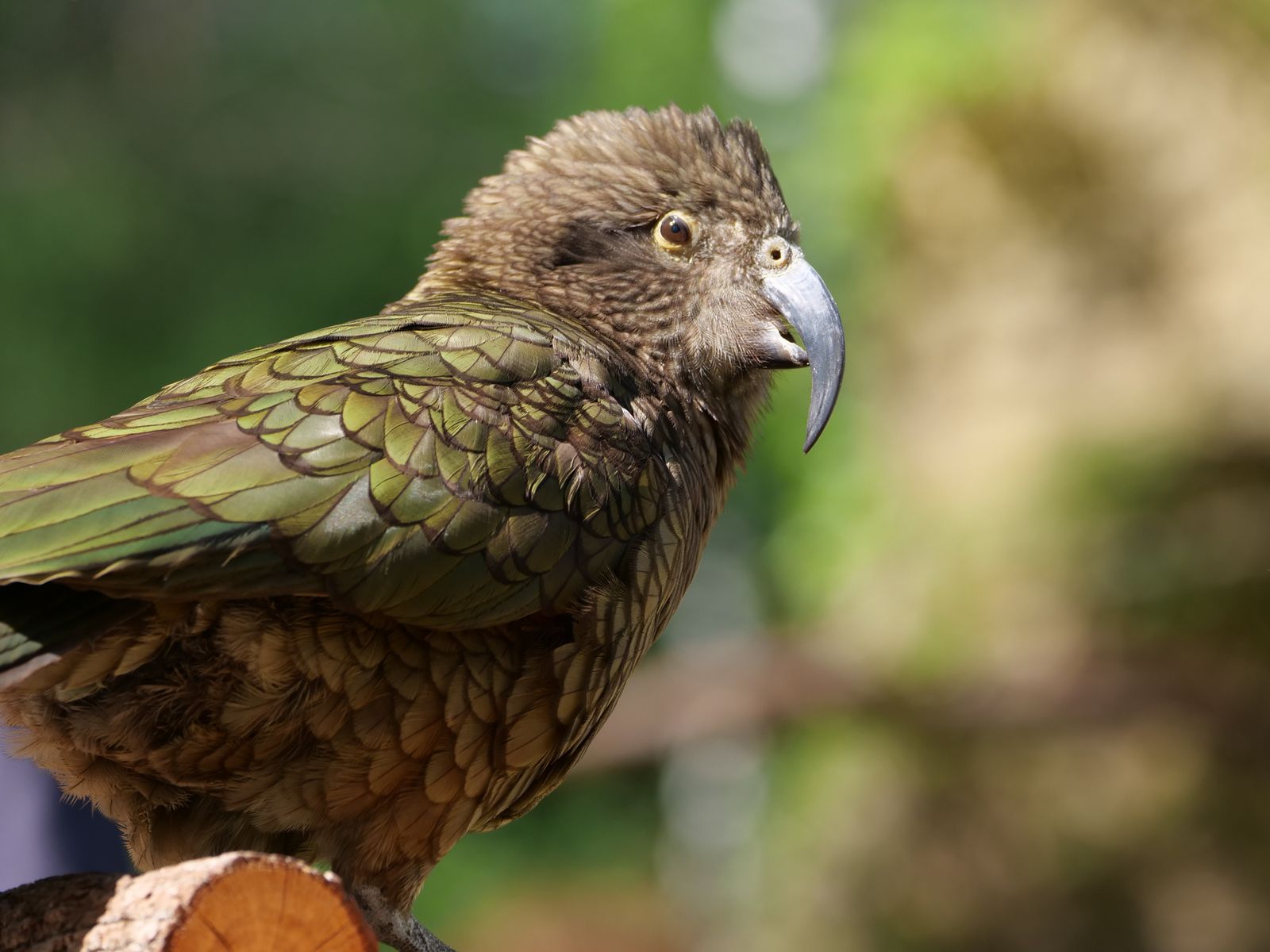
On three specks of land off New Zealand’s southern coast — Whenua Hou, Anchor Island and Chalky Island — a parrot that cannot fly is booming again. The kākāpō breeding season has brought renewed hope for a species that once numbered as few as 51 known individuals, and the reason it exists at all is that every rat, stoat, cat and possum on those islands has been killed and kept out.
The mechanism is brutally simple. Kākāpō weigh over three kilograms at their heaviest before breeding season, smell strongly of musk and honey, nest on the ground in shallow burrows, and freeze rather than flee when threatened — traits that work beautifully against a hawk overhead and catastrophically against a stoat at ground level. Remove the mammals, and 80 million years of ground-adapted evolution suddenly makes sense again. New Zealand’s Department of Conservation reported in August 2024 that its most recent aerial predator control operations across 735,000 hectares had achieved the best results the programme has ever recorded, with rat populations reduced to minimal levels across the treated areas.
Islands that behave like time machines
New Zealand broke away from Gondwana roughly 80 million years ago, before any land mammal larger than a bat had reached it. Its birds filled every niche a mammal would have filled elsewhere. Moa grazed like deer. Kiwi rooted like badgers. Kākāpō climbed trees, ate rimu berries, and lost the muscle mass for flight because there was nothing on the forest floor that wanted to eat them.
Then Polynesian voyagers arrived around 1300 CE with the Pacific rat. Europeans followed with ship rats, Norway rats, cats, dogs, pigs and, in the 1880s, stoats — deliberately introduced to control rabbits, which had themselves been introduced. Within a few centuries, ground-nesting birds that had thrived for tens of millions of years were gone from the mainland. As evolutionary biologists have noted, flightlessness was never the vulnerability. The vulnerability was mammals arriving in a place that had never had them.
By the mid-1970s, the kākāpō was believed to be on the brink of extinction. Then a remnant population was discovered booming in Fiordland and on Stewart Island. Every surviving bird was, over the following two decades, moved to islands that had either never had predators or had been cleared of them, a history the Department of Conservation documents in detail.
Why an offshore island is not just a smaller mainland
The reason the offshore-island strategy works — and the reason it looks miraculous when it does — is that a small island is a closed system. You can, in principle, count every rat on it. You can drop bait until the last one is gone. You can then patrol the coastline for reinvasion. On a continent, or even a large mainland, none of this is true; a rat killed today is replaced by a rat that swam in from next door tomorrow.
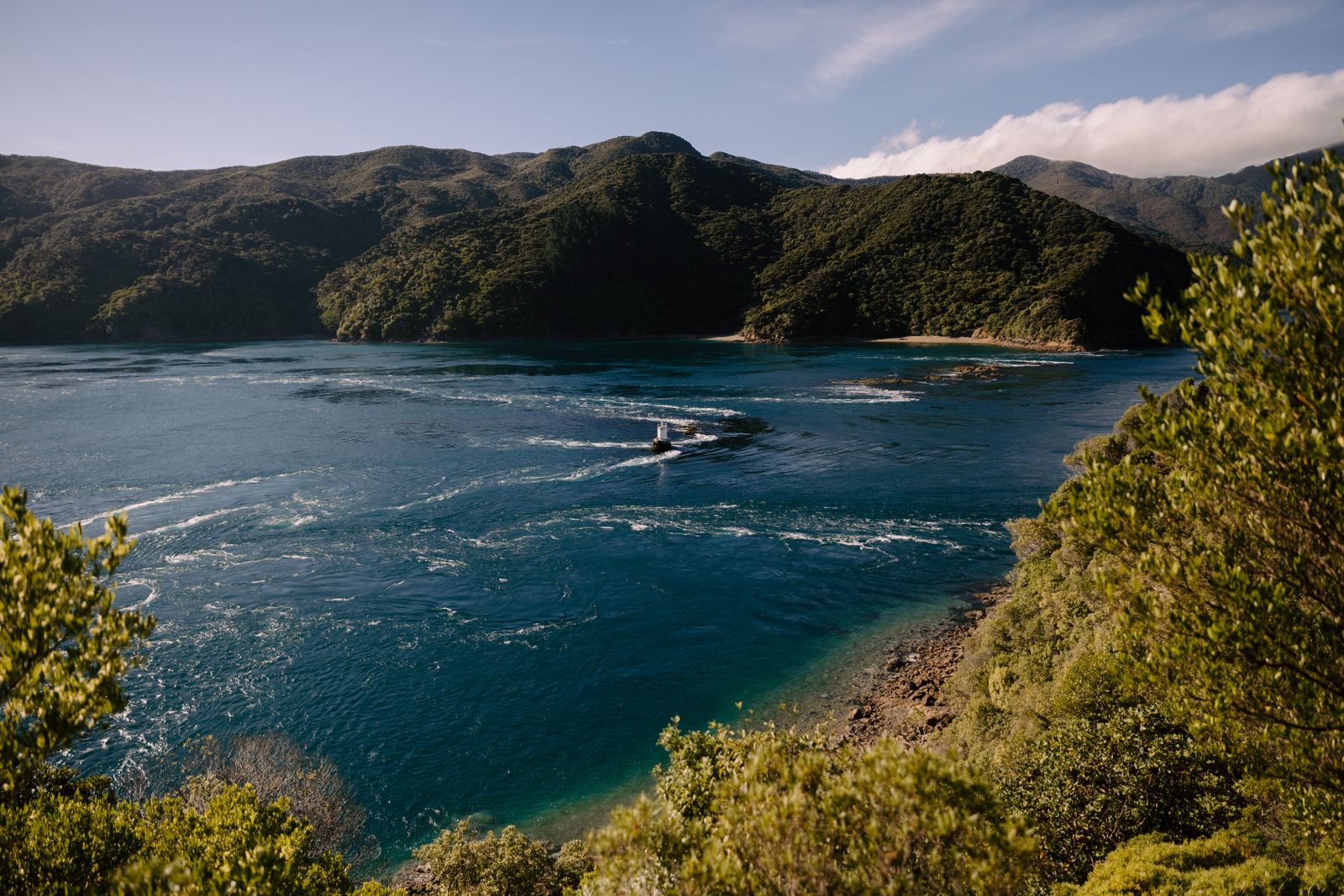
Whenua Hou (Codfish Island), Anchor Island in Dusky Sound, and Chalky Island are all predator-free islands that serve as sanctuaries for kākāpō and other native species. On Whenua Hou, weka and possums were eradicated first, by 1986; kiore, the Pacific rat, held on for another decade before being cleared in 1998. The forest floor, which had spent two centuries as a buffet, went quiet in stages, not all at once.
Once the mammals are gone, the birds that had been holding on in tiny numbers — or in some cases had been extinct on the mainland for over a hundred years — return to breeding. Not because they were reintroduced with fanfare, but because the pressure that was killing their eggs and chicks simply stopped.
The rimu masting problem
Kākāpō breeding is triggered by the fruiting of the rimu tree, which happens irregularly — sometimes every two years, sometimes every four or five. When rimu masts, the forest floor is carpeted with green fruit, and researchers have found the fruit is unusually rich in calcium and vitamin D, giving female kākāpō enough nutrition to lay eggs and raise chicks. Males dig shallow bowls in the ground and boom — a low sonorous call that can carry across a valley — followed by metallic “chings,” a sound widely described in reporting on the birds as resembling rusty bedsprings.
In years without a mast, almost nothing happens. In years with one, everything happens at once. The 2026 season followed a strong fruiting event, and Mongabay reported it as a standout year for a species that has spent most of its recent history teetering on the edge of vanishing entirely.
Rimu is not the only tree keeping this clock. New Zealand’s dominant beech forests mast on their own irregular cycle, and in years when beech and rimu seed heavily together — a “megamast” — the same glut that feeds breeding birds also fuels a boom in rodents on the mainland, which then feeds a boom in the stoats that eat the rodents. The Department of Conservation calls this the predator plague cycle. The 2024 results came partly from re-timing 1080 drops to catch rodents before the beech seed fell, or after it had been consumed, when the animals were hungry and took bait aggressively.
What comes back when the mammals leave
Kākāpō are the charismatic case, but they are not alone. On predator-free offshore islands, tuatara — a reptile lineage older than most dinosaurs — breed successfully again. Little spotted kiwi, gone from the North Island by 1900 and lost from the South Island mainland by the 1980s, now thrive on Kapiti Island and other sanctuaries, all descended from a handful of birds moved there in 1912. South Island saddlebacks, down to about 36 birds after a 1960s rat invasion of their last stronghold, have since recovered to several thousand across multiple cleared islands. Fairy prions, diving petrels and grey-faced petrels — ground-nesting seabirds that had not bred on the North or South Island in living memory — begin returning to burrows within a decade of eradication.
The seabirds matter beyond their own numbers. Their guano fertilises the forest, pushing marine-derived nitrogen and phosphorus into island soils. Lizards eat the invertebrates that thrive on the enriched leaf litter. Tuatara eat the lizards and the petrel chicks that fall from burrows. The whole system reassembles itself, which is what makes island eradication one of the most cost-effective conservation interventions ever measured: you do the work once, and the ecosystem does the rest.
None of this means kākāpō recovery is hands-off. Every bird has a name. Every bird wears a small backpack transmitter. Every mating is tracked, and in some cases artificial insemination is used to preserve genetic diversity across a population descended from a small number of founders. Eggs are sometimes removed and incubated indoors, with wooden replicas placed under the mother, then swapped back shortly before hatching.
The birds have a distinctive musky, fruity smell that made them findable by dogs and stoats alike. The programme’s approach, as detailed in National Geographic’s June 2026 reporting, is now beginning to loosen: staff intervene less each season, testing whether the population can sustain itself without human matchmaking. That reporting found the answer edging toward yes on at least one island — provided the boundaries stay clean.
Reinvasion is the permanent threat
A single pregnant rat swimming ashore from a yacht can undo three decades of work. This is why Whenua Hou is off-limits to almost all visitors, why boats approaching Anchor Island are inspected, and why the Department of Conservation maintains permanent trap and detection networks along the shorelines. Rodents can swim considerable distances in calm water, and stoats are capable swimmers as well.
The country’s broader Predator Free 2050 goal — to eliminate rats, stoats and possums from the entire mainland by mid-century — treats every cleared island as both a refuge and a proof of concept. The islands demonstrate what the mainland could look like. They also serve as insurance: if a mainland sanctuary fails, breeding stock still exists offshore.
The offshore-island approach fits a broader pattern in ecological restoration where removing one specific pressure allows a whole system to reassemble — the same logic that lets a dam-building rodent raise water tables in a drought-prone valley, or that lets predator numbers climb back on rangelands once grazing pressure is shared out. In each case the intervention is small and specific. The response is systemic.
The kākāpō case is more constrained because the islands are so small and the founder population so tiny. But the principle holds: if you identify the single limiting factor — mammalian predation, in this case — and remove it completely within a defensible area, the species that evolved without that factor can resume the lives they were built for.
What the numbers actually say
From a critically low population in the 1990s, kākāpō numbers have grown steadily over the past three decades. Three islands serve as primary sanctuaries. Twenty-four aerial predator control operations across 735,000 hectares of conservation land were conducted in 2023–24. Roughly 1.8 million hectares — about 20 percent of New Zealand’s public conservation land — are under rotational predator control.
The kākāpō is still critically endangered. A disease outbreak, a single stoat swimming ashore, or a failed rimu mast at the wrong moment could still tip the species back toward the edge. But the trajectory is upward for the first time in perhaps two hundred years, and the reason is not clever breeding programmes alone. The reason is a scatter of small islands where, for the first time since Europeans arrived, a slow, heavy, ground-nesting parrot can lay eggs in a burrow and expect the chicks to survive.
On a still night on Anchor Island, if you stood in the beech forest after midnight, you might hear it: a low booming pulse from a bowl in the ground, carrying through the trees. It is the sound of an 80-million-year-old lineage that almost ended, and did not.