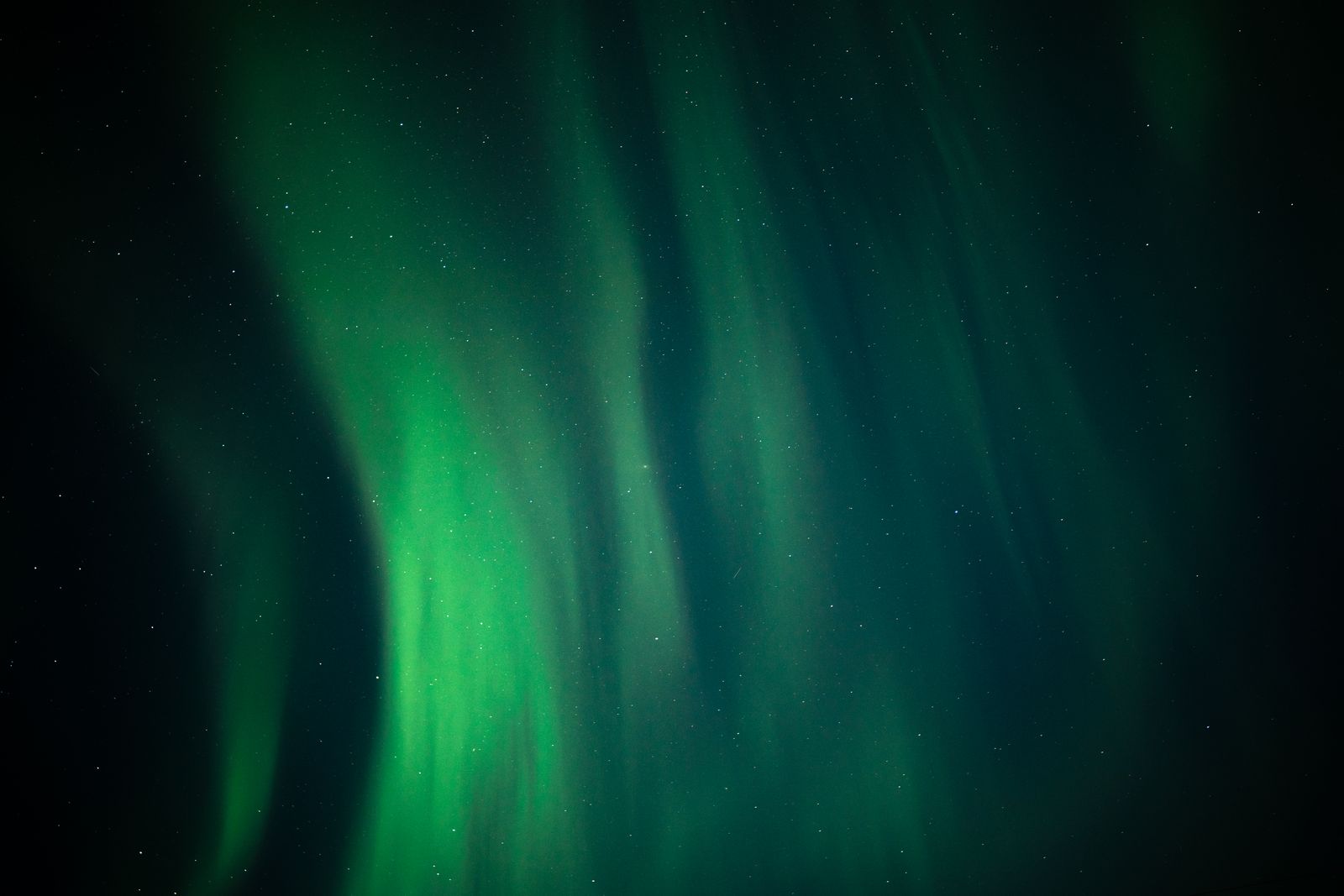
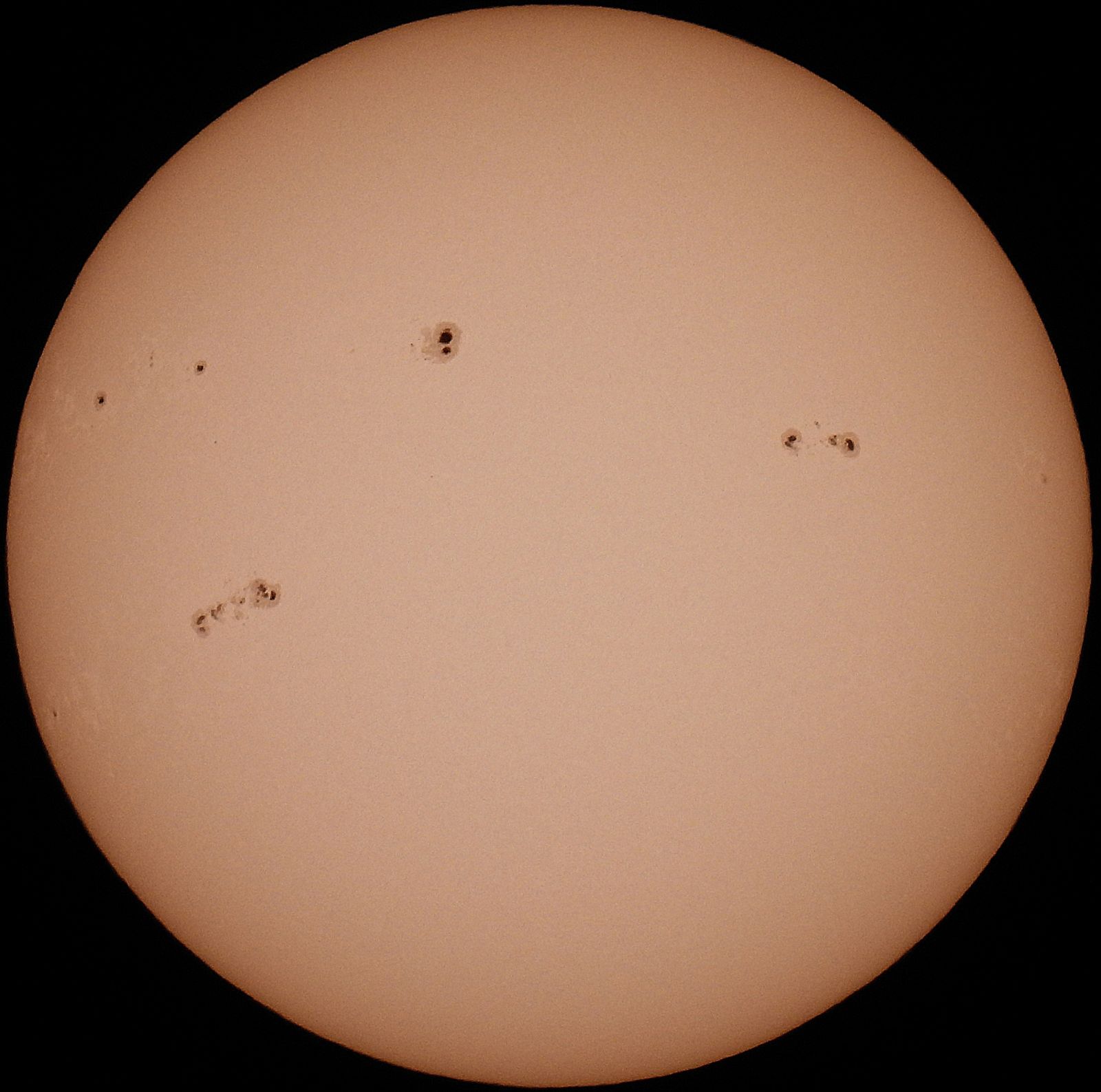
Shortly before noon on 1 September 1859, British astronomer Richard Carrington was projecting an image of the Sun onto a screen at his private observatory in Redhill. As he sketched a large group of sunspots, two intensely bright patches appeared within it and faded over roughly five minutes.
About seventeen and a half hours later, Earth’s magnetic field convulsed. Red auroras appeared over parts of the Caribbean, telegraph equipment sparked and malfunctioned, and some operators discovered that their lines would carry messages after the batteries had been disconnected.
The flare that outran expectations
Carrington’s published account of the brilliant solar patches became one of the foundational documents of solar astronomy. He was not, however, the event’s only observer. The English astronomer Richard Hodgson independently recorded the same flare, and their reports appeared beside one another in the same issue of Monthly Notices of the Royal Astronomical Society.
Together, Carrington and Hodgson produced the earliest recorded observations of a solar flare. Carrington also noticed the remarkably short interval between the flash and the magnetic disturbance, although he stopped short of claiming that the solar event had definitively caused what happened on Earth.
The storm reached Earth extraordinarily quickly. Researchers have proposed that previous eruptions may have reduced the solar-wind drag ahead of the main coronal mass ejection, allowing it to cross the roughly 150-million-kilometre gap in less than eighteen hours. Because no spacecraft existed to measure the eruption directly, its speed, structure, and magnetic orientation must be reconstructed from nineteenth-century observations.
The Carrington Event remains one of the most extreme geomagnetic storms in observational history. It is still used as the benchmark for a severe space-weather event, although reconstructed measurements suggest that storms in 1872 and 1921 may have approached it in some respects.
Batteries out, current flowing
The telegraph network of 1859 was still young, but long stretches of copper and iron wire already crossed North America and Europe. When Earth’s magnetic field changed rapidly, electrical currents were induced in those conductors, interfering with the batteries and instruments that normally powered the system.
Operators reported sparks, electric shocks, garbled transmissions, and equipment fires. The most famous episode involved stations in Boston and Portland, Maine, where operators disconnected their batteries and continued exchanging messages through the storm-induced current.
Accounts of the exchange describe Boston asking Portland to turn off its battery, only to learn that Portland had already done so. The two stations then worked using what the operators called the auroral current, reportedly maintaining communication for around two hours without ordinary battery power.
The Sun was not deliberately powering the network, of course. The changing geomagnetic field was inducing voltage along the wires. Even so, the result was extraordinary: a communications system briefly operating on electricity generated by a storm arriving from the Sun.
Auroras where auroras do not belong
Auroras normally cluster at high latitudes because charged particles are guided toward the polar regions by Earth’s magnetic field. During an exceptionally strong geomagnetic storm, the auroral oval can expand far toward the equator.
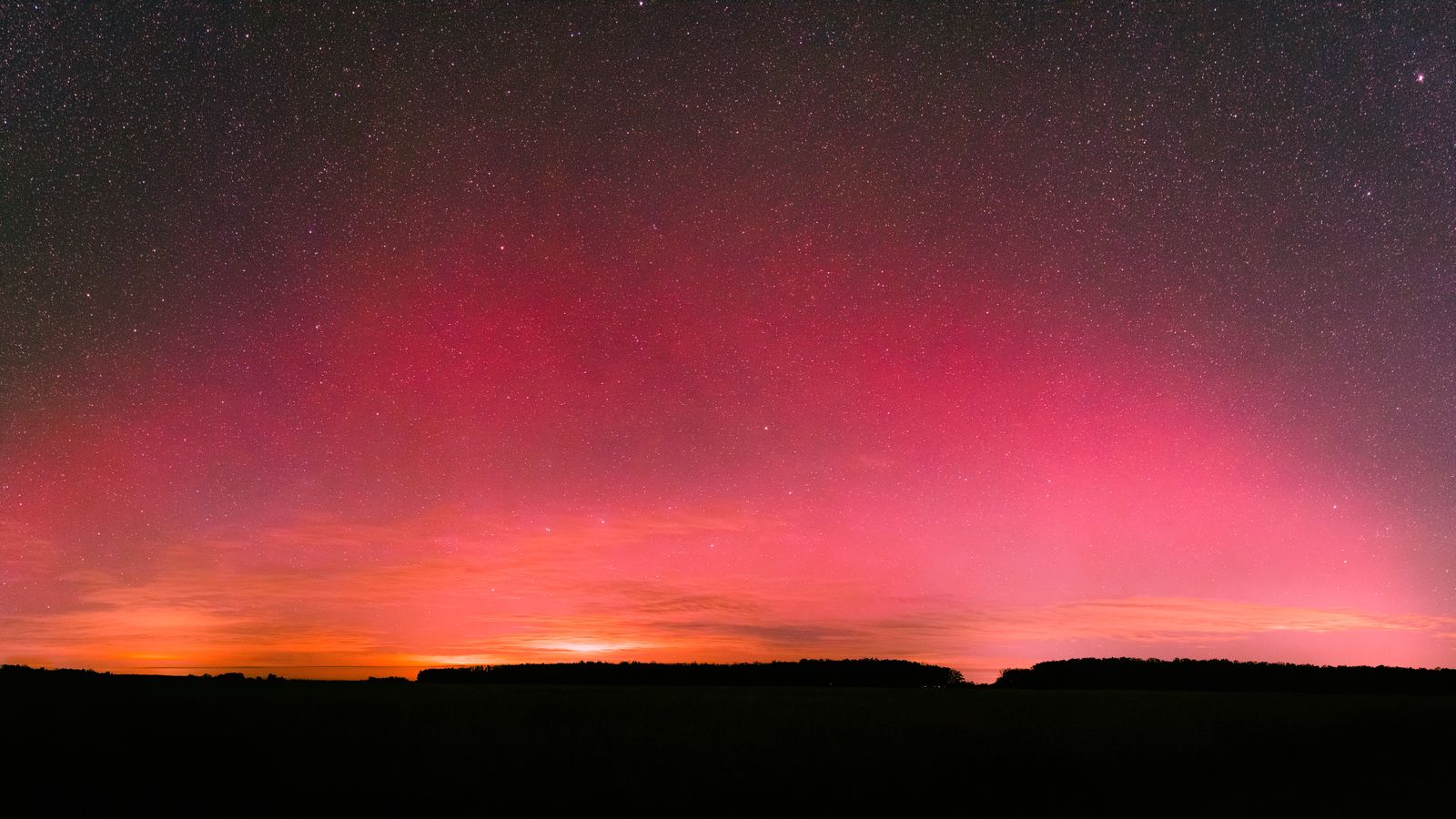
Historical reports from 1859 describe red or crimson light over Cuba, parts of Central America, Hawaii, and South America. A later scientific reconstruction found that red auroral displays were reported in both Cuba and Hawaii, places where such displays are exceptionally rare.
In parts of the northern United States, witnesses said the light was bright enough to read by at night. A later recollection from the Rocky Mountains described miners waking and preparing breakfast because they believed dawn had arrived.
The total energy of the 1859 flare cannot be calculated precisely from the observations that survive. Comparisons with billions of nuclear weapons may sound dramatic, but they depend heavily on which part of the event is being measured and create a level of certainty the historical evidence cannot provide.
Who was Richard Carrington
Carrington was 33 when he witnessed the flare. Wealth from his family’s brewing business helped him establish his observatory at Redhill, where he carried out systematic observations of sunspots and recorded their changing positions across the solar surface.
His work helped demonstrate that the Sun rotates differentially, with different latitudes turning at different rates. His name also survives in the Carrington rotation, a standard solar-coordinate system based on a mean synodic period of approximately 27.2753 days.
When the bright patches appeared on 1 September, Carrington reportedly left the observing room to find someone who could confirm what he was seeing. By the time he returned, the light was fading. The observation lasted only a few minutes, but the storm that followed helped establish the idea that events on the Sun could affect technology and magnetic conditions on Earth.
Hodgson’s independent report is an important part of that history. Referring to Carrington alone as the first person to record a solar flare leaves out the second observer whose account was published alongside his.
The 1921 rehearsal
From 13 to 15 May 1921, another exceptionally powerful geomagnetic storm struck Earth. Telegraph and telephone systems were disrupted in several countries, and fires were associated with electrical equipment connected to long communication lines.
At Brewster, New York, a railway station burned after its telegraph switchboard caught fire. The incident helped give the disturbance its enduring nickname, the New York Railroad Storm.
Modern reconstructions have placed the 1921 event among the strongest geomagnetic storms ever documented. Some estimates make it comparable with the Carrington Event rather than simply a weaker repetition, although the two storms affected technological systems built for very different eras.
By 1921, communication networks were denser, electrical infrastructure was more widespread, and radio had become important. The storm demonstrated that the threat was not limited to the early telegraph age.
What a Carrington-class storm would do now
Modern infrastructure presents many more points of exposure. Rapid geomagnetic changes can drive currents through long, grounded conductors such as high-voltage transmission lines and pipelines. Satellites face a different set of hazards, including charged-particle damage, surface charging, navigation errors, and changes in atmospheric drag.
Large power transformers are a particular concern because geomagnetically induced currents can push their magnetic cores into saturation. A North American Electric Reliability Corporation assessment notes that large transmission transformers can develop winding and structural hot-spot heating during geomagnetic disturbances.
Some of these transformers are custom-built and difficult to replace quickly. That does not mean a Carrington-class storm would automatically destroy entire continental grids, however. The outcome would depend on the storm’s magnetic orientation, the design of each network, operating conditions, protective equipment, and the actions taken by grid controllers.
Other likely effects include degraded GPS accuracy, interruptions to high-frequency radio, increased radiation exposure on polar aviation routes, disruption to satellite operations, and changes in the upper atmosphere that increase drag on spacecraft in low Earth orbit. Mission operators and airlines can alter procedures when forecasts indicate elevated risk.
Economic estimates for an extreme storm vary widely. A regional grid failure lasting days would be very different from widespread transformer damage requiring lengthy replacement programmes, so predictions of a fixed multitrillion-dollar loss should be treated as scenarios rather than guaranteed outcomes.
How often does the Sun do this?
Solar activity rises and falls in a cycle lasting roughly eleven years. By 2026, Solar Cycle 25 was generally considered to be in its declining phase after a likely maximum in late 2024.
Declining does not mean quiet. Large active regions and powerful eruptions can still occur after the formal maximum, and significant geomagnetic storms may continue for several years as the cycle moves toward minimum.
In May 2024, Earth experienced a geomagnetic storm that reached NOAA’s G5, or extreme, category and produced auroras far outside their usual range. It was the first G5 storm since 2003, but measurements did not place it in the same category as the most extreme reconstructions of 1859.
The recurrence rate of a true Carrington-class storm remains uncertain. In July 2012, a powerful double coronal mass ejection crossed Earth’s orbit but struck NASA’s STEREO-A spacecraft instead. NASA reported that an earlier eruption had cleared part of the path ahead of the double ejection, helping it maintain an unusually high speed.
Earth had occupied the affected part of its orbit roughly a week earlier. The episode provided a modern reminder that the Sun remains capable of producing eruptions with characteristics associated with the most severe historical storms.
Building a wall out of gas
Most space-weather protection plans focus on stronger forecasting, improved operating procedures, transformer protection, and the ability to disconnect vulnerable equipment. A more speculative proposal asks whether material deliberately released in space could change how an incoming storm interacts with Earth’s magnetic field.
A paper published in Space Weather and available as Terrestrial Space Weather Protection Through Human-Produced Mass-Loading describes a concept sometimes called StormWall. It proposes releasing neutral material near geosynchronous orbit, where the gas would become ionised and mass-load the outer magnetosphere.
In the simulations, this added plasma reduced magnetic reconnection and lowered several measures of geomagnetic-storm intensity by 50 per cent or more. That is different from physically blocking or absorbing half of all the energy carried by a coronal mass ejection.
The demonstration model required 384,048 kilograms of material. Hackaday’s coverage translated that quantity into approximately six Starship launches, based on an assumed future payload capacity to geosynchronous orbit.
That delivery performance has not yet been demonstrated. Questions also remain about deployment hardware, the choice of material, orbital contamination, international governance, timing, cost, and whether the simulated protection would work against storms with different magnetic structures.
For now, defence remains rooted in monitoring and preparation. NASA says DSCOVR can give forecasters around 15 to 60 minutes of final warning after measuring solar-wind conditions at the L1 Lagrange point. Coronagraphs and other solar instruments can identify Earth-directed eruptions much earlier, but their precise magnetic orientation is often not known until they are much closer to Earth.
The Sun as a character in the story
The Sun is not idle. Its magnetic field twists, reconnects, and launches plasma into space throughout every solar cycle. Most eruptions miss Earth or cause effects that are temporary and manageable, but a small fraction arrive with the speed and magnetic orientation needed to produce a severe storm.
A previous SpaceMart article examined how the Parker Solar Probe passes within roughly 6.1 million kilometres of the Sun’s visible surface, flying through the corona and sampling the region where the solar wind and major eruptions develop.
Even ordinary space weather can disrupt radio communication, satellite navigation, spacecraft operations, and electrical systems under the wrong conditions. The Carrington Event remains at the far end of that risk spectrum, not because every detail of it can be measured precisely, but because its effects were documented across the technology of its time.
Nine years after the flare, astronomers detected helium in the Sun before the element was identified on Earth. The nineteenth century repeatedly revealed that the star overhead was more chemically, magnetically, and technologically connected to human life than anyone had realised.
A message across the years
What lingers about 1859 is not only the red light over Cuba or the telegraph equipment throwing sparks. It is the image of operators in New England removing their batteries and continuing to send messages through wires carrying current induced by a storm that began 150 million kilometres away.
For roughly two hours, according to the surviving accounts, human communication continued without its normal source of power. The Sun had disturbed Earth’s magnetic field, the field had driven current through the wires, and the operators had found a way to work with it.
Since then, the wires have multiplied, the transformers have grown, and satellites have filled the space above the atmosphere. The Sun follows the same magnetic cycles it followed in 1859, and occasionally it produces an eruption powerful enough to remind a technological civilisation that space has weather too.