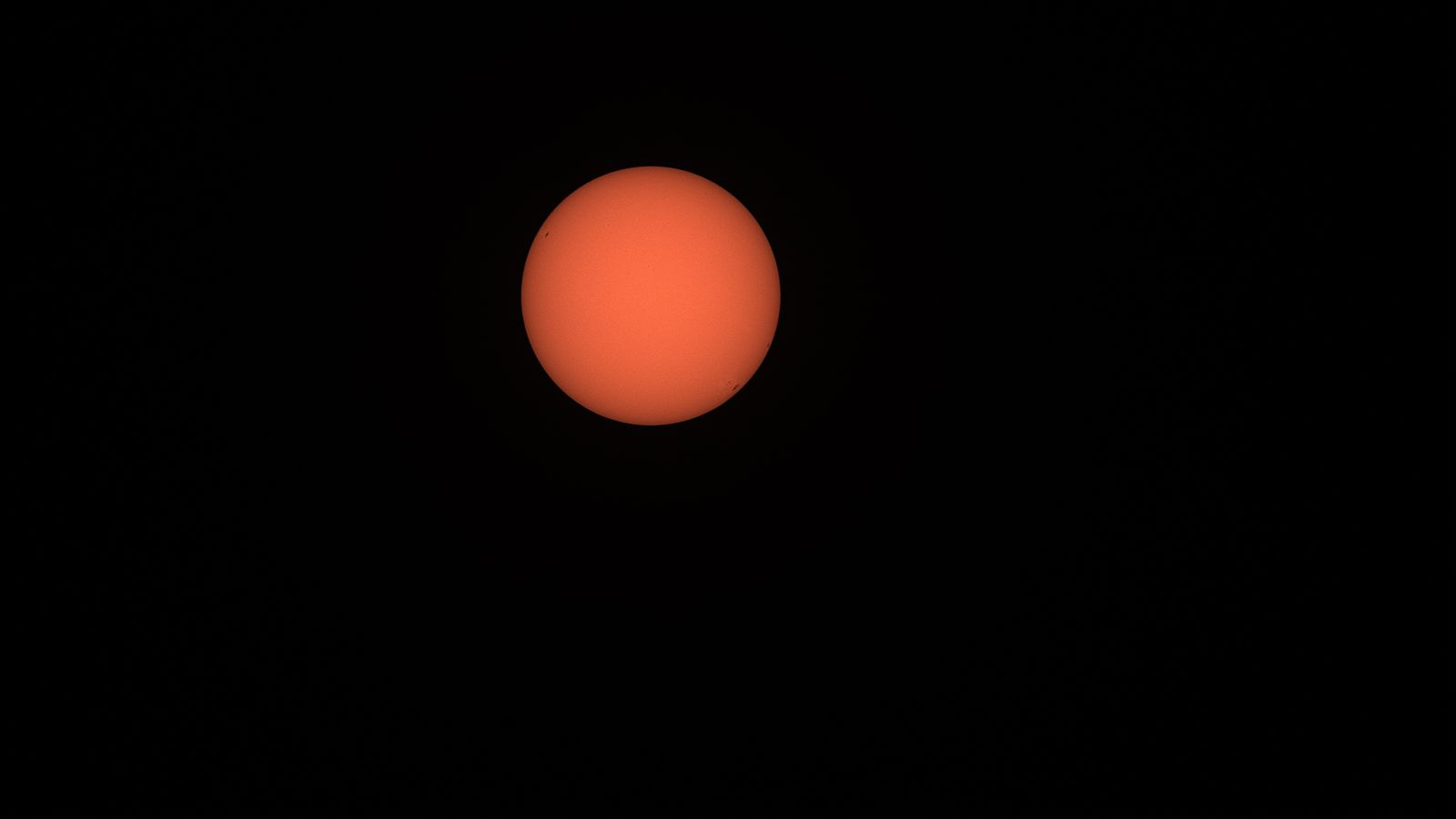
A spacecraft about the size of a small car keeps passing through the Sun’s outer atmosphere at up to 692,000 kilometres per hour. NASA’s Parker Solar Probe has repeatedly come within about 6.1 million kilometres of the visible solar surface, and on 8 June 2026 it completed its 28th close approach. NASA says modelling indicates that its heat shield reaches about 1,700°F, or roughly 930°C, at closest approach, while most of the spacecraft remains protected in the shield’s shadow.
The barrier making that possible is only 11.4 centimetres thick. That narrow wall separates one of the harshest environments any spacecraft has entered from instruments designed to operate at comparatively ordinary temperatures.
The number that sounds made up
Parker’s peak velocity of 692,000 kilometres per hour is the fastest recorded speed for a human-made object. NASA reported the probe moving at 430,000 miles per hour around the Sun during its record-setting close passes.
At that velocity, it could cover the distance from Philadelphia to Washington, D.C. in roughly one second. It would cross the continental United States from coast to coast in about 20 seconds.
Writers sometimes express the speed as approximately Mach 560, although Mach numbers technically describe motion through a medium and Parker is travelling through extremely thin plasma rather than ordinary air. Used only as a comparison with the speed of sound at sea level, the figure conveys the scale. The F-14 Tomcat featured in the original Top Gun reached around Mach 2.3 at altitude.
Parker first reached its current speed and distance records in December 2024. It has since matched the speed on several subsequent close approaches.
How a probe gets that fast
The Delta IV Heavy that launched Parker on 12 August 2018 supplied the initial energy needed to begin the mission. At the time, NASA described it as the world’s second-highest-capacity rocket and the most powerful rocket then used by NASA. It did not accelerate Parker to its present record speed by itself.
The probe used seven gravity assists at Venus to reduce its orbital energy and draw its path progressively closer to the Sun. NASA says the flybys gravitationally directed the spacecraft ever closer to the Sun.
Each encounter changed the shape of Parker’s orbit. As the probe descended more deeply into the Sun’s gravity well, it accelerated, reaching its highest speed while sweeping around the Sun near perihelion. The result is similar to a skateboarder gaining speed while dropping into a bowl, except the curved path is controlled by orbital mechanics rather than a physical surface.
6.1 million kilometres, in context
Earth orbits about 150 million kilometres from the Sun, while Mercury’s average orbital distance is roughly 58 million kilometres. Parker’s closest passes bring it within approximately 6.1 million kilometres of the solar surface, closer than any previous spacecraft.
The German-American Helios 2 probe, which set the previous proximity record in 1976, approached to roughly 43 million kilometres from the Sun. Parker now travels about seven times closer to the surface.
At that distance, the sunlight striking the heat shield is roughly 480 times as intense as the sunlight received near Earth’s orbit. The Sun is no longer a distant disc in the way it appears from Earth. It dominates the spacecraft’s environment.

The 11.4-centimetre wall
Parker’s Thermal Protection System is about 2.4 metres across and weighs approximately 73 kilograms. NASA describes it as two carbon-carbon composite panels surrounding a lightweight carbon-foam core. The foam is mostly empty space, which keeps the structure light while slowing the transfer of heat.
A white ceramic coating on the Sun-facing surface reflects much of the incoming light. The complete shield is about 4.5 inches, or 11.4 centimetres, thick.
The distinction between operating temperature and design tolerance matters. The shield was engineered to withstand temperatures of roughly 2,600°F, or about 1,430°C, but NASA’s modelling for the most recent closest passes places the actual peak near 1,700°F, or about 930°C.
Most of the spacecraft and its electronics remain in the shadow behind the shield, where temperatures can stay near 30°C. Parker carries four principal instrument suites: FIELDS, SWEAP, WISPR and IS☉IS. A small number of components, including the Solar Probe Cup and several antennas, were specially designed to operate beyond the shield’s full protection.
Why the corona does not vaporise it
The solar corona can reach temperatures of around 1 million°C, yet Parker does not encounter heat in the same way an object would inside a million-degree furnace on Earth. The explanation begins with the difference between temperature and heat.
As NASA explains, temperature reflects particle motion, while heat concerns the energy those particles transfer. Coronal particles move extraordinarily fast, but the corona is extremely sparse. Relatively few particles strike the spacecraft at any given moment.
Opening a hot oven exposes a person to hot, thin air without causing an instant burn. Touching the metal rack transfers far more energy because the rack contains much more matter in close contact. Parker moves through extremely hot but exceptionally low-density plasma, while its largest sustained thermal burden comes from intense sunlight.
The reflective coating, carbon foam and carefully controlled orientation are designed around that burden. Parker must keep the shield precisely between the Sun and the vulnerable parts of the spacecraft throughout each close pass.
What Parker is actually doing there
The idea of sending a probe toward the Sun dates to the early years of the space age. The eventual mission was named after physicist Eugene Parker, who proposed the existence of the solar wind in 1958.
Parker was built to investigate two connected mysteries: why the corona is far hotter than the visible solar surface below it, and how the solar wind is accelerated before spreading through the solar system. Those questions cannot be answered completely through distant images alone. The probe must sample magnetic fields, charged particles and plasma waves close to where the processes begin.
In 2021, Parker became the first spacecraft to cross the Alfvén critical surface and enter the solar corona. NASA defines that boundary as the point that marks the end of the solar atmosphere and the beginning of the solar wind. Beyond it, the outward-flowing wind moves too quickly for Alfvén waves to travel back toward the Sun.
Parker’s in-situ observations are now helping scientists test and refine models of how energy travels through the corona and heats the solar wind. Researchers working with the mission have said the new measurements are changing their understanding of energy movement through the Sun’s outer atmosphere.
Why any of this matters on Earth
Solar wind and eruptions from the Sun can disturb satellites, interfere with radio communications, affect navigation systems and induce currents in electrical infrastructure. During the March 1989 geomagnetic storm, six million people in Quebec lost electricity for nine hours.
Parker is not a stand-alone alarm positioned permanently between Earth and an incoming storm. Its larger contribution is scientific: measurements gathered close to the Sun help researchers understand how solar structures form and evolve, which can improve the physical models used in space-weather forecasting.
NASA says Parker’s observations can help improve space-weather predictions and protect astronauts and technology. Continued passes also allow scientists to compare conditions across changing phases of the solar cycle.
The mission it echoes
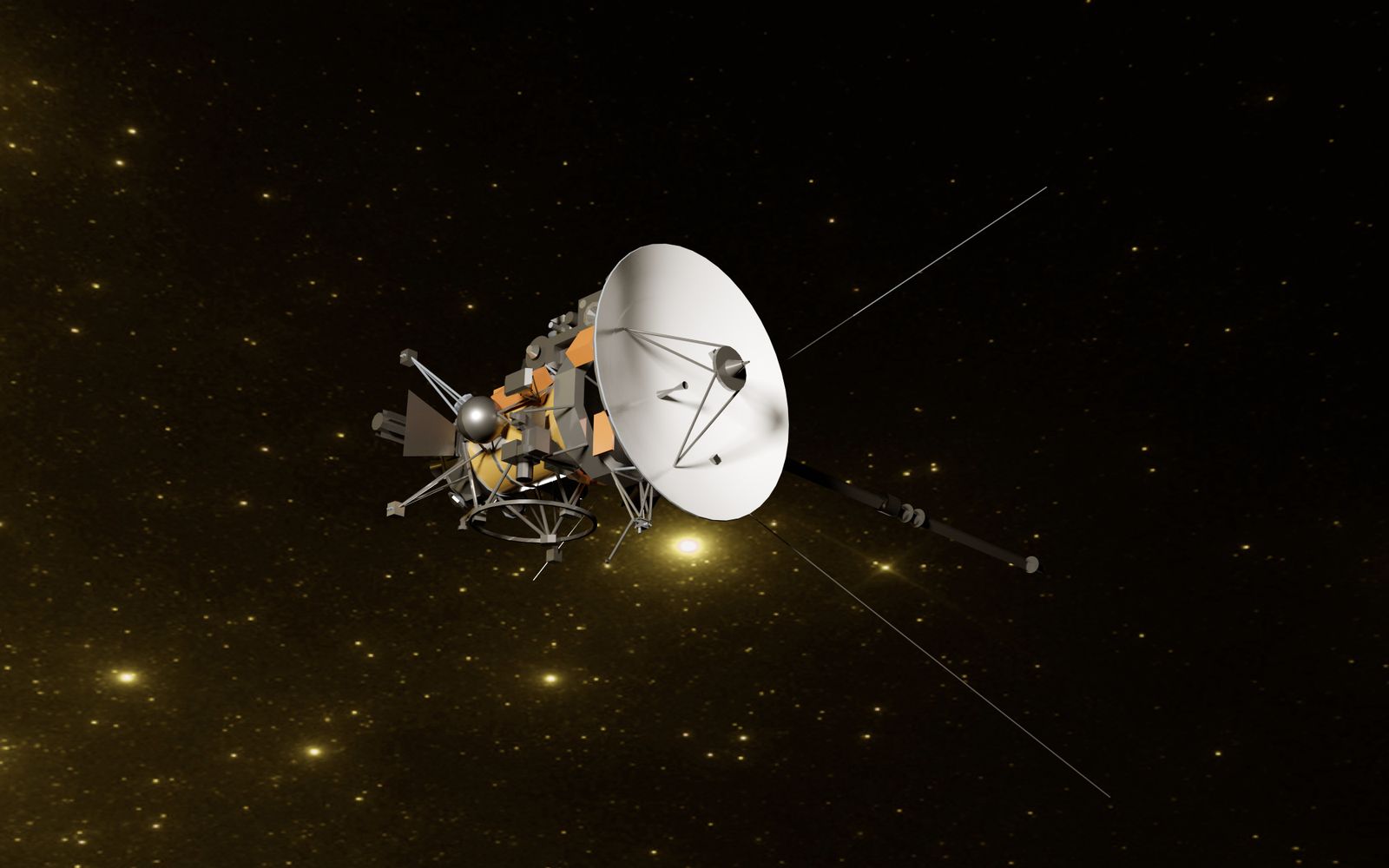
Parker sits at one end of a spectrum of NASA missions shaped by extreme engineering endurance. At the other is Voyager 1, launched in 1977 and travelling through interstellar space after crossing the heliopause in 2012.
Voyager is a mission of patience. Parker is a mission of nerve. One continues outward at roughly 17 kilometres per second, while the other reaches about 192 kilometres per second as it circles close to the Sun.
Both follow the same underlying principle: send instruments where human beings cannot go, then engineer the spacecraft to survive long enough to return observations that could not be collected any other way.
What happens next
On 8 June 2026, Parker completed its 28th close approach to the Sun, again reaching its established distance and speed records. NASA reports that the heat shield remains in excellent condition, with no detected degradation.
The spacecraft will remain in its current orbit and continue collecting observations as solar activity moves into a declining phase. NASA says the mission’s specific plans for late 2026 and beyond remain under review, so claims about a fully scheduled or funded programme through the end of the decade would be premature.
For now, roughly every three months, a car-sized spacecraft sweeps past the Sun at 692,000 kilometres per hour and later checks in with mission controllers at the Johns Hopkins Applied Physics Laboratory in Laurel, Maryland. The signal means its orientation held, the shield remained between the Sun and the electronics, and another set of observations survived the journey home.