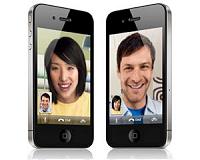
Apple was Tuesday fined Aus$9 million (US$6.7 million) by an Australian court for making false claims about consumer rights when refusing to fix faulty iPhones and iPads previously repaired by a third party.
Customers of the US tech giant had complained to the Australian Competition and Consumer Commission (ACCC) after an operating system update disabled their devices in a global issue known as "error 53".
The users were told by Apple that they were not eligible for a remedy if the iPhone or iPad had been repaired by another company.
The ACCC took Apple to the Federal Court last year over allegedly false or misleading representations to customers with faulty iPhones and iPads about their rights under the law.
"If a product is faulty, customers are legally entitled to a repair or a replacement under the Australian Consumer Law, and sometimes even a refund," ACCC Commissioner Sarah Court said in a statement.
"The court declared the mere fact that an iPhone or iPad had been repaired by someone other than Apple did not, and could not, result in the consumer guarantees ceasing to apply, or the consumer's right to a remedy being extinguished."
Apple admitted misleading at least 275 Australian customers over the issue between February 2015 to February 2016 on its US website, by its Australian store staff and on its customer service phone calls.
The consumer watchdog said Apple had also committed to providing new devices as replacements, after allegations that the company was giving customers refurbished goods instead after a device suffered a major failure.
Apple said Tuesday that it had "very productive conversations with the ACCC" over the issue and vowed to offer its Australian users "excellent service".
It has previously described the error as appearing "when a device fails a security test" and released an operating system update to fix the issue.
Jilted Fujifilm sues Xerox for $1bn after aborted merger
Tokyo (AFP) June 19, 2018 –
Japanese technology giant Fujifilm said Tuesday it was suing US firm Xerox, seeking more than $1 billion in damages after a merger between the two firms was scrapped last month.
Fujifilm slammed what it said was a "unilateral decision to terminate without legitimate cause" the planned merger announced in January.
The merger was shelved after a lawsuit by powerful shareholders Carl Icahn and Darwin Deason, who together own more than 15 percent of Xerox and had vigorously opposed the tie-up.
The pair secured an injunction in April to halt the deal after a New York judge agreed the merger prioritised the interests of the Xerox CEO over the firm's shareholders.
Fujifilm also announced a challenge to that ruling, saying it was "inconsistent with shareholder democracy to allow Carl Icahn and Darwin Deason… to dictate the fate of Xerox."
When scrapping the merger, Xerox cited "material deviations" in the audited accounts of an existing joint venture known as Fuji Xerox controlled by Fujifilm.
And the Japanese firm said it continued to believe that the tie-up between Xerox and Fuji Xerox was "the only correct solution to provide shareholders of both companies with exceptional short and long-term value".
Xerox issued a robust statement in response, saying it would "vigorously defend its decision and pursue any and all remedies available to Xerox arising from Fujifilm's mismanagement and misconduct".
Calling off the merger was seen as a victory for Icahn, a battle-tested billionaire who has aggressively challenged companies since the 1980s.
It came after activist fund Elliott won a weeks-long power struggle with Vivendi over Telecom Italia by wresting control of the company's board in early May.