
Voters in Iraq's Kurdistan elect a new parliament Sunday, with the autonomous region mired in an economic crisis a year after an independence referendum that backfired disastrously.
Despite deep discontent and divisions, there appears to be little prospect of a major political shakeup as the region grapples with the fallout from the controversial poll last September.
"The Kurds lost so much with that referendum," said shop owner Omar Karim, 62, in the region's second city Sulaymaniyah.
"This election will not give us back what we lost. The Kurdish leaders are not learning from their errors."
The vote last year saw more than 92 percent of Kurds back secession, but the federal government rejected that as "illegal".
Baghdad then imposed economic penalties and sent federal troops to push Kurdish forces out of oil fields vital for the autonomous region's economy.
Regional president Massud Barzani, who had dominated the region since the ouster of Saddam Hussein and was the driving force behind the plebiscite, stepped down in November.
Despite the upheaval, Sunday's election sees the parties that have long held sway set to come out on top yet again.
Barzani's still-dominant Kurdistan Democratic Party (KDP) will face established rivals, the Patriotic Union of Kurdistan (PUK) and the Goran (Change) party.
There is only one new political party competing — the New Generation movement, founded in 2018 to channel public anger at the region's elite.
– 'Harsh reality' –
Ire at the political establishment has been fanned by economic woes since the referendum.
Last December, protesters attacked the headquarters of major political parties across Iraqi Kurdistan in days of violent demonstrations that left at least five dead.
Departed regional president Barzani has not been replaced, and his powers have been redistributed temporarily to parliament and the local government.
But despite the disarray, analysts say entrenched loyalties in the region should limit the impact of the new challengers.
"Any democratic change by new political forces comes up against the harsh reality of Kurdish society," said Karim Pakzad from the French Institute for International and Strategic Affairs.
"The big government posts and economic levers are held by different figures from the PDK and PUK and there is little room for reformist parties to develop."
That was echoed on the streets of regional capital Arbil. Day labourer Ahmed Ali said he would be unlikely to vote.
"Elections never change anything," the 44-year-old told AFP.
Civil servant Salar Mohammed said he would vote PDK, and predicted that established parties would remain at the helm.
"The opposition has not been good in recent years and it is the big parties that will remain in the majority in the government and parliament," the 31-year-old said.
– National stage –
The vote in Kurdistan comes amid major political shifts not just in the region but elsewhere in the country.
Iraq is still struggling to form a new government after a nationwide parliamentary poll in May.
That has prompted traditional heavyweights the KDP and PUK to jostle to bolster their positions in both Kurdistan and Baghdad.
Until now the two parties had a tacit agreement that the KDP would have the leadership of Kurdistan while the PUK would have Iraq's figurehead presidency, reserved for a Kurd since the 2003 ouster of Saddam.
The ruptures after the referendum have torn apart that pact — meaning the two parties are jockeying for top position both in their home region and nationally.
Days after the vote in Kurdistan, Iraq's national parliament should meet to choose a new president.
While the political manoeuvering continues, the cold truth for Iraq's Kurds is that fifteen years after the fall of Saddam Hussein, dreams of forming their own homeland now lie in tatters.
Kurdistan's economy has slumped, political divisions have deepened and the region is struggling to get back on its feet.
"The referendum set back Kurdistan by 10 years," analyst Pakzad said.
Iraq's Kurdistan region, autonomous since 1991
Arbil, Iraq (AFP) Sept 27, 2018 –
Iraqi Kurdistan, which holds parliamentary elections on Sunday, has been autonomous since 1991 and mired in an economic crisis since its failed independence referendum a year ago.
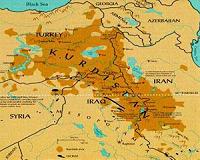
Here is some background about the region bordering Iran and Turkey.
– Mountainous north –
Situated in the rugged mountainous north of Iraq, the region is home to about five million people.
They are mainly Kurds, who are mostly Sunni Muslims, and a Turkmen minority.
Kurdish and Arabic are the official languages, and the capital is Arbil.
Of Indo-European origin, Kurds also live in Iran, Turkey and Syria.
– Long persecuted –
The struggle for an independent Kurdish state started during Britain's mandate in Iraq and was relaunched in 1961 by the Kurdistan Democratic Party (KDP) of Mustafa Barzani.
It erupted into an Iraqi-Kurd war that finished in 1970 with a peace accord that granted Kurds autonomy.
But this failed to materialise and a new conflict started in 1974, the Kurds quickly collapsing.
The following year, the KDP split with the creation of the revolutionary Patriotic Union of Kurdistan (PUK).
In 1987-1988, as the Iran-Iraq war neared its end, the regime of Saddam Hussein launched violent operations against the Kurds.
The Anfal campaign saw nearly 180,000 killed and more than 3,000 villages destroyed.
The regime's policy of "Arabisation" forced thousands to leave their homes, replaced by Arabs.
Baghdad used chemical weapons against the village of Halabja, killing 5,000 people.
– Autonomy –
Iraqi Kurdistan gained de facto autonomy after the 1991 Gulf War, when Western powers intervened to protect Kurds against an onslaught by Saddam's forces that led hundreds of thousands to flee to neighbouring countries.
In 1992 the Iraqi Kurds elected their first parliament and set up a government.
Clashes erupted in 1994 between the PUK and the KDP parties over the distribution of the region's resources, leaving 3,000 dead over four years.
In 2003 Kurds joined up with US troops to help overthrow Saddam. He was executed three years later.
Iraqi Kurdistan became formally autonomous as a federal republic in 2005, with Mustafa Barzani's son, Massud, elected president.
– US allies against IS –
In 2014 Kurdish forces took control of the oil-rich province of Kirkuk, profiting from the chaos created by the advance of the Islamic State (IS) group.
They became an important ally of the US-led coalition against the jihadists in zones bordering Kurdistan.
– Failed independence referendum –
On September 25, 2017 Iraqi Kurdistan voted for independence at a referendum initiated by Massud Barzani, despite warnings from Baghdad and the international community.
The referendum covered disputed border areas beyond the autonomous region, such as Kirkuk, and led Iraqi government forces to act to retake the oil-rich province.
Barzani stepped down as president. Since then Iraqi Kurdistan has been run by his nephew, Nechervan Barzani.
– Economically strapped –
Iraqi Kurdistan went through an economic boom after the 2003 US-led invasion of Iraq, as the rest of the country sank into violence.
However the emergence of IS in 2014 hit investments hard.
In the wake of last year's failed referendum, the loss of disputed territory, notably Kirkuk, deprived the region of essential oil revenues.
The central government withheld civil servant salaries, fuel prices rose and there were power cuts, feeding popular anger that erupted into days of protests in December.
Baghdad also imposed a blockade for nearly six months on two of the region's airports that was lifted in March 2018.
