
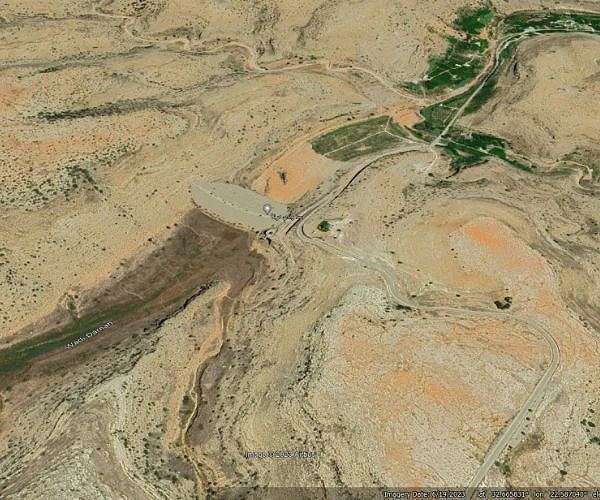
Researchers from the USC Viterbi School of Engineering and the Institute de Physique du Globe de Paris at the University of Paris Cite have identified an alarming trend: desertification is increasing soil erosion in coastal regions, intensifying the impact of floods in Middle Eastern and North African port cities. Their study, published in 'Nature Communications', focused on the catastrophic floods in Derna, Libya, in 2023, where more than 11,300 lives were lost. The findings highlight how soil erosion contributed to the devastation, underscoring the growing vulnerability of arid areas as extreme weather events become more frequent due to climate change.
In the past decade, the Sahara has faced increasingly harsh droughts interrupted by powerful coastal storms, driven by rising temperatures in the Eastern Mediterranean. The research's lead author, Essam Heggy, a scientist in USC Viterbi's Microwave Systems, Sensors, and Imaging Lab (MiXIL), explained that the combination of drought and intense rainfall has exacerbated soil erosion, leading to deadly mudflows. This problem is worsened by outdated dams that are unable to control the resulting floodwaters.
Heggy challenges the common view that droughts pose the greatest threat to desert regions. "Our study, 'Assessing flash flood erosion following Storm Daniel in Libya,' provides the evidence that floods, not droughts, are now the more dangerous threat," he said.
The 2023 flash floods, caused by Storm Daniel (also known as "Medicane Daniel"), resulted in unprecedented destruction along Libya's eastern coast. These floods were intensified by a mix of heavy rain, dam failures, and ineffective urban infrastructure. The combination of surface erosion and sediment-laden waters magnified the floods' destructive impact, devastating 66% of Derna's and 48% of Susah's urban areas.
Using Sentinel-1A Synthetic Aperture Radar images, the team analyzed changes in the landscape before and after the storm. This data helped map the extent of flood erosion, revealing how the soil erosion increased the flow's intensity and contributed to the collapse of critical dams.
Heggy emphasized the limitations of current flood prediction models, stating that while they can estimate flood extent, they fail to consider the effects of soil erosion in desert regions. He stressed the importance of radar satellite monitoring, saying, "Improving the monitoring of arid watersheds using advanced radar satellites will be crucial for mitigating these devastating risks across several parts of the Sahara, Arabian Peninsula, and other deserts."
Jonathan Normand, a visiting graduate student at the USC AWARE Center and first author of the study, pointed out the paradox in current technology use: "Today, you can post on social media from the middle of a desert thanks to the hundreds of communication satellites now orbiting Earth. Yet, researchers are still left with a limited number of satellites to grasp the complexities of Earth's dynamics and surface processes in deserts."
Heggy and his colleagues warned that the events seen in Libya could easily happen elsewhere in North Africa and the Arabian Peninsula, where growing populations and a lack of disaster preparedness increase the risks. They also noted that stronger storms and insufficient policy changes are compounding the threat.
"The deadly floods of Derna show that regional policymakers in the Middle East and North Africa are not yet sufficiently listening to science," Heggy said. "The deadliest enemy ahead is our own belief that these extremes are punctual events that will not repeat. Climate models tell us that they will hit back even stronger."
Research Report:Assessing flash flood erosion following storm Daniel in Libya
