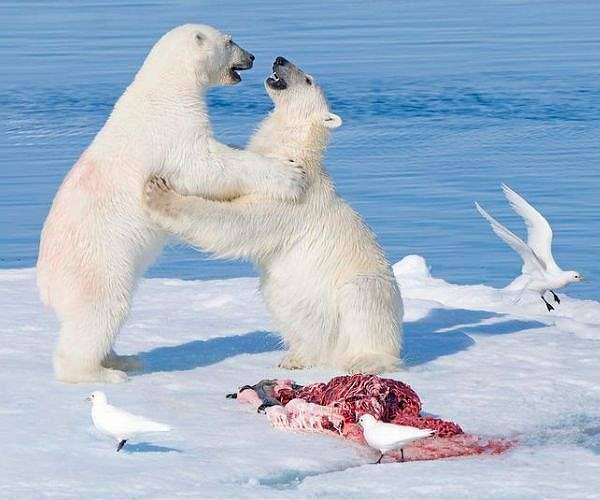
A study published in Oikos highlights polar bears as a cornerstone species for arctic scavengers, showing that their annual hunting activities supply about 7.6 million kilograms of carrion to the region. Researchers from the University of Manitoba, San Diego Zoo Wildlife Alliance, Environment and Climate Change Canada, and the University of Alberta found that when polar bears hunt seals on sea ice, they leave prey remains that transfer energy from marine to terrestrial ecosystems. At least 11 vertebrate species, such as Arctic foxes and ravens, feed on these leftovers, with up to eight other species possibly benefiting.
Lead author Holly Gamblin of the University of Manitoba stated, "Our findings quantify for the first time, the sheer scale of polar bears as a food provider to other species and the interconnectedness of their ecosystem." She added that no other arctic species replicates the bears' role, particularly in dragging prey onto the ice and leaving substantial remains.
The study also found that declining sea ice-accelerated by climate change-has reduced polar bear populations and diminished access to this vital food source. Dr. Nicholas Pilfold of San Diego Zoo Wildlife Alliance noted, "The sea ice acts as a platform for many species to access scavenging resources provided by polar bears, and ultimately, declines in sea ice will reduce access to this energy source. Our findings indicate that documented declines in polar bear abundance in two subpopulations have already resulted in the loss of more than 300 tonnes of food resources for scavengers annually."
Researchers warn that shrinking polar bear numbers threaten not just the species but an entire network of dependent arctic wildlife. The study underscores the urgency of conservation measures to safeguard the ecosystem linked to polar bear survival.
Research Report:Predators and scavengers: Polar bears as marine carrion providers