
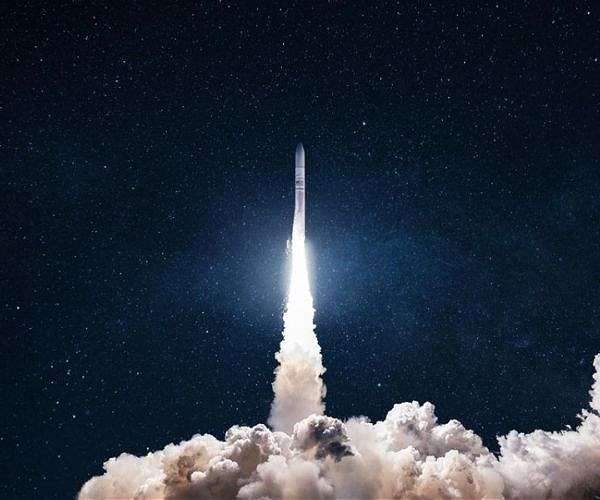
SpaceX has successfully launched Northrop Grumman's newest and largest cargo spacecraft, the Cygnus XL, on Sunday, September 14. For this mission, it rode atop a Falcon 9 rocket from SpaceX and lifted off from Cape Canaveral Space Force Station in Florida around 6:11 P.M. GMT. This mission, known as the NG-23, is the debut flight for the Cygnus XL, the upgraded version of the Cygnus line.
The NG-23 and the Cygnus XL
NG-23 is Northrop Grumman's 23rd supply trip to the International Space Station (ISS) for NASA, but this one is special. It's the first time the Cygnus XL has gone to space. The new version is larger and can carry more than the older model, which handled about 8,500 pounds (3,855 kilograms). The Cygnus XL delivers 11,000 pounds (4,990 kilograms) of supplies on this flight.
The spacecraft has also been named the S.S. William 'Willie' McCool, in honour of one of the astronauts who died in the 2003 Space Shuttle Columbia tragedy.
The earlier mission, NG-22, was meant to fly earlier this year but was cancelled after the craft was damaged during transport. Before that, some technical problems had pushed the schedule from January to June. This showed that tech evolution can be halted by simple problems, but can be fixed to move forward, just like how the Bitcasino mobile app handles its problems.
The freighter's mission
The Cygnus XL delivers everyday supplies and carries experiments and technology that could make a difference in future space exploration and even life on Earth. Some of its cargo includes materials needed to produce semiconductor crystals in space and some vital equipment to improve cryogenic fuel tanks for deep-space missions.
The freighter also holds a specialised UV light system, which is made to prevent the growth of bacteria in water systems. This is an essential safeguard for astronauts living in orbit, such as on the ISS. The mission also includes carrying supplies to space so they can grow medical crystals that could eventually lead to better treatments for cancer and other serious illnesses.
These experiments and tools highlight the dual purpose of ISS cargo missions: to support astronauts' daily needs while enabling scientific research that benefits both space travel and life back on Earth.
What will happen next?
The Cygnus XL is expected to arrive at the ISS on Wednesday, September 17, at 6:35 A.M. EDT. Unlike SpaceX's Dragon capsule, which can dock on its own, Cygnus will need the ISS's Canadarm2 robotic arm to grab and attach it. NASA will show the event live starting at 5 A.M. EDT.
The ship will stay connected to the ISS until March 2026, providing storage and support. Cygnus will detach and burn up in Earth's atmosphere at the end of its mission, the same way Russia's Progress supply ships do. However, SpaceX's Dragon is different, as it can return to Earth and be reused.
Marking a new chapter in space cargo missions
The NG-23 mission proves that humans are getting to know space even better. With the current technology, humanity could do delivery and cargo missions, such as the NG-23, and help the scientists living on the International Space Station.
Even though the Cygnus XL doesn't have the capacity to drop back to Earth safely, other rockets and pods can, such as SpaceX's Dragon capsule. Whether it's as simple as placing a bet in Bitcasino or as mind-blowing as launching a cargo capsule into orbit, technology has helped humans be at their best.
