
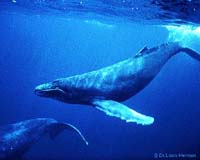
The U.S. National Oceanic and Atmospheric Administration says most North Pacific humpback whale populations are rebounding.
Officials say a study funded primarily by NOAA and conducted by more than 400 whale researchers across the Pacific region shows the overall population of humpbacks has rebounded to approximately 18,000 to 20,000 animals. That population numbered fewer than 1,500 in 1966, when international whaling for the species was banned.
However, some isolated populations of humpbacks, especially those in the Western Pacific Ocean, have not recovered at the same rate and still suffer low numbers, researchers said.
The results of the report come from SPLASH — Structure of Populations, Levels of Abundance and Status of Humpback — an international effort involving more than 50 organizations. The project, which started in 2004, determined whale migratory patterns and estimated population sizes by using a library of 18,000 photographs of whale flukes to identify 8,000 individual whales.
In addition to whale fluke photographs, SPLASH researchers said they collected more than 6,000 biopsy samples for studies of genetics and pollutants, along with thousands of additional photographs to determine how levels of scarring from line entanglement and ship strikes vary among regions.
