
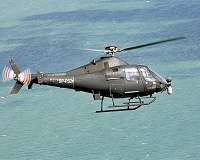
The U.K. Ministry of Defense and Leonardo will move forward with phase 2 of the Rotary Wing Unmanned Air System Demonstrator program.
The program, referred to as RWUAS CCD Phase 2, is a two-year agreement that aims to identify, develop and explore plans to integrate rotary-wing capabilities with military unmanned aircraft.
"Supported by our rising defense budget and 178 billion pounds [$221 billion] Equipment Plan, we want to transform defence and work with industry, academics and allies to find innovative ways to stay at the international cutting edge," U.K. defense procurement chief Harriet Baldwin said in a press release.
Baldwin went on to note the plan will sustain high-skill jobs, and will identify solutions for keeping ground-level troops safer in future battlefields.
"This is an exciting time as the opportunities presented by unmanned technologies start to be realised in the vertical take-off and landing sector," Leonardo CEO Mauro Moretti added. "These technologies and systems can be a game changer in terms of undertaking a wide range of autonomous operations at a significantly lower cost."
RWUAS CCD Phase 2 will continue the research and development facilitated under the first phase of the program, which took place between 2013 and 2015. Leonardo says it will work closely with the U.K. Ministry of Defense for the follow-on operation.
UC researchers teach drones to land themselves on moving targets
The buzzword in drone research is autonomous – having the unmanned aerial vehicle do most or all of its own flying. It's the only realistic way that drones will have commercially viable uses such as delivering that roll of toilet paper to customers, said Manish Kumar, associate professor of mechanical engineering at the University of Cincinnati's College of Engineering and Applied Science.
