
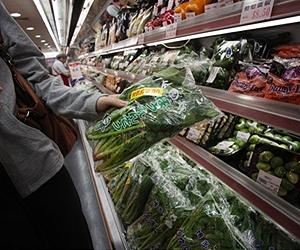
Japan on Wednesday asked trading partners at the World Trade Organization not impose what it described as unjustifiable import restrictions on its exports.
Explaining actions taken on food safety following the nuclear accident at Fukushima No.1 plant, a Japanese envoy to the WTO said: "Japan would like to request WTO members not to overreact by implementing unjustifiable import restrictions."
The country outlined that it had restricted distribution of agricultural products that may have been contaminated, and that it was monitoring levels of radioactive contaminants in order to prevent potential food safety risks.
It added that it was striving to "provide precise information in a timely manner" to its trading partners about the situation and therefore, in return, it called on WTO members to not overreact.
No country commented on Japan's statement, a WTO official said.
Several countries, including China, Taiwan, Singapore and the United States, have banned some food imports from Japan on fears of radioactive contamination.
earlier related report
Europe eyes stiffer controls on Japanese food imports
Brussels (AFP) March 30, 2011 –
The EU said Wednesday it may strengthen controls on imports of Japanese food to include checks on the presence of plutonium.
"The European Union will look at this question" at experts level, said European Commission spokesman on health issues Frederic Vincent. "We will take plutonium contamination into account."
Measures activated in Europe last week over fears of radiation contamination after Japan's nuclear crisis touch on iodine-131, caesium-134 and caesium-137.
But the detection of plutonium in soil this week at the stricken Fukushima nuclear plant has sparked new fears.
"The situation is serious but surveillance is under way and if there is a need to broaden the controls, the EU will do that," the spokesman added.
The Commission, the 27-nation bloc's executive arm, imposed emergency tests on imports of Japanese food and feed a week ago originating in or consigned from areas "most affected by the accident" at the Fukushima Daiichi plant.
Deliveries must come "accompanied by a declaration, to be provided by the Japanese authorities, attesting that the product does not contain levels of radionuclides that exceed the EU's maximum permitted levels."
Radioactive elements listed under the special regulation are: iodine-131, caesium-134 and caesium-137.
Importers will be required to notify national authorities two days before landings and physical checks in labs "will be carried out on at least 10 percent of the consignments."
The EU commission says Japan may export to the EU fishery products, bivalve molluscs (seafood), casings and pet food as well as fruits and vegetables.
Imports to the EU of Japanese agricultural products were worth just over 200 million euros in 2010.
Share This Article With Planet Earth
