
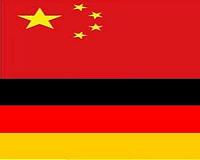
Berlin is preparing for the first time to veto the takeover of a German company by Chinese investors for "strategic" reasons, local media reported Thursday, a year after ministers toughened up rules over fears the country could lose vital technologies.
Business weekly Wirtschaftswoche reported the economy ministry will prevent Chinese investor Yantai Taihai Corporation from buying Leifeld Metal Spinning.
The 200-employee firm produces high-strength parts for the car and aerospace industries that also have nuclear applications.
"The cabinet will make the decision on August 1," the magazine said.
A spokesman for the ministry declined to comment on the specific case when contacted by AFP.
But he said that "the economy ministry can examine whether a purchase endangers public order or the security of the Federal Republic of Germany."
The government can take a closer look if a foreign investor plans to buy at least 25 percent of a firm and last year modified rules to extend the range of firms eligible for a probe under "critical infrastructure" provisions or considered to be developing "key technologies".
Ministers also doubled the amount of time civil servants have to examine deals by non-European Union or European Free Trade Association (EFTA) buyers from two to four months.
The moves followed a string of high-profile takeovers or attempted takeovers of high-tech German firms by foreign companies.
Robot maker Kuka was bought by China's Midea in 2016, while factory automation specialist Grohmann Engineering was snapped up by US-based Tesla Motors.
A study by consultancy EY found Chinese companies bought 54 German firms last year and invested $13.7 billion in Europe's largest economy.
In March, then-economy minister Brigitte Zypries said continuing approaches from China might encourage Berlin to lower the ownership threshold that could trigger a government probe of a foreign investment.
China's nod paves way for French-Italian eyewear merger
Beijing (AFP) July 26, 2018 –
China on Thursday announced it had approved the proposed merger between French lens-maker Essilor and Luxottica, the Italian eyewear company that produces Ray-Ban and Oakley sunglasses.
Beijing was one of the final hurdles for the tie-up between the two eyewear giants and its ruling likely paves the way for the deal's completion.
China was one of five key markets whose approval the two companies set as a condition for completing the tie-up in order to ensure that the merged entity would face no hurdles in them.
The deal had already been cleared by the authorities in the other markets — the EU, US, Canada and Brazil.
But China's State Administration for Market Regulation attached a list of conditions to its approval.
The combined company cannot sell eyewear products at prices below cost without justifiable reasons, the announcement said, adding several other restrictions for the merged company's operations in China.
When the merger was announced in January 2017, analysts had warned of possible reluctance by competition authorities over a deal that would bring together a major lens producer with a leading manufacturer of frames.
The European Union approved the merger in March, leaving China's unpredictable authorities as the remaining hurdle.
The deal had been expected to conclude late last year or early 2018, creating a combined group to be known as EssilorLuxottica, with annual sales of more than 15 billion euros ($17.7 billion) and a market value of nearly 50 billion euros.
Founded in 1961, Luxottica owns the Ray-Ban, Oakley and Sunglass Hut brands and licences for designer frames such as Giorgio Armani, Chanel and Ralph Lauren.
