
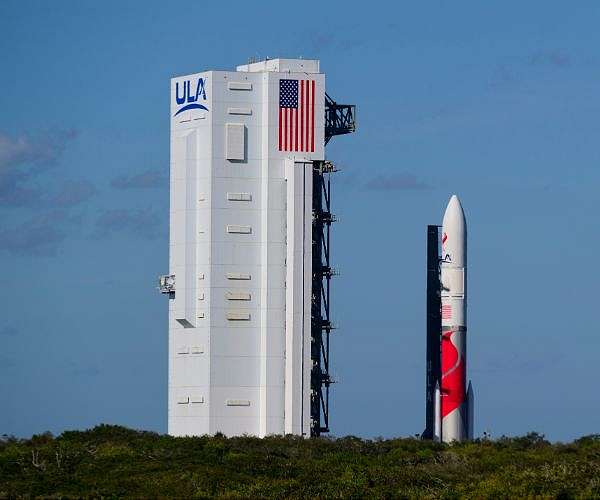
The U.S. Space Force's Space Systems Command (SSC) is preparing for the USSF-106 mission, scheduled to launch August 12 from Cape Canaveral Space Force Station, Florida. A United Launch Alliance Vulcan rocket will lift off from Space Launch Complex 41 during a one-hour window opening at 7:59 p.m. EDT.
This mission marks the first operational National Security Space Launch (NSSL) for the Vulcan system, following two successful certification flights. Vulcan Centaur replaces the Atlas V and Delta IV fleets, providing long-term Department of Defense and National Reconnaissance Office access to space.
"We certified the Vulcan Centaur Launch System in March 2025, and now we're on the pad and ready to launch Vulcan," said Col. Jim Horne, USSF-106 Mission Director. "That's progress, that's teamwork, and there are a lot more coming after this one. National Security Space Launch provides critical space capabilities to us and our allies through all of our launch service providers and we now have the launch vehicle diversity and advanced systems to take us into the future."
With Vulcan's certification, the U.S. ends reliance on Russian engines as mandated by Congress. The system aligns with the National Security Strategy, expands launch options for the USSF, and integrates commercial innovation into national defense space operations.
The primary payload, Navigation Technology Satellite-3 (NTS-3), is an Air Force Research Laboratory experiment built by L3Harris Technologies. NTS-3 will test advanced positioning, navigation and timing (PNT) technologies in near-geosynchronous orbit, including reprogrammable signals, electronically steerable antennas, and enhanced timekeeping algorithms.
As the first integrated U.S. navigation satellite experiment in nearly five decades, NTS-3 follows NTS-1 and NTS-2, which laid the foundation for today's GPS network. The project aims to create a more resilient and adaptable PNT architecture.
Assured Access to Space manages launch and range operations for the Space Force, ensuring the deployment of vital national security space assets. The program also sustains infrastructure, supports in-orbit operations, and advances U.S. leadership in space technology, science, and industry.
