
A top Chinese university on Thursday removed the student leader of an on-campus Marxist group, replacing him and other core members with its own picks — most of them Communist Party members.
The person responsible for the Marxist society "repeatedly" organised activities in violation of rules, the Peking University Student Extracurricular Guidance Center posted on the school's internal online forum.
He has already been "penalised" by the public security bureau and "does not have the qualifications to continue… as head of the organisation", it said.
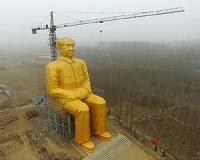
The removal of Qiu Zhanxuan, the school's Marxist society president, comes a day after he was detained by police for — according to a witness — attempting to commemorate the 125th birth anniversary of Mao Zedong, whose legacy in China remains controversial.
According to a notice seen by AFP, Qiu was handed an "administrative penalty" by Beijing police for "holding up slogans, singing… (and) other methods to disturb the public order at Peking University" last week.
Qiu was released from police custody on Thursday, according to a source who requested anonymity due to the sensitivity of the matter.
Peking University has also decided to "restructure" the Marxist society, its notice said, listing newly selected student leaders — all of whom are Communist Party members.
The 32 other students who have been made core members of the reshuffled Marxist group are also all in the Communist Youth League or Communist Party, or are in the process of becoming members.
Considered China's most prestigious university, Peking has a history of student activism with its alumni playing a key role in the pro-democracy Tiananmen protests in 1989.
But campus activism has been quashed under President Xi Jinping.
In August, a police raid swept up student activists at several universities, beating some of them and confiscating their phones for supporting a labour rights movement in the southern Guangdong province.
And last month, a Peking graduate affiliated with the activist group was beaten and taken by men in dark clothing on campus, according to an eyewitness.
The school later issued a statement on its online forum, calling the alumnus a "suspected criminal".
Top Chinese officials forced to carry out self-criticisms
Beijing (AFP) Dec 27, 2018 –
Top Chinese leaders have been forced to undergo a self-criticism session, state media said Thursday, in a further sign of President Xi Jinping's efforts to enforce party loyalty amid signs of internal dissent over his handling of a trade war with the United States.
A tool highly favoured by Mao Zedong and taken to extremes during the Cultural Revolution, self-criticism sessions are back in favour under Xi's presidency as he seeks to consolidate power and tighten discipline in the upper party echelons.
Members of the Politburo "were asked to conduct criticism and self-criticism in light of work experience," at a meeting held on Tuesday and Wednesday, state news agency Xinhua reported.
The were also questioned on "how they have taken the lead to implement Xi's instructions and key Party regulations and policies," it added.
The centre of power in China lies with the 25-member Politburo, though its role has lessened since Xi got the top job in 2012 and started concentrating powers in his own hands.
Analysts however say the president's authority has been contested over the last few months due to an economic slowdown triggered by an ongoing trade war with the US.
Xinhua's report of the meeting does not say what self-criticisms the members of the Politburo were expected to make.
Self-criticisms were regularly carried out during the Cultural Revolution — a period of intense social and political upheaval launched by Mao from 1966-76 — and have returned under Xi.
Experts said top officials appear to have wavered from the political line imposed by the strongman president.
Willy Lam, a professor at the Chinese University of Hong Kong, described the meeting as "extraordinary" because the leadership is "admitting there is tension within its ranks".
"It means some of the Politburo members have done or said things contrary to Xi Jinping's interests," he added.
According to Xinhua, the leaders "were also urged to study the latest speeches given by Xi" as quickly as possible, and will have to "discipline themselves, their families and close aides at work".
Xi reportedly made a speech at the meeting, during which he lauded "democratic centralism" — one of the founding principles of Leninism in which the top leadership is all-powerful — and called for unity within the party.
Since he came to power, Xi has waged a campaign against corruption, punishing more than 1.5 million officials. Some observers however say the crackdown has targeted his internal opponents in particular.
