
A South Korean envoy has warned that a controversial US civilian nuclear deal with India could set a bad precedent for North Korea.
Chun Yung-Woo, Seoul's chief negotiator to six-party talks on terminating North Korea's nuclear ambitions, was speaking at a forum Monday. His comments, reported by local media Tuesday, were confirmed by the foreign ministry.
"The United States has made an exception for India and I am afraid North Korea will come back and ask: Why not us?" Chun said.
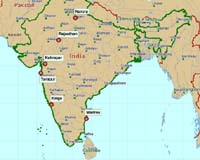
India struck a controversial deal with the United States, allowing it to buy US civilian nuclear technology while possessing nuclear weapons despite not having signed the nuclear Non-Proliferation Treaty.
North Korea, under a six-nation deal, has agreed to abandon its nuclear programmes in return for economic, security and diplomatic benefits.
It has already shut down its only operating reactor ahead of a full declaration and disabling of all nuclear programmes by the end of this year.
"If North Korea denuclearises fully and says…that it wants the start of construction of a light-water nuclear reactor, then I think there can be a deal," Chun said.
"But if it insists that a reactor be provided before it abandons its fissile material and nuclear explosive devices, then I think devising a new international system along the lines of the US-India nuclear deal would take decades, if ever. It would pose a big problem."
Chun also criticised John Bolton, a hardline and blunt-spoken former US diplomat who angered North Korea with his strong criticisms in the run-up to six-party talks in 2003.
"We are still struggling to undo the damage done by John Bolton," Chun said in an unusually public personal attack.
"Without his perfectionist approach, I don't think North Korea would be where it is now in terms of its nuclear capabilities."
Chun praised progress made in the six-party talks that began in 2003. "The year 2007 has been an especially bad year for sceptics," he said. "And I hope it continues that way."
