
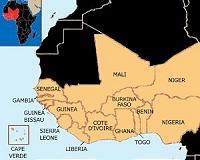
An agreement covering energy resources offshore Gambia and Senegal expired so that other options could be explored, regional explorer African Petroleum said.
African Petroleum said Thursday it let its exclusivity agreement for West African licenses lapse so it can look for potential partners for offshore Senegal and negotiate further with the government in Gambia.
FAR Ltd., an Australian energy company and one of the early movers into West Africa, said two blocks offshore Gambia hold at least 1 billion barrels of oil. Offshore Senegal holds at least 1.5 billion barrels of oil.
African Petroleum said it's been working to resolve contractual disputes with the Gambian government at least since early July, when company officials met with Gambian President Adama Barrow at the nation's capital, Banjul.
"Further to the meeting with the president and subsequent dialogue, it is the understanding of the management team that the government is considering the company's proposal regarding the licenses and it is anticipated that the company will receive formal feedback and clarity on the situation from the government in early August 2017," the company said in a statement.
The company said the current terms were too restrictive.
"I think the fact that we were granted an audience with the president highlights that the significant investment made by the company in these licenses is recognized by the Gambian government and we hope that sense will prevail in finding a way forward," African Petroleum's CEO Jens Pace said in a statement.
FAR and Woodside Petroleum are embroiled in regional disputes of their own. FAR is protesting an effort by Woodside to take over as operator offshore Senegal, after a transfer of assets from Conoco Phillips to Woodside.
For African Petroleum, the company said authorities in Senegal were considering an extension to its contractual terms to that it had more time to test the offshore reserve potential and drill and exploration well. Any extension, however, depends on whether a suitable partner is found.
At least as far as Senegal as concerned, analysts for consultant group Wood Mackenzie suggested disputes were indicative of the region's emerging oil potential.
Spilt crude oil has repeatedly polluted and even destroyed marine ecosystems. An effective measure would be to remove spilt oil slicks by absorption into a separable solid phase. As Indian scientists now report in the journal Angewandte Chemie, congelation of the oil to a rigid gel within impregnated cellulose and scooping the particles out is possible.
Marine oil spills are disasters that … read more
