
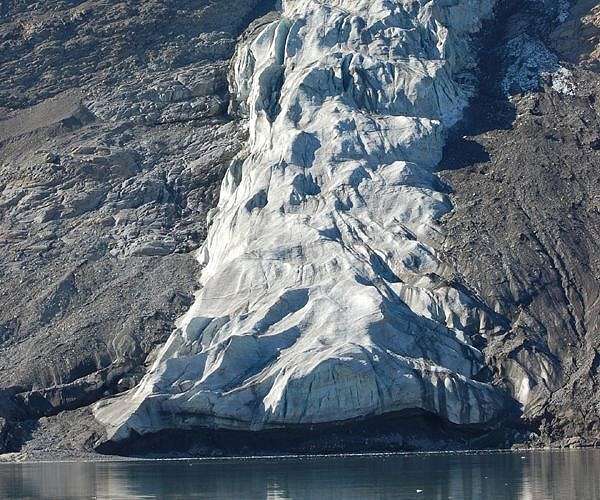
Iceberg calving, where massive ice blocks detach from glacier fronts and plunge into the ocean, is a major factor in Greenland's rapid ice loss. An international team led by the University of Zurich (UZH) and the University of Washington (UW) has now used fiber-optic sensing to reveal how the impact and drift of calved ice accelerate melt by mixing glacial meltwater with warmer subsurface seawater.
Warmer water erodes the glacier's submerged ice base, fueling more calving and mass loss. "This, in turn, amplifies glacier calving and the associated mass loss from ice sheets," explained Andreas Vieli, UZH geography professor and co-author. The research, part of the GreenFjord project in southern Greenland, appears on the cover of Nature.
Using a ten-kilometer fiber-optic cable placed on the fjord floor at the Eqalorutsit Kangilliit Sermiat glacier, researchers tracked wave activity. This glacier sheds about 3.6 cubic kilometers of ice annually – nearly triple the Rhone glacier's volume. Distributed Acoustic Sensing detected vibrations from crevasses, falling ice, ocean waves, and temperature changes, enabling real-time monitoring of calving-driven waves.
Surface waves, or calving-induced tsunamis, stirred the upper fjord layers. But scientists also found towering internal waves between density layers that persisted long after surface calm returned. These subsurface waves continually drew warmer water toward the glacier front, intensifying melt and undercutting the ice wall. "The fiber-optic cable allowed us to measure this incredible calving multiplier effect," said lead author Dominik Graff.
Direct measurement of these underwater interactions has been rare due to iceberg hazards and satellite limitations. The findings underscore the vulnerability of the Greenland ice sheet, which spans an area 40 times Switzerland's size and holds enough water to raise sea levels by seven meters. Meltwater from retreating glaciers could also slow currents like the Gulf Stream, altering Europe's climate and disrupting Greenland's fjord ecosystems. "It's a fragile system that could collapse if temperatures rise too high," warned Graff.
Research Report:Calving-driven fjord dynamics resolved by seafloor fibre sensing
