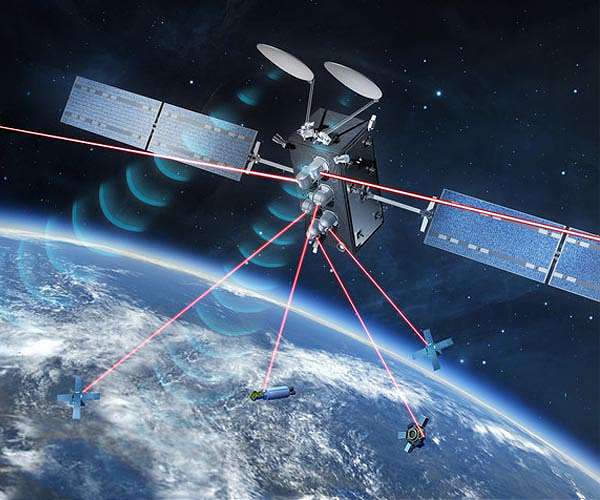
An unseen system of satellites is what keeps the contemporary world running. Satellite networks are the quiet backbone of our digital infrastructure. They support everything from worldwide financial transactions and national security to navigation systems and real-time communication. But since they are in a higher position, they are a prime target for a new breed of advanced cyber attacks.
Not only aerospace professionals are worried about the safety of these systems anymore; today it's a matter of public safety, global security, and economic stability. One successful breach may put economies out of whack, make it harder for the military to accomplish its job, or stop essential services. The problem is that systems that can't be accessed physically and have their own rules need specialized systems that are not physically accessible and have their own set of rules necessitating a proactive approach to cybersecurity.
Satellite Network Vulnerabilities
There are three primary parts to satellite networks: the ground (control stations and data centers), the space (satellites), and the connections. Each one has its own problems. Stations and data centers can be affected by malware, ransomware, and DDoS attacks. An attacker can take control of a satellite if there is a breach.
Once the space segment is launched, it is often physically separated, although its software and onboard equipment can still be used. Using COTS and open-source software in tiny satellites and mega-constellations makes them more vulnerable to attacks. Supply chain assaults, which happen when bad code is added during production, are becoming more common. Jamming and spoofing can stop signals from getting to a satellite or give it false information, which can make it stop working or need to be re-tasked.
Evolving Threats and Adversaries
Many different people pose changing threats to satellite networks. Some groups involved in geopolitical cyber warfare include nation-states, sophisticated criminal organizations seeking profit, and hacktivist groups. These attackers use AI-powered attacks that can change how they work in real time to get around security measures.
A major advantage of secure satellite data streams is the way they empower essential industries and modern digital platforms. Reliable connectivity supports logistics networks, precision farming, banking systems, and public transportation services, ensuring that critical operations run smoothly. In Japan, high-speed connectivity enables services such as streaming platforms, global online gaming communities, e-commerce platforms, and remote collaboration tools. Similarly, in Canada, this connectivity supports digital entertainment and online services, including online casinos in Canada, streaming platforms, and global online gaming communities, all of which depend on fast, low-latency connections to deliver seamless and trusted user experiences.
Proactive Security Protocols
The space industry is working to improve "security-by-design" to protect against these threats. From design to operation in space, satellite security is a top priority. By default, zero-trust architectures don't trust any user or system. Anyone who wants to connect to the network must prove who they are.
Basic encryption is very important.
Quantum computing could make encryption useless, even though it works. To protect communications from future attacks, scientists are looking into Post-Quantum Cryptography (PQC) and Quantum Key Distribution (QKD). These quantum-based encryptions promise encryption that can't be broken. Keep an eye out for strange behavior, fix software bugs right away, and make sure that all access points on the ground require more than one login.
Implications for Global Connectivity
Satellite network security is important for the stability of the global digital economy. Satellite communications need to be reliable as more services and systems connect, from passenger planes with high-speed internet to remote IoT devices. A major interruption may undermine the economy and national infrastructure including electricity grids and emergency response agencies.
Governments, businesses, and international partners need to work together more than ever to protect space assets. Universal standards, exchanging information about threats, and spending money on next-generation technologies will all have an effect on satellite cybersecurity. The world can preserve space as a place of creativity and connection instead of a place of cyberwar by correcting security gaps and gearing ready for attacks.