
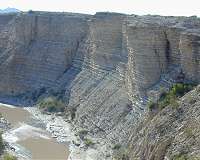
A new analysis suggests that much of the carbon released from volcanic arcs, chains of volcanoes that arise along the tectonic plates of a subduction zone, comes from remobilizing limestone reservoirs in the Earth's crust.
Previous research suggested carbon was sourced from the mantle as a result of the subduction process.
The discovery ultimately impacts the amount of organic carbon scientists believe was buried in the past. Carbon cycling between surface reservoirs and the mantle over geologic history is important because the imbalance greatly influences the amount of total carbon at Earth's surface.
However, the source for carbon from volcanic arc outgassing remained uncertain. Emily Mason and colleagues compiled a global data set of carbon and helium isotopes to determine the origin of the carbon.
The data reveal that many volcanic arcs mobilize carbon from large, crustal carbonate platforms – particularly in Italy, the Central American Volcanic Arc, Indonesia, and Papua New Guinea. In contrast, arcs located in the northern Pacific, such as Japan and Kuril-Kamchatka, release carbon dioxide with an isotope signature indicative of a mantle source.
The recognition of a large amount of crustal carbon in the overall carbon isotope signature requires, from a mass balance consideration, downward revision of how much organic carbon was buried in the past.
Crystals help volcanoes cope with pressure
University of Alaska Fairbanks researchers have discovered that volcanoes have a unique way of dealing with pressure – through crystals. According to a new study published in the Journal of Geology, a network of microscopic crystals can lessen the internal pressure of rising magma and reduce the explosiveness of eruptions.
Crystals can form in the rising molten rock in as little as 18 minu … read more
