
China will launch its first comprehensive solar probe, the Advanced Space-based Solar Observatory, in October, opening a new chapter in the country's exploration of the sun, according to the National Astronomical Observatory of the Chinese Academy of Sciences.
From Monday to July 24, the research institute is gathering suggestions from the public for names to give the milestone instrument, which weighs 888 kilograms and will operate in a synchronous orbit of the sun at around 720 kilometers.
The satellite is equipped with three payloads, namely the All-Solar Vector Magnetic Imager, the Lyman Alpha Solar Telescope and the Solar Hard X-ray Imager. It is the culmination of over five years of work by Chinese scientists and engineers and is set to operate for more than four years.
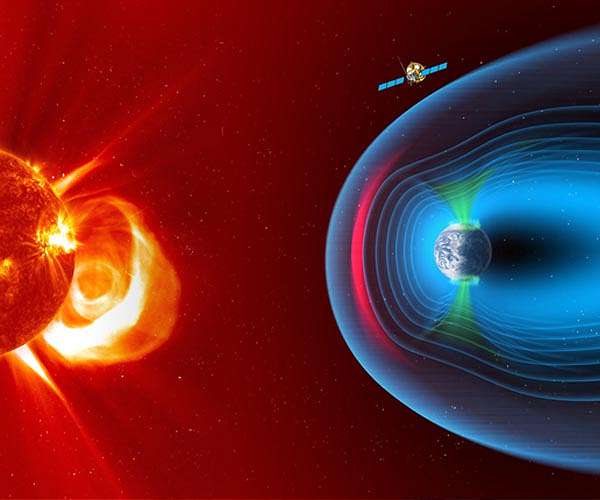
Its goal is to study solar flares and coronal mass ejections, two of the most violent phenomena on the sun, as well as examining the star's magnetic field. These undertakings will yield valuable insights on severe space weather critical for the safe operation of instruments in orbit and electronic infrastructure on the ground.
Although the sun is about 150 million kilometers from Earth, its activities can generate high-energy particles that fly across space, many of which can reach Earth's atmosphere and affect a variety of technological systems.
In October 2003, the planet saw some of the most powerful solar storms in history that disrupted aircraft, research satellites and global positioning systems, later dubbed the Halloween Storms of 2003.
China solicits name for Advanced Space-based Solar Observatory
Beijing (XNA) Jul 13 – China started soliciting suggestions on Monday for a Chinese name of its first solar probe, the Advanced Space-based Solar Observatory (ASO-S), according to the National Space Science Center of the Chinese Academy of Sciences.
The satellite is scheduled to be launched into space this October. Between July 11 and 24, netizens are invited to suggest a name for the probe that reflects its function while also suggesting China's spirit of scientific exploration and cultural self-confidence.
The satellite, which is designed to have a four-year lifespan, will conduct observations on the solar magnetic field, solar flares and coronal mass ejections, to support the forecasting of catastrophic space weather.
It will deploy three payloads, including a Full-disk Vector MagnetoGraph, a Hard X-ray Imager and a Lyman-alpha Solar Telescope.
After entering into orbit, the satellite will generate about 500GB of data each day, all of which will be made available to global users around the world.
