
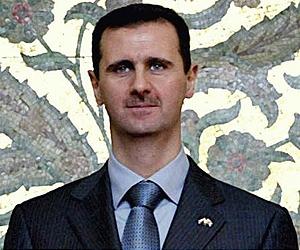
Syrian human rights lawyer Haitham Maleh on Wednesday warned protests and a tough crackdown will go on after President Bashar al-Assad dashed expectations with a speech unveiling no major reforms.
"He said nothing," Maleh told AFP by telephone. "We heard this speech before. They always say that they need to change and do something but in real fact, in practice nothing happened."
Assad blamed conspirators for deadly unrest in Syria but declined to elaborate on promised reforms in a speech Wednesday despite expectations he would lift a decades-old state of emergency.
"All the people were waiting to hear what he will say, what he will do… nothing" said Maleh, who says he spent eight years of his life behind bars "for nothing, for my speech" until his release under a presidential pardon earlier this month.
Maleh, who has worked for London-based human right watchdog Amnesty International since 1989 and was involved in founding a Syrian rights group, was arrested on October 14, 2009 and questioned in a military tribunal over articles he had written
The 80-year-old's main grievance with the government is on the issue of human rights, the independence of the judiciary and the primacy of the constitution.
"The government is not ready to give us our rights," he said. "We need a lot of things. He did nothing till now. Eleven years passed. Nothing happened. We asked, we asked with letters, negotiation, dialogue, nothing happened."
A recurring theme on the president's speech was the threat of fitna — division — raising the ghost that Syria could crack along sectarian lines due to foreign intervention as neighbouring Iraq did in 2003.
"Always we are under pressure from outside. There is Israel, the West, powers from this outside. This story we have heard it from the time of his father," he said referring to the late Hafez al-Assad who Bashar succeeded in 2000.
He warned Syrians will continue with strikes and pour into the streets starting from Friday, the Muslim day of prayer and rest, because the people are not ready to wait any longer to see results.
"Protests will continue. We said please. We said we need change, our freedom, we want democracy. Nothing changed. So the only other choice is to go to the streets."
One of the main points that President Assad made in his speech was that the shape and type of protests in Syria differ from the revolts rattling regimes elsewhere in the Arab world.
"I said to him one week ago, this is the time to change," Maleh added. "In my opinion, Syria is the same.
"And this tsunami for change that started from Tunis will cover all countries in the region, including Syria," he said, referring to the overthrow of veteran Tunisian leader Zine El Abidine Ben Ali in January.
He warned that future protests could face the sort of violent response that met demonstrations in Daraa south of the capital earlier this month.
"We talk," he said. "They attack us. All of this regime, from top to bottom, they do not want change. Arrests have not stopped since Assad came to power. Day by day, hour by hour, they arrest people. Nobody wants to hear us."
Assad released 200 prisoners, mainly Islamists, as a concession to protest demands.
But the infamous Adraa prison, where Maleh spent time due to a three year sentence issued by a military court, still holds 11 political prisoners, according to the human rights lawyer.
He added there are still "more than 4,000 prisoners who were arrested for their ideas" in a country with 15 separate security agencies dedicated to monitoring and crushing dissent.
"They look at the people as animals, as sheep, so we are slaves. We are not free. But we will move. We want our freedom. We want our democracy. We refuse to continue (like this.)"
Share This Article With Planet Earth
